Temperature15 – 25 °C
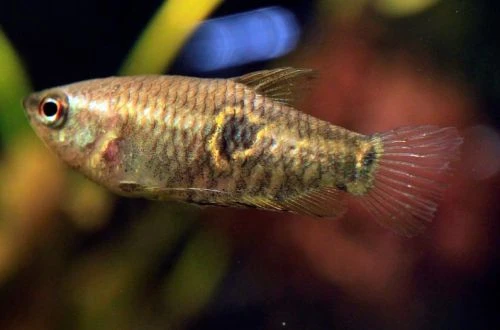
The Ocellated Gourami, also known as Parasphaerichthys ocellatus, belongs to the family Osphronemidae. Among aquarists, it is sometimes called the Dwarf or Burmese Chocolate Gourami. This species is considered relatively easy to care for and highly compatible with other fish of similar size, making it a suitable choice for those who already have some experience in aquaristics.
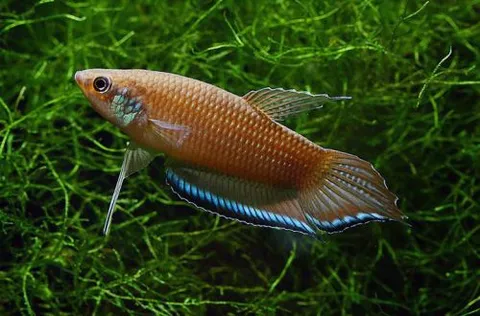
Many consider it to be related to the Chocolate Gourami, and these species share common features. For example, unlike other gouramis, they lack modified filamentous fins. Adults reach about 3 cm in length. These fish are characterized by a relatively large head in proportion to their body and short fins. The coloration is usually grayish-yellow, and the main hue can change depending on the lighting. A characteristic feature is a large dark spot with a golden border in the middle of the body. Sexual dimorphism is weakly expressed: mature females appear slightly larger than males.
The natural habitat of this fish extends to Southeast Asia. It is found in the upper reaches of the Irrawaddy River in northern Myanmar (Burma), as well as in river systems associated with Lake Indawgyi, the largest inland lake in Southeast Asia. Representatives of the species prefer small streams and rivers with slow currents, where dense thickets of aquatic vegetation provide reliable shelter. Most of the time, these fish spend hiding among plants.
This peaceful and somewhat timid fish may struggle to compete for food in the presence of larger and more active neighbors, which can ultimately lead to malnutrition. Therefore, it is recommended to keep it in a community with equally calm and peaceful species of comparable size. Intraspecific conflicts are not typical, and the fish can live either alone or in a group, with the latter option being preferable.
For keeping one or two Ocellated Gouramis, an aquarium of 40 liters or more is suitable. The setup should ideally include a large amount of aquatic vegetation and a soft substrate. Snags and leaf litter can give the aquarium a more natural look, and decorative elements will serve as additional shelters. Dried leaves of certain trees are used not only for decoration but also to recreate the chemical composition of the water, close to the natural habitat of these fish. During decomposition, the leaves release tannins, which give the water a brownish tint. The necessary stability is achieved through regular aquarium maintenance and the installation of appropriate equipment.
Fish that have been acclimated or have lived in artificial conditions for several generations successfully adapt to popular dry foods such as flakes and granules. To enrich the diet, live or frozen foods can be used, for example, Artemia, Daphnia, bloodworms, and others.
Breeding in a home aquarium is quite possible, but it involves certain difficulties, the main one being the preservation of the fry. The best conditions are achieved with separate keeping, where a breeding pair is separated from other inhabitants. At the beginning of the breeding season, the male builds foam nests at the surface, usually among floating plants. During this time, the fish acquire "nuptial" coloration, becoming darker. Ocellated Gouramis spawn for several days, laying eggs in the nest and, if necessary, building new ones nearby. The male stays near the clutch, guarding it, while the female keeps her distance. The incubation period lasts 3–5 days. The fry remain in the nest for a few more days, consuming nutrients from the yolk sac, and only then begin to swim freely. Young fish should be fed specialized foods for aquarium fish.
Most health problems in fish often arise from unsuitable keeping conditions. Maintaining a stable and comfortable habitat is a key factor for successful keeping. If symptoms of illness appear, the first step is to check the water quality. If deviations are found, it is important to take immediate measures to eliminate them. If the symptoms do not disappear or worsen, medicinal treatment may be required.
When purchasing, choose active individuals with clean fins and no visible damage to their scales. Avoid fish with sunken bellies, signs of lethargy, or unnaturally bloated abdomens, as the species is sensitive to transport conditions. Since the fish are often imported and can be timid, in the store they may stay at the bottom or hide in decorations, which is normal behavior under stress.
The essentials: size, tank volume, water parameters and care
An adult reaches 2–3.2 cm in length. Plan the tank around the maximum size: the fish quickly outgrows a cramped setup.
The recommended volume is 40 L. A smaller tank speeds up nitrate build-up and raises stress levels.
Temperature 15–25 °C, pH 6.5–7.5, hardness 2–10 dGH. Stability matters more than exact values: sudden swings are harder on the fish than a small deviation from the ideal.
Around 2 years when kept properly. Lifespan depends directly on tank volume, water quality and a varied diet.
Temperament: peaceful (regular). Keep this in mind when choosing tank mates.
Recommended setup: mixed (solitary / pair / group). Ignoring this is a common cause of stress and disease.
Diet type: any (universal). Feed small portions that are finished within a couple of minutes — overfeeding does more harm than underfeeding.
The scientific name of the species is Parasphaerichthys ocellatus, family Osphronemidae. It also appears in the literature as: Paraspherichthys ocellatus.
The water suits 196 of 208 plants in the catalogue — the easiest ones are shown first.
Afzelius's AnubiasAnacharisAnubiasBrazilian PennywortDwarf CloverDwarf CloverDwarf HygrophilaDwarf SagittariaDwarf ValGuppy GrassHornwortJava FernJava MossMoneywortMud SwordNarrow Leaf AnacharisNarrow-leaf CloverStringy MossSüsswassertangTaiwan MossTape GrassTemple PlantUssuri WatermilfoilWater Wisteria
Matched by family, categories and overlapping keeping conditions
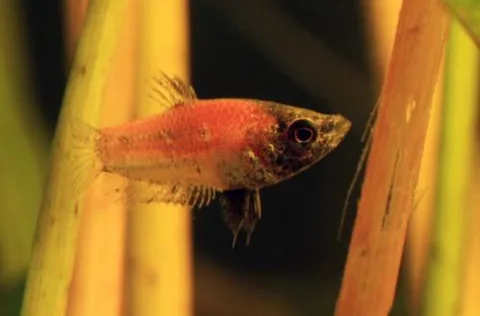
Parasphaerichthys lineatus
The scientific name Parasphaerichthys lineatus belongs to the family Osphronemidae, and this species is known as the False Chocolate Gourami. This fish is modest in size, does not stand out with a bright appearance, and…
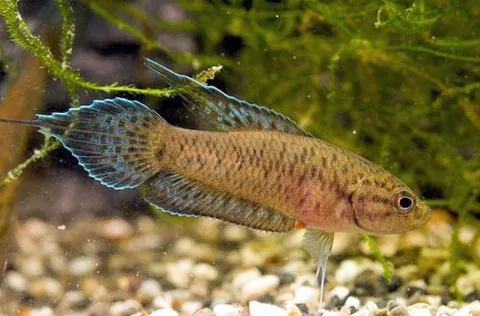
Malpulutta kretseri
Malpulutta kretseri, also known as Kretser's Paradise Fish, bears the scientific name Malpulutta kretseri and belongs to the family Osphronemidae. It was named in honour of the Sri Lankan lawyer De Kretser, who…
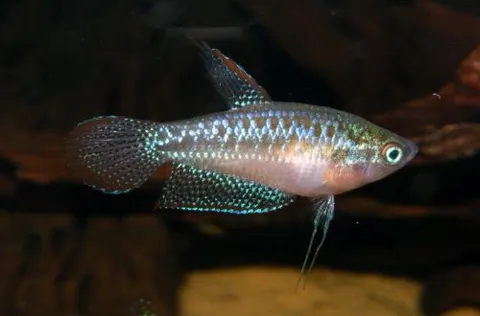
Trichopsis pumila
The Dwarf Gourami, or Pumila, known scientifically as Trichopsis pumila, is a member of the Osphronemidae family. This aquarium fish is popular due to its interesting coloration, as well as its ease of care and…
Betta enisae
Betta enisae, or as it is often called, the Energetic Betta, belongs to the family Osphronemidae, receiving its Russian name through adaptive translation from Latin. Despite this, one should not expect high mobility…