Temperature23 – 28 °C
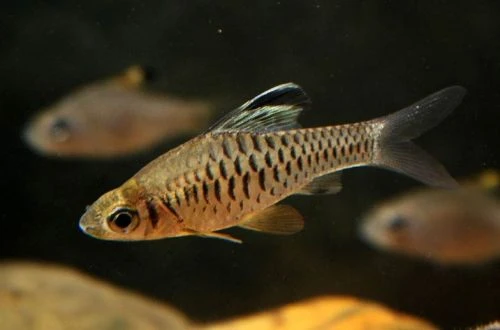
Oreichthys cosuatis, scientifically known as Oreichthys cosuatis, is a member of the carp family (Cyprinidae). This miniature schooling fish can be a wonderful addition to a community aquarium, especially if kept with other peaceful species. Given its relative ease of care and breeding, it can be recommended even to beginner aquarists.
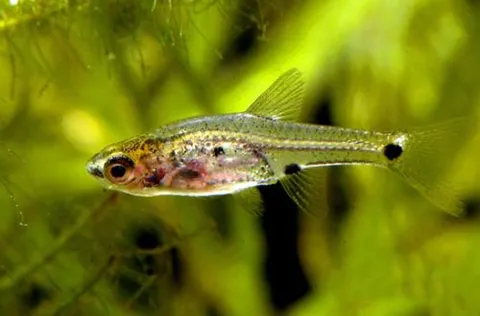
Adults reach approximately 4 cm in length. Distinctive features include a large head with big eyes and a rather stocky body. The coloration is predominantly silvery, with characteristic black streaks at the base of each scale. The dorsal fin is enlarged, showing yellowish hues and a black pattern of irregular spots. Males differ from females by being larger and having more intense coloration; they have a black spot on the anal fin and red pelvic fins. Often, another related species, Oreichthys barbs, which has a more variegated coloration and a characteristic sail-like dorsal fin, is mistakenly sold under the name Oreichthys cosuatis.
The natural habitat of this fish covers the vast water systems of the Ganges and Brahmaputra in South Asia, including the territories of modern Nepal, India, and Bangladesh. Oreichthys cosuatis prefers small tributaries where the water is clear and the banks and water surface are densely overgrown with vegetation.
Oreichthys cosuatis is a peaceful schooling fish that requires maintaining a group of at least 6-8 individuals. With fewer numbers, these barbs may become overly timid. It is important to avoid cohabitation with large, and especially predatory, species. Suitable tank mates include other barbs of comparable size, danios, rasboras, Corydoras catfish, small tetras, and similar fish.
For a group of 6-8 individuals, the optimal aquarium volume starts from 60 liters. When decorating, it is recommended to use a soft sandy substrate. Dense aquatic plants, including floating ones for additional shading, as well as driftwood and other decorative elements serving as shelters, will be very appropriate. Dim lighting will help highlight the fish's natural coloration, while bright light can make it appear duller. Placing leaves from certain trees at the bottom of the aquarium will provide additional benefits. Besides their aesthetic value, they release tannins when decomposing, which helps create a water environment close to natural conditions.
This species is omnivorous. It is important to note that the diet composition and food quality directly affect the vibrancy of the fish's coloration. Therefore, it is recommended to include protein-rich foods in their diet. It is advisable to regularly offer them live or frozen brine shrimp, bloodworms, daphnia, and other similar foods.
Spawning in these fish can occur regularly under suitable conditions. However, the survival rate of fry in a regular aquarium will be low. This is due to both predation by adult fish and difficulties in selecting suitable food for the young. If the goal is to obtain offspring, a separate tank should be prepared in advance; even a three-liter jar can sometimes suffice for this purpose. Such an improvised spawning tank is equipped with a simple air-driven sponge filter and a heater; a separate light source is not needed in this case. For decoration, either specially designed spawning substrates or shade-loving mosses, ferns, and other low-maintenance aquatic plants are used. When the breeding season arrives, the fish attach their eggs to the underside of plant leaves. Since Oreichthys cosuatis do not exhibit parental instincts, they are capable of eating their own clutch immediately after spawning. To prevent this, the eggs should be carefully moved to a pre-prepared breeding tank with identical water parameters. Incubation takes approximately 3 days. After hatching, the fry will consume the remnants of their yolk sac for about 5 more days before they begin to swim actively and search for food. Initially, they will require microscopic food, such as paramecia; only after a week will they be able to switch to powdered foods, brine shrimp nauplii, and similar products. Diseases in fish rarely occur in an aquarium with a stable ecosystem and conditions that meet the needs of the specific species. The causes of diseases can be deteriorating water quality, contact with infected individuals, or physical injuries.
Oreichthys cosuatis has robust health when kept under proper conditions. Like other cyprinids, when stressed, in poor water quality, or injured, fish become susceptible to typical aquarium diseases such as ich (white spots on the body), fin rot, or bacterial infections. It is important to maintain water purity and avoid abrupt parameter fluctuations, as fish are sensitive to organic accumulation. Prevention involves regular water changes, using a soft substrate to prevent damage to sensitive barbels, and maintaining a stable temperature regime.
When purchasing, choose active, brightly colored individuals with undamaged fins and scales. Avoid fish that isolate themselves, show signs of emaciation, spots, ulcers, or "clamped" fins. It is important to pay attention to their behavior in the store: healthy fish should show interest in food and swim actively. Since the species is often confused with other members of the genus, it is recommended to carefully examine the fish for species-specific characteristics. It is advisable to acquire a group of 6-8 individuals, as fish kept alone become timid and prone to stress.
The essentials: size, tank volume, water parameters and care
An adult reaches 4–4.5 cm in length. Plan the tank around the maximum size: the fish quickly outgrows a cramped setup.
The recommended volume is 60 L. A smaller tank speeds up nitrate build-up and raises stress levels.
Temperature 23–28 °C, pH 6–7, hardness 1–10 dGH. Stability matters more than exact values: sudden swings are harder on the fish than a small deviation from the ideal.
Around 4 years when kept properly. Lifespan depends directly on tank volume, water quality and a varied diet.
Temperament: peaceful (regular). Keep this in mind when choosing tank mates.
Recommended setup: medium group (6–8 individuals). Ignoring this is a common cause of stress and disease.
Diet type: small / appropriate size / pieces. Feed small portions that are finished within a couple of minutes — overfeeding does more harm than underfeeding.
The scientific name of the species is Oreichthys cosuatis, family Cyprinids (Cyprinidae). It also appears in the literature as: Barbus cosuatis, Cyprinus cosuatis, Leuciscus cosuatis.
The water suits 197 of 208 plants in the catalogue — the easiest ones are shown first.
Afzelius's AnubiasAnacharisAnubiasBrazilian PennywortDwarf CloverDwarf CloverDwarf HygrophilaDwarf SagittariaDwarf ValGuppy GrassHornwortJava FernJava MossMoneywortMud SwordNair's LagenandraNarrow Leaf AnacharisNarrow-leaf CloverStringy MossSüsswassertangTaiwan MossTape GrassTemple PlantUssuri Watermilfoil
Matched by family, categories and overlapping keeping conditions
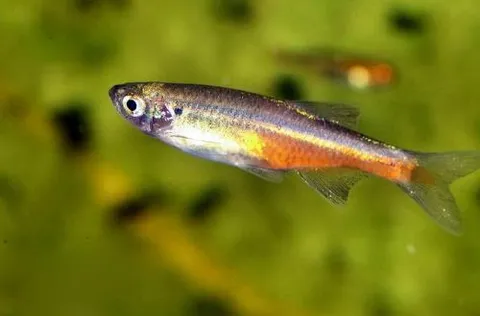
Devario sondhii
The fish, known scientifically as Devario sondhii, belongs to the Cyprinidae family and is commonly called Devario sondhii. These aquarium inhabitants became available to hobbyists in the early 2000s. Initially, there…
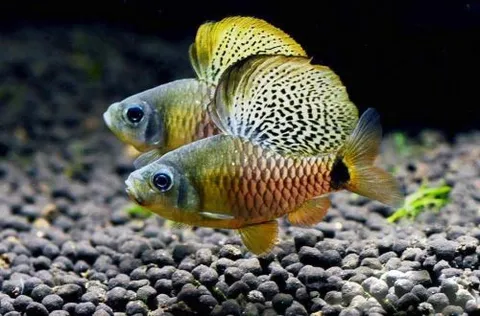
Oreichthys crenuchoides
The Oreichthys barb, known scientifically as Oreichthys crenuchoides, belongs to the carp family (Cyprinidae). Among barbs, this fish stands out due to noticeable differences between males and females. Males are…
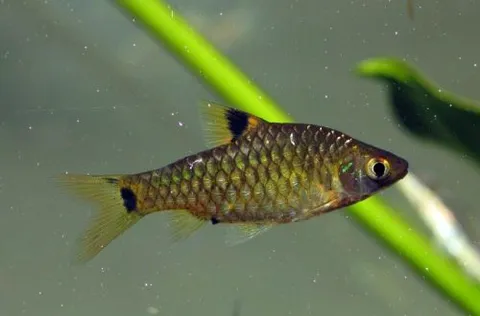
Puntius vittatus
Puntius vittatus, known as the Greenstripe Barb, belongs to the carp family (Cyprinidae). This unpretentious fish adapts well to aquarium conditions, breeds easily, and coexists harmoniously with most peaceful tank…
Boraras micros
Boraras micros, also known as the Dwarf Rasbora, belongs to the family Cyprinidae. Despite its rather modest coloration, which makes this species not the most sought-after among aquarists, these fish are quite capable…