Temperature20 – 28 °C
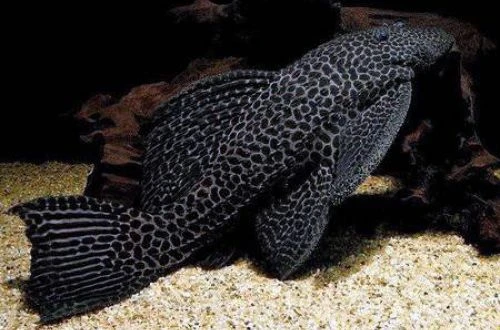
Megalancistrus parananus, or the Giant Parana Ancistrus, belongs to the armored catfish family (Loricariidae). Its name accurately conveys the scale of this fish, as its length can exceed half a meter. Such impressive dimensions require not only a spacious aquarium but also a special approach to maintenance. In addition, its temperament cannot be called docile, which significantly limits the list of possible tank mates. This species is not recommended for novice aquarists.
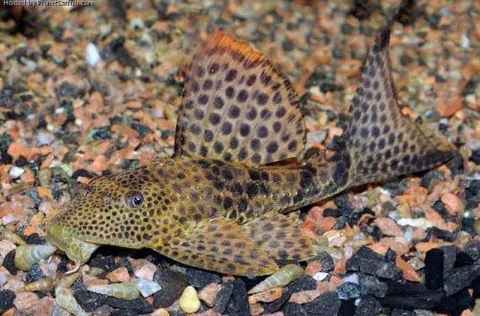
Adult Parana Ancistrus grow up to 58 cm. The catfish's body is slightly flattened, with a massive head and large fins. Its entire surface is covered with numerous sharp spines, and the first rays of the fins are transformed into thorns. The coloration consists of large black spots on a gray background; in younger fish, the background has a yellowish-brown hue.
The natural habitat of this catfish is a vast region in the central part of South America. It inhabits the Parana River basin, which is considered the second-longest river on the continent and flows through the territories of Paraguay, Uruguay, southern Brazil, and Argentina. It can be found everywhere along the entire length of the river.
This species exhibits territorial behavior and can be aggressive towards other fish that encroach on its territory at the bottom of the aquarium. Coexistence with other species of comparable size is permissible, but only if the fish are kept in very spacious tanks, measured in thousands of liters.
Considering the size of adult individuals and their behavioral characteristics, a single Parana Ancistrus will require an aquarium of at least 600–700 liters. Inside its dwelling, the catfish will look most harmonious under subdued lighting, among driftwood and dense thickets of aquatic plants. Keeping such a large fish involves a number of difficulties. First and foremost, this concerns the need to maintain high water quality within acceptable temperature and hydrochemical parameters. This requires weekly water changes of 20–30% of the volume with fresh water and regular removal of organic waste, such as food remnants and excrement. It is also extremely important to provide an efficient filtration system and other necessary equipment. Without automation mechanisms for aquarium care processes, they will require significant time and effort.
This species is omnivorous. Its diet should primarily consist of fresh or frozen foods, such as bloodworms, earthworms, mosquito larvae, and shrimp. Vegetable supplements can complement the diet: for example, spirulina flakes, as well as pieces of fresh vegetables and fruits. The catfish will also not refuse to feast on soft and tender aquatic plants.
To date, successful cases of breeding this species in home aquariums have not been recorded. Fish offered for sale are either supplied from commercial fish farms or caught from natural bodies of water.
Most health problems in fish often arise from unsuitable keeping conditions. Maintaining a stable and comfortable habitat is a key factor for successful keeping. If symptoms of illness appear, the first step is to check the water quality. If deviations are found, it is important to take immediate measures to eliminate them. If the symptoms do not disappear or worsen, medicinal treatment may be required.
When choosing Megalancistrus parananus, it is important to consider the impressive size of the adult, reaching almost 60 cm, so make sure the aquarium in the store meets the fish's needs. Inspect the skin: there should be no white spots, ulcers, bruises, or damage to the spiny fin rays on the body. A healthy fish is active during twilight hours, has clear eyes, and fins pressed tightly against its body. Avoid individuals with sunken bellies, which may indicate emaciation or internal parasitic infections, and also ensure that the fish does not show signs of apathy or labored breathing.
The essentials: size, tank volume, water parameters and care
An adult reaches 58 cm in length. Plan the tank around the maximum size: the fish quickly outgrows a cramped setup.
The recommended volume is 600 L. A smaller tank speeds up nitrate build-up and raises stress levels.
Temperature 20–28 °C, pH 6–7.5, hardness 2–12 dGH. Stability matters more than exact values: sudden swings are harder on the fish than a small deviation from the ideal.
Around 20 years when kept properly. Lifespan depends directly on tank volume, water quality and a varied diet.
Temperament: aggressive / incompatible / unfriendly. Keep this in mind when choosing tank mates.
Recommended setup: both solitary and in group (flexible). Ignoring this is a common cause of stress and disease.
Diet type: any (universal). Feed small portions that are finished within a couple of minutes — overfeeding does more harm than underfeeding.
The scientific name of the species is Megalancistrus parananus, family Armored Catfishes (Loricariidae). It also appears in the literature as: Chaetostomus aculeatus, Chaetostomus gigas, Megalancistrus aculeatus.
The water suits 197 of 208 plants in the catalogue — the easiest ones are shown first.
Afzelius's AnubiasAnacharisAnubiasBrazilian PennywortDwarf CloverDwarf CloverDwarf HygrophilaDwarf SagittariaDwarf ValGuppy GrassHornwortJava FernJava MossMoneywortMud SwordNair's LagenandraNarrow Leaf AnacharisNarrow-leaf CloverStringy MossSüsswassertangTaiwan MossTape GrassTemple PlantUssuri Watermilfoil
Matched by family, categories and overlapping keeping conditions
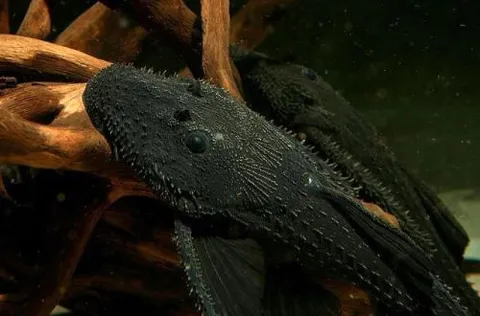
Acanthicus hystrix
Acanthicus hystrix, known scientifically as Acanthicus hystrix, belongs to the family Loricariidae, or Armored Catfishes. Due to its size and certain behavioral characteristics, this fish is not suitable for beginner…
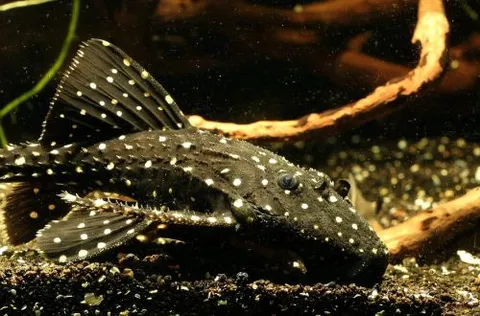
Acanthicus adonis
Acanthicus adonis, scientifically known as Acanthicus adonis, belongs to the family Loricariidae, also known as Armored Catfish. This species is generally not considered suitable for home aquariums due to its impressive…
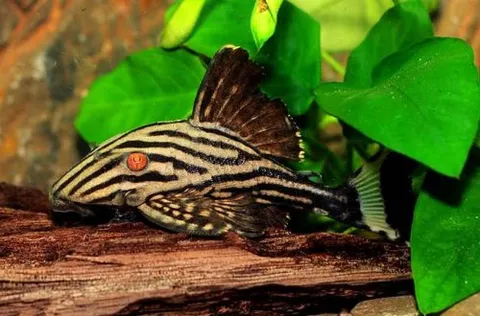
Panaque nigrolineatus
The Royal Panaque, known in scientific literature as Panaque nigrolineatus, belongs to the family Loricariidae, which includes armored catfish. This large fish is distinguished by its beautiful appearance and…
Hypostomus punctatus
The scientific name for the Spotted Fin Hypostomus, also known as the Spotted Pleco, is Hypostomus punctatus; this member of the Loricariidae family (Armored Catfish) originates from South America. It inhabits the river…