Temperature24 – 28 °C
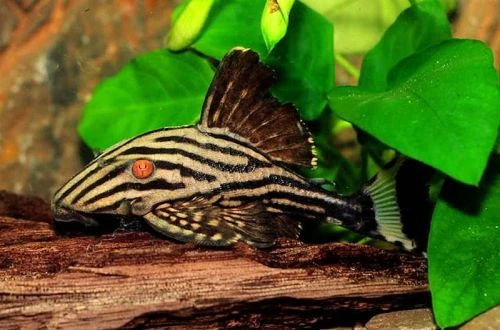
The Royal Panaque, known in scientific literature as Panaque nigrolineatus, belongs to the family Loricariidae, which includes armored catfish. This large fish is distinguished by its beautiful appearance and adaptability, although its temperament requires special attention. However, if all its needs are met, keeping a Royal Panaque will not be difficult even for those new to aquaristics.
Adults grow up to 43 cm in length. During the first year and a half, they show rapid growth, reaching over 20 centimeters, after which the development rate slows down, and panaques reach their maximum size only by 7–10 years of age. Outwardly, they are very similar to plecos, being a closely related species. The Royal Panaque's body is completely covered with bony plates, forming a hard shell with numerous spines. The first rays of the fins are transformed into sharp spines. The body coloration consists of alternating dark brown and light cream or white stripes. The fish's eyes are red. The mouth, adapted as a sucker, allows the catfish to scrape nutritious biofilms from driftwood, fruits, leaves, and plant stems.
The homeland of this catfish is the waters of South America. It can be found in the Orinoco River basin, as well as in some tributaries of the Amazon, located in Venezuela, Colombia, and Brazil. It inhabits both the main channels of large rivers and smaller streams.
In their natural habitat, these fish often gather in large shoals, numbering dozens, and sometimes hundreds of individuals. However, for a home aquarium, it is recommended to acquire only one catfish. The Royal Panaque is a territorial species that shows aggression towards any bottom-dwelling fish, including its own kind. Its behavior changes to the opposite only when kept in a very large group. Representatives of other species inhabiting the water column or near the surface will be safe; even small tetras will remain outside this catfish's interest. Thanks to their protective armor, panaques can coexist with some predators of comparable size.
For keeping one adult specimen, the optimal aquarium volume should be at least 200 liters. When decorating the tank, it is important to provide a sufficient number of shelters made of natural or artificial decorative elements. Any refuge, whether a cave or a grotto, must be through-and-through and spacious enough to prevent the catfish from getting stuck — this is a common problem. Royal Panaques are prone to damaging live plants, so it is recommended to use floating species or fast-growing varieties with strong root systems. These catfish are unpretentious and highly resilient, adapting well to various conditions. They can live in a fairly wide range of temperatures and hydrochemical parameters. Standard aquarium maintenance includes weekly partial water changes with fresh water, removal of accumulated organic waste, and regular equipment checks.
This species is considered omnivorous. Panaques readily accept most common dry sinking foods, such as flakes and granules. They often eat leftover food that has not been consumed by other aquarium inhabitants. A key element of their diet is plant supplements. These can be specially formulated foods, as well as fresh lettuce leaves, spinach, zucchini, and other green vegetables. Before offering them to the fish, it is recommended to blanch the greens with boiling water or pre-freeze them to soften the plant fibers.
Successful breeding of royal panaques in home aquariums is quite rare. Most often, these fish are sold either as a result of capture from the wild or from specialized commercial fish farms.
Given favorable conditions and a balanced diet, the likelihood of these fish developing diseases is very low. If any symptoms of illness appear, it usually indicates problems with care, so the first step should always be to check the water quality and composition.
When choosing a black-lined panaque, carefully inspect the fish for any external damage, ulcers, or white film on the body and fins. A healthy specimen should be active (during twilight hours), firmly adhering to surfaces, and its eyes should be clear and prominent. Avoid specimens with sunken bellies, which may indicate emaciation or internal parasitic infections, often found in wild-caught individuals. Since fish of this species are territorial, it is recommended to acquire a single specimen if the aquarium volume does not allow for keeping a larger group, in order to avoid conflicts during adaptation.
The essentials: size, tank volume, water parameters and care
An adult reaches 43 cm in length. Plan the tank around the maximum size: the fish quickly outgrows a cramped setup.
The recommended volume is 400 L. A smaller tank speeds up nitrate build-up and raises stress levels.
Temperature 24–28 °C, pH 6–7.5, hardness 5–15 dGH. Stability matters more than exact values: sudden swings are harder on the fish than a small deviation from the ideal.
Around 12 years when kept properly. Lifespan depends directly on tank volume, water quality and a varied diet.
Temperament: aggressive / incompatible / unfriendly. Keep this in mind when choosing tank mates.
Recommended setup: both solitary and in group (flexible). Ignoring this is a common cause of stress and disease.
Diet type: high protein (predominantly meat). Feed small portions that are finished within a couple of minutes — overfeeding does more harm than underfeeding.
The scientific name of the species is Panaque nigrolineatus, family Armored Catfishes (Loricariidae). It also appears in the literature as: Chaetostomus nigrolineatus, Cochliodon nigrolineatus.
This fish damages plants, especially when its diet is short of vegetable food.
African Onion PlantAfrican Water FernAfzelius's AnubiasAmazon FrogbitAmazon SwordAnacharisAnubiasArrowhead CryptAsian WatermossBalansa Water TrumpetBanana PlantBarth's SwordBeckett's Water TrumpetBladderwort CarpetBlue BuceBog MossBoivin's AponogetonBolivian Chain SwordBrazilian PennywortBroad-leaf Water SpriteBrookweedBrown's LimnophilaBuceCardinal PlantCaribbean MintCarolina Micro SwordChristmas MossCognac AmmanniaCongo AnubiasCreeping JennyCreeping RushCreeping SpotflowerCreeping StaurogyneCrinkled AponogetonCupheaCutleaf WatermilfoilCylindricfruit LudwigiaDark SwordDense MayacaDitch Stonecrop
Matched by family, categories and overlapping keeping conditions
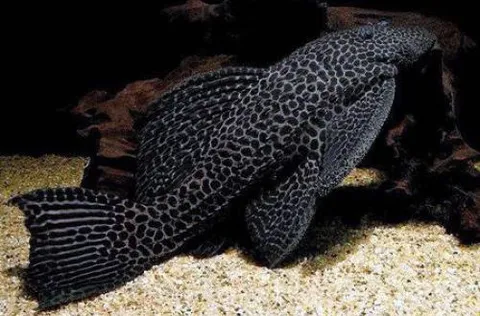
Megalancistrus parananus
Megalancistrus parananus, or the Giant Parana Ancistrus, belongs to the armored catfish family (Loricariidae). Its name accurately conveys the scale of this fish, as its length can exceed half a meter. Such impressive…
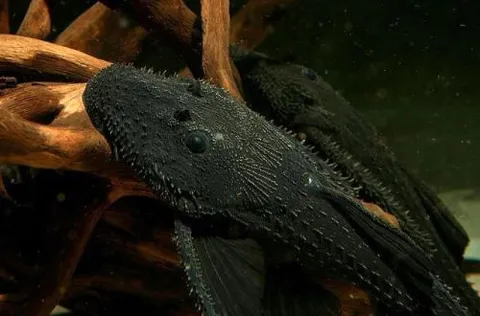
Acanthicus hystrix
Acanthicus hystrix, known scientifically as Acanthicus hystrix, belongs to the family Loricariidae, or Armored Catfishes. Due to its size and certain behavioral characteristics, this fish is not suitable for beginner…
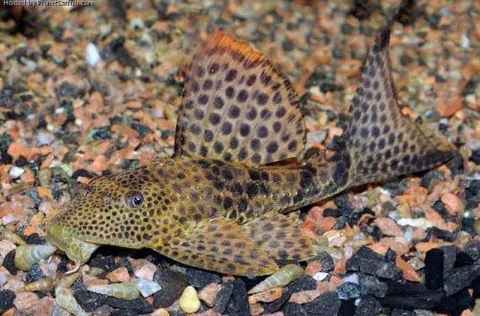
Hypostomus punctatus
The scientific name for the Spotted Fin Hypostomus, also known as the Spotted Pleco, is Hypostomus punctatus; this member of the Loricariidae family (Armored Catfish) originates from South America. It inhabits the river…
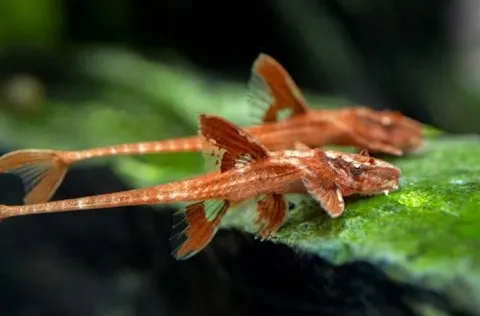
Rineloricaria sp.
The Red Whiptail Catfish belongs to the genus Rineloricaria and is part of the armored catfish family (Loricariidae). Its exact species identification is currently unknown. There are several hypotheses regarding its…