Temperature23 – 27 °C
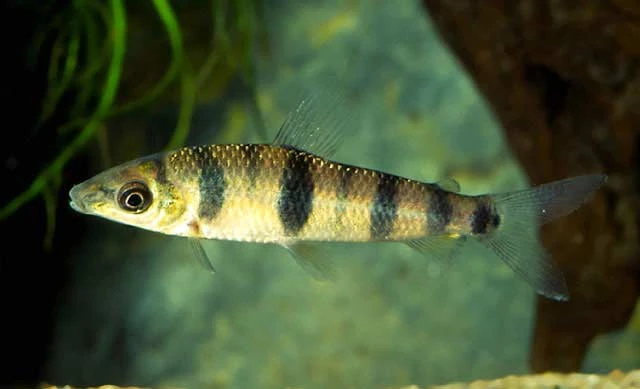
Leporinus pellegrinii, also known as Pellegrin's Leporinus, is a member of the family Anostomidae. Its homeland is the vast expanses of South America; in particular, it is widely distributed throughout the entire length of the Amazon River basin. Such a wide distribution of this species is explained by its annual seasonal migrations.
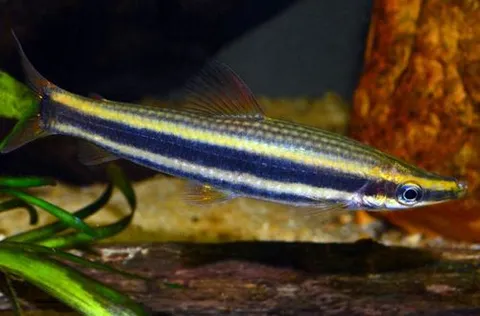
Adults reach approximately 12 cm in length. Thanks to such a wide range, various groups have formed within the species, differing in minor variations in coloration and body pattern. The most common specimens have a golden hue and a black ornament consisting of large oval spots and dashes. Young fish have a slightly different pattern, dominated by dark stripes. Differences between males and females are weakly expressed, making sexual dimorphism almost imperceptible.
The species inhabits rivers in South America, including the Amazon basin and coastal rivers of Guyana. It prefers areas with strong currents and clear water. In nature, it leads a benthopelagic lifestyle, requiring high levels of dissolved oxygen and flowing water. Optimal water parameters for the species are: temperature 24–27 °C, pH 6.0–7.5, and hardness up to 12–15 dGH.
In their natural habitat, these fish prefer to stay in large shoals. It is also recommended to maintain a shoal of Pellegrin's Leporinus in the aquarium, which should consist of at least 8–10 individuals. When kept in small numbers or in a confined space, they tend to show aggression towards both conspecifics and other aquarium inhabitants. Thus, in small aquariums, it is preferable to keep either a single Leporinus or a pair. They get along well with fish of comparable size, including characins, peaceful American cichlids, as well as Armored or Loricariid catfish.
Considering the behavioral characteristics of Leporinus, the aquarium volume should be chosen taking into account the size of the group. A tank of at least 300 liters will be required for a shoal of ten fish. In the aquarium design, it is important to provide both open swimming areas and hiding places formed by driftwood and dense plant thickets. The choice of plants should be approached with particular care, as this species is herbivorous. Therefore, preference should be given to species with tough leaves. Although Leporinus is undemanding in terms of keeping conditions and can adapt to a wide range of hydrochemical parameters, it still prefers soft, slightly acidic water.
The diet of these fish should primarily consist of foods enriched with plant additives. High-protein products, on the contrary, are not recommended. Otherwise, Leporinus may start damaging ornamental aquatic plants.
These fish are egg-layers. In their natural environment, spawning occurs in pairs in areas with dense aquatic vegetation, where males exhibit territorial behavior, guarding the spawning site. Reliable information on breeding in captivity is limited, making the process of obtaining offspring in aquarium conditions a challenging task for experienced aquarists.
No specific diseases unique to this species have been recorded. Like other members of the Anostomidae family, these fish are sensitive to water quality and dissolved oxygen levels due to their natural habitat in strong currents. The main risk factors are: — bacterial and fungal infections arising from non-compliance with water parameters or the accumulation of organic waste; — stress caused by insufficient aquarium volume or lack of hiding places, which reduces immunity and makes the fish vulnerable to parasitic diseases; — injuries sustained during careless transportation or incompatibility with aggressive tankmates. To prevent diseases, it is necessary to maintain high aeration and filtration, regularly change the water, and provide a balanced plant-based diet. If signs of illness appear, such as changes in coloration, apathy, or skin lesions, the hydrochemical parameters of the water need to be checked.
When selecting individuals, attention should be paid to the integrity of the fins and the absence of body damage, as the fish is sensitive to water quality and stress during transportation. A healthy fish should be active, have clear eyes, and a species-specific pattern of spots or stripes. Avoid specimens with signs of emaciation, sluggish behavior, or a film on the body.
The essentials: size, tank volume, water parameters and care
An adult reaches 12 cm in length. Plan the tank around the maximum size: the fish quickly outgrows a cramped setup.
The recommended volume is 300 L. A smaller tank speeds up nitrate build-up and raises stress levels.
Temperature 23–27 °C, pH 5.8–7.5, hardness 2–15 dGH. Stability matters more than exact values: sudden swings are harder on the fish than a small deviation from the ideal.
Around 10 years when kept properly. Lifespan depends directly on tank volume, water quality and a varied diet.
Temperament: semi-peaceful (including aggression during spawning / intraspecific conflicts). Keep this in mind when choosing tank mates.
Recommended setup: mixed (solitary / pair / group). Ignoring this is a common cause of stress and disease.
Diet type: plant-based (algae, vegetables). Feed small portions that are finished within a couple of minutes — overfeeding does more harm than underfeeding.
The scientific name of the species is Leporinus pellegrinii, family Anostomidae. It also appears in the literature as: Leporinus maculatus.
This fish damages plants, especially when its diet is short of vegetable food.
African Onion PlantAfrican Water FernAfzelius's AnubiasAmazon FrogbitAmazon SwordAnacharisAnubiasArrowhead CryptAsian WatermossBalansa Water TrumpetBanana PlantBarth's SwordBeckett's Water TrumpetBladderwort CarpetBlue BuceBog MossBoivin's AponogetonBolivian Chain SwordBrazilian PennywortBroad-leaf Water SpriteBrookweedBrown's LimnophilaBuceCardinal PlantCaribbean MintCarolina Micro SwordChristmas MossCognac AmmanniaCongo AnubiasCreeping JennyCreeping RushCreeping SpotflowerCreeping StaurogyneCrinkled AponogetonCupheaCutleaf WatermilfoilCylindricfruit LudwigiaDark SwordDelta ArrowheadDense Mayaca
Matched by family, categories and overlapping keeping conditions
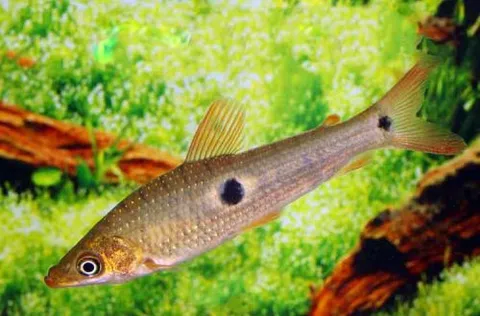
Pseudanos trimaculatus
The Three-spot Anostomus, scientifically known as Pseudanos trimaculatus, belongs to the family Anostomidae, or Headstanders. Previously, this fish was classified as Anostomus trimaculatus, and this name is still found…
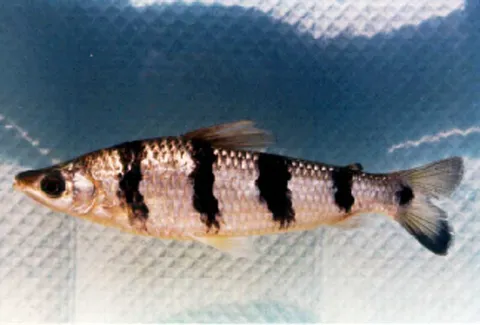
Schizodon fasciatus
The scientific name Schizodon fasciatus refers to the banded Schizodon, a member of the family Anostomidae. This fish is native to South America, where it can be found both in the upper reaches of the Amazon and in…
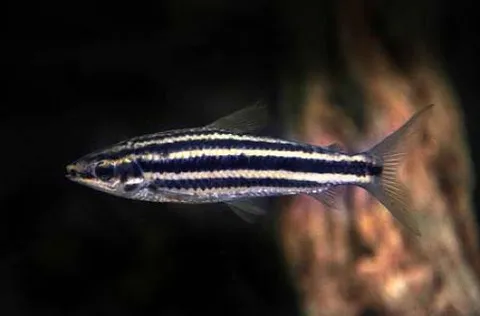
Leporinus striatus
The Four-lined Leporinus, also known as Leporinus striatus, belongs to the family Anostomidae. This fish species inhabits the waters of South America, particularly in the Paraná and Paraguay river basins, covering the…
Anostomus ternetzi
Anostomus ternetzi, or Ternetz's Anostomus, belongs to the family Anostomidae. This species was named after the Swiss ichthyologist Carl Ternetz (1870–1928), who collected the holotype. Along with the Common Anostomus,…