Temperature23 – 27 °C
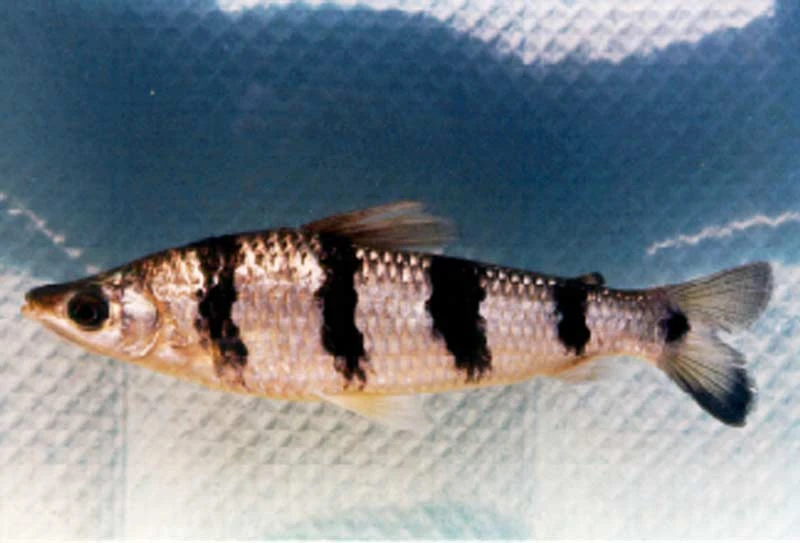
The scientific name Schizodon fasciatus refers to the banded Schizodon, a member of the family Anostomidae. This fish is native to South America, where it can be found both in the upper reaches of the Amazon and in coastal areas near its confluence with the Atlantic Ocean. The wide range of its natural habitat is due to the species' regular migratory movements.
Adults of this fish can reach up to 40 cm in length. Their coloration consists of a silvery background with a pattern of four wide black vertical stripes, as well as a single dark spot at the base of the tail. Sexual dimorphism in the species is weakly expressed; males and females show only minor external differences. Sexual maturity occurs when the fish reaches a size of 18–22 cm. However, breeding in aquarium conditions is difficult, mainly because spawning in the natural environment is preceded by a prolonged migration.
Schizodon fasciatus inhabits the Amazon and Orinoco river basins, as well as coastal waters of French Guiana. In nature, it is a benthopelagic fish, preferring still or slow-moving waters, including floodplain lakes. The species lives in schools and undertakes seasonal migrations. In its natural habitat, water parameters are characterized by a tropical climate with temperatures of 22–28 °C and a wide range of acidity.
They prefer to stay in groups with their own kind. The presence of other peaceful species of comparable size does not bother them. However, if the aquarium is too cramped, smaller tank mates may be attacked. Good compatibility is observed with large catfishes, for example, with representatives of the Loricariidae family.
For a group of 5–6 fish, the optimal aquarium volume starts from 500 L. The decor can be anything, provided there is enough swimming space. When choosing vegetation, preference should be given to species with tough leaves. Species that tolerate the company of herbivorous fish are listed in the article “Aquarium plants”. This species is considered relatively easy to keep if a large tank equipped with appropriate equipment is available. It is extremely important to maintain stable hydrochemical water parameters and a comfortable temperature range. Maintenance is standard: it includes regular removal of organic waste and weekly partial water changes.
Although the species is sometimes classified as omnivorous, in the wild, their diet consists mainly of plant material: fallen leaves, algae, and aquatic plants. Therefore, in a home aquarium, it is recommended to offer foods rich in plant components, and to supplement the diet with pieces of soft fruits, lettuce leaves, and other plant additives.
Breeding of this species in aquarium conditions is poorly understood. It is known that in nature, Schizodon lay eggs in dense thickets of aquatic vegetation, forming pairs. Fish reach sexual maturity when they reach a body length of about 18–22 cm. Special methods for stimulating spawning in captivity have not been developed, so successful cases of obtaining offspring at home are extremely rare.
No diseases that affect only this species have been described. Under suitable conditions — clean water, a balanced diet and calm tank mates — health problems usually do not arise. The most common cause of illness is a decline in conditions: it weakens the immune system, and the fish becomes vulnerable to infections that are always present in an aquarium. At the first signs of trouble — lethargy, wasting, refusal of food or clamped fins — check the basic water parameters and the levels of ammonia, nitrite and nitrate first. Restoring acceptable conditions often lets the fish recover on its own.
When choosing fish, pay attention to the integrity of the fins and the absence of external skin damage. A healthy individual should be active, have a clear stripe pattern, and even breathing. It is recommended to avoid fish with signs of emaciation, sunken bellies, or unnatural behavior, such as constantly hovering at the water surface. Given the territorial nature of the species, it is important to assess compatibility with other aquarium inhabitants in advance.
The essentials: size, tank volume, water parameters and care
An adult reaches 40 cm in length. Plan the tank around the maximum size: the fish quickly outgrows a cramped setup.
The recommended volume is 500 L. A smaller tank speeds up nitrate build-up and raises stress levels.
Temperature 23–27 °C, pH 6.2–7, hardness 3–12 dGH. Stability matters more than exact values: sudden swings are harder on the fish than a small deviation from the ideal.
Around 10 years when kept properly. Lifespan depends directly on tank volume, water quality and a varied diet.
Temperament: semi-peaceful (including aggression during spawning / intraspecific conflicts). Keep this in mind when choosing tank mates.
Recommended setup: small group (5–6 individuals). Ignoring this is a common cause of stress and disease.
Diet type: plant-based (algae, vegetables). Feed small portions that are finished within a couple of minutes — overfeeding does more harm than underfeeding.
The scientific name of the species is Schizodon fasciatus, family Anostomidae. It also appears in the literature as: Anostomus fasciatus, Piabuca schizodon.
The water suits 197 of 208 plants in the catalogue — the easiest ones are shown first.
Afzelius's AnubiasAnacharisAnubiasBrazilian PennywortDwarf CloverDwarf CloverDwarf HygrophilaDwarf SagittariaDwarf ValGuppy GrassHornwortJava FernJava MossMoneywortMud SwordNair's LagenandraNarrow Leaf AnacharisNarrow-leaf CloverStringy MossSüsswassertangTaiwan MossTape GrassTemple PlantUssuri Watermilfoil
Matched by family, categories and overlapping keeping conditions
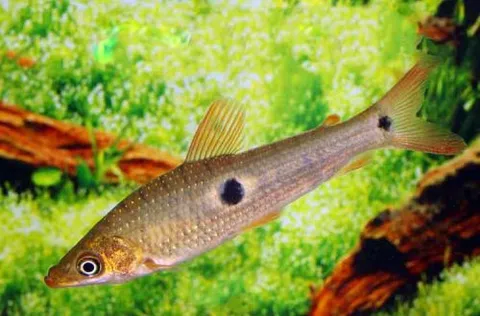
Pseudanos trimaculatus
The Three-spot Anostomus, scientifically known as Pseudanos trimaculatus, belongs to the family Anostomidae, or Headstanders. Previously, this fish was classified as Anostomus trimaculatus, and this name is still found…
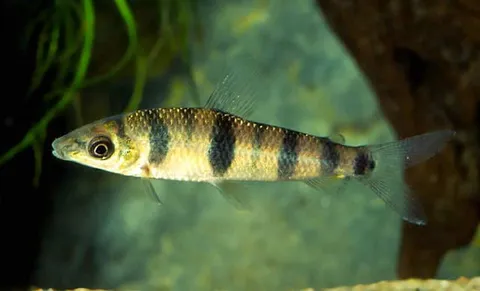
Leporinus pellegrinii
Leporinus pellegrinii, also known as Pellegrin's Leporinus, is a member of the family Anostomidae. Its homeland is the vast expanses of South America; in particular, it is widely distributed throughout the entire length…
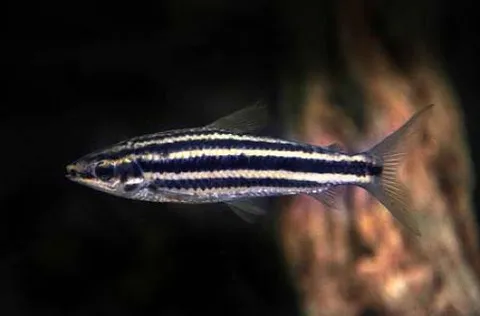
Leporinus striatus
The Four-lined Leporinus, also known as Leporinus striatus, belongs to the family Anostomidae. This fish species inhabits the waters of South America, particularly in the Paraná and Paraguay river basins, covering the…
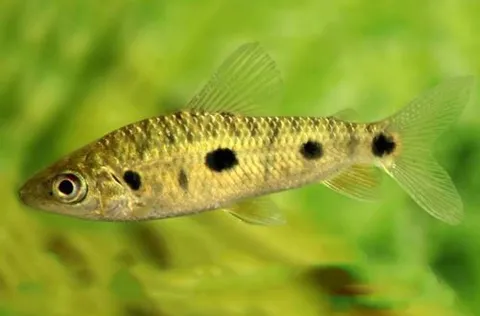
Leporinus steyermarki
Leporinus steyermarki, also known as the Venezuelan Leporinus, is a representative of the family Anostomidae. This fish was named in honor of Julian Steyermark, who led a botanical expedition to Venezuela in 1953 and…