Temperature22 – 29 °C
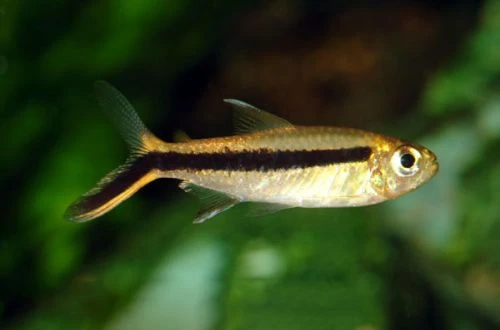
The Crooked-Striped Thayeria, widely known as the Penguin Tetra, with the scientific name Thayeria boehlkei, is a member of the Acestrorhamphidae family. These fish are characterized by their cheerful, energetic, and peaceful nature. They are unpretentious and hardy, easily adapting to various conditions and simple to breed, making them an excellent addition to almost any freshwater tropical aquarium. Due to their undemanding nature, they are well-suited for beginner aquarists.
In English-speaking countries, this species is often called the “hockey stick fish.” This name is due to the presence of a wide dark horizontal stripe that runs along the fish's body and bends on its tail, resembling the shape of a hockey stick.
This species is native to South America, specifically the territory of modern Brazil. One of its numerous populations inhabits the Araguaia River basin, one of the largest on the continent. Thayerias live in diverse natural conditions, from small streams and rivers with clear flowing water to swamps with lush and dense vegetation.
This peaceful and very active species coexists perfectly with other active fish of similar size. The optimal option is to house them with representatives of South American fauna, such as various types of tetras (for example, Glowlight Tetra, Rummy-nose Tetra, Rosy Tetra, Callistus Tetra, Diamond Tetra, and Lemon Tetra), Corydoras catfish or Armored catfish, as well as Barbs and many others.
Thayeria boehlkei can successfully adapt to a wide range of pH and dGH values. For successful keeping, it is important to provide subdued lighting and weak water flow, or its complete absence. Although the aquarium decor can be anything, the fish look most natural in conditions close to their natural environment. To simulate a river biotope, it is advisable to use snags, twisted tree roots, smooth stones, and rock fragments, as well as floating and rooted plants against a dark sandy substrate. If the aquarium is designed to mimic a swampy river section, fallen tree leaves are added to the listed elements. As they decompose, they enrich the water with tannins and give it a slight brown tint. Oak leaves are perfect for these purposes; before placing them in the aquarium, they must be dried and then soaked until they begin to sink. An important element characteristic of swamps is peat. It can be used in filtration systems or added directly to the water, for example, in canvas bags. Peat should only be purchased from specialized pet stores, ensuring it has already been processed.
In aquarium conditions, Thayeria boehlkei readily accepts all types of food: dry, frozen, and live. To maintain optimal health and vibrant coloration, it is recommended to combine them in the daily diet. Feeding only one type of food should be avoided, as this can lead to reduced vitality, lethargy, and loss of color intensity in the fish.
Breeding this species is not particularly difficult and does not require special conditions; spawning can even occur in a community tank. However, with this approach, fry survival will be extremely low, as they can become prey for both other aquarium inhabitants and their own parents. Therefore, if you are seriously planning to breed them, you should provide a separate tank — a breeding aquarium. Adult fish are transferred to it for the breeding period. Typically, such a breeding tank has a volume of 20 liters or more. Dense thickets of fine-leaved aquarium plants or mosses, such as Java moss and floating Riccia, which is anchored to the bottom, are used for decoration, providing reliable protection for the eggs. An alternative effective method is to use a fine-mesh net placed above the substrate. Minimal equipment is sufficient: a simple sponge air-driven filter and a heater. A special lighting system is not required, as ambient room light will be quite enough. To stimulate the breeding period, it is necessary to raise the temperature to the upper limit of the permissible range and start feeding the fish predominantly live or frozen food. After some time, you may notice that some Thayerias become noticeably rounded — these are females full of roe. After this, fish of both sexes are carefully transferred to the breeding tank, where one only needs to wait for spawning to begin, which may take several days. Once spawning is complete, the new parents are returned to the main aquarium. Fry hatch within 12–24 hours, and they begin to swim freely, exploring their surroundings, on the 3rd day. They should be fed microscopic food, available in pet stores, or so-called “infusoria” — paramecia and Artemia nauplii.
A balanced aquarium ecosystem with optimal keeping conditions is the best measure for disease prevention. If signs of illness are detected, such as unusual behavior or rashes on the body, the first step is to check the water quality and parameters. Only after this should treatment begin. Often, simply adjusting the keeping conditions to optimal values is enough to eliminate the problem.
When choosing Thayeria boehlkei, pay attention to the overall activity of the school in the display aquarium: healthy fish are constantly moving, exhibiting their characteristic angled swimming style. Avoid individuals with signs of emaciation, sunken bellies, damaged fins, or film on the body, as the species is sensitive to water quality and transport conditions. — Choose fish from the same batch to minimize stress during adaptation. — Ensure there are no visible wounds or ulcers, which may indicate bacterial infections. — Purchase at least 6–10 individuals, as fish become timid and stressed when alone.
The essentials: size, tank volume, water parameters and care
An adult reaches 7 cm in length. Plan the tank around the maximum size: the fish quickly outgrows a cramped setup.
The recommended volume is 70 L. A smaller tank speeds up nitrate build-up and raises stress levels.
Temperature 22–29 °C, pH 5.5–8, hardness 3–20 dGH. Stability matters more than exact values: sudden swings are harder on the fish than a small deviation from the ideal.
Around 5 years when kept properly. Lifespan depends directly on tank volume, water quality and a varied diet.
Temperament: peaceful, active/mobile. Keep this in mind when choosing tank mates.
Recommended setup: medium group (6–8 individuals). Ignoring this is a common cause of stress and disease.
Diet type: any (universal). Feed small portions that are finished within a couple of minutes — overfeeding does more harm than underfeeding.
The scientific name of the species is Thayeria boehlkei, family Acestrorhamphidae.
The water suits 198 of 208 plants in the catalogue — the easiest ones are shown first.
Afzelius's AnubiasAnacharisAnubiasBrazilian PennywortDwarf CloverDwarf CloverDwarf HygrophilaDwarf SagittariaDwarf ValGuppy GrassHornwortJava FernJava MossMoneywortMud SwordNair's LagenandraNarrow Leaf AnacharisNarrow-leaf CloverStringy MossSüsswassertangTaiwan MossTape GrassTemple PlantUssuri Watermilfoil
Matched by family, categories and overlapping keeping conditions
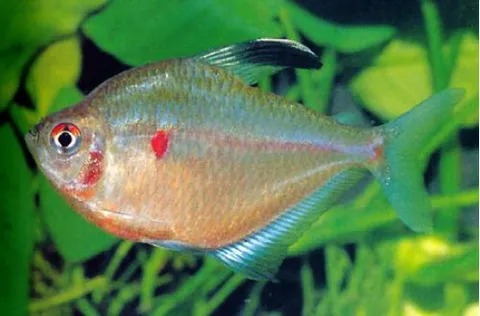
Megalamphodus erythrostigma
The Red-Spotted Tetra, also known as Rubrostigma or Ornate Red-Spotted Tetra (scientific name Megalamphodus erythrostigma), belongs to the Acestrorhamphidae family. This active, peaceful fish, distinguished by its…
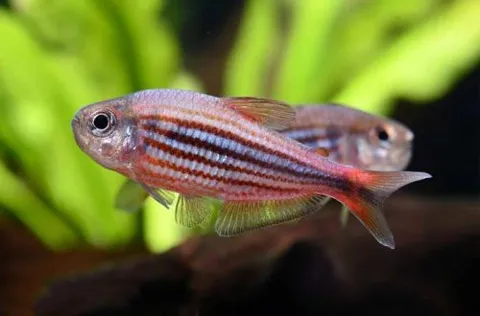
Moenkhausia agnesae
Moenkhausia agnesae, known in scientific literature as Moenkhausia agnesae, belongs to the Acestrorhamphidae family. This fish is native to South America, specifically found in the upper reaches of the Amazon River. It…
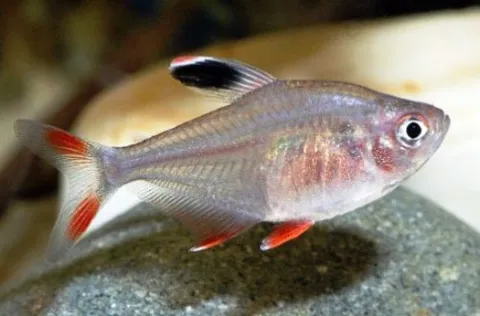
Megalamphodus bentosi
The Ornate Tetra, also known as the Common Ornate Tetra or by its scientific name Megalamphodus bentosi, belongs to the family Acestrorhamphidae. This species is a classic representative of the extensive group of…
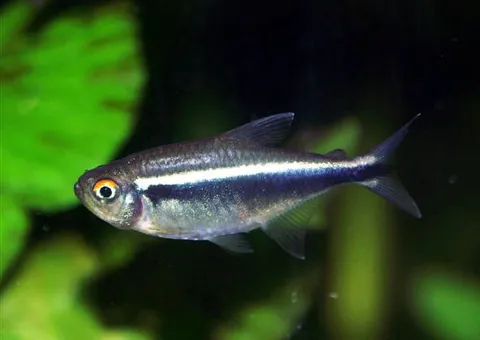
Hyphessobrycon herbertaxelrodi
Hyphessobrycon herbertaxelrodi, also known as the Black Neon Tetra, belongs to the family Acestrorhamphidae. This fish is characterized by its energetic nature and attractive appearance, especially due to the bright,…