Temperature18 – 22 °C
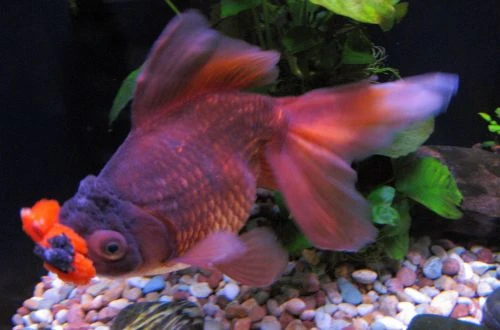
The true history of the origin of Goldfish remains somewhat unclear. Nevertheless, only two countries are often cited as their possible ancestral home: Japan and China. Pompon-type goldfish have a unique characteristic — noticeably enlarged nasal septa, which are usually almost invisible. These form distinctive growths on the nose, varying in size and shape.
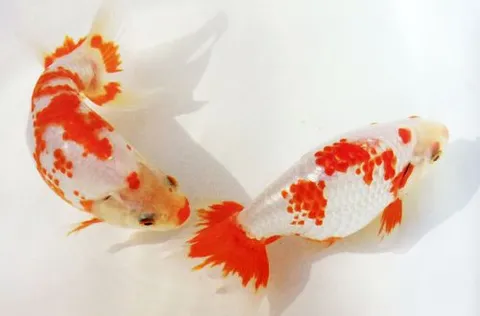
The Pompon Goldfish is a selectively bred, short-bodied form of goldfish characterized by fleshy growths near the nostrils, resembling fluffy pompons. These formations develop from the nasal septa and can reach 10 mm in diameter. The fish's body is rounded, and the back is usually smoothly curved. Depending on the breed standard, the dorsal fin may be absent, while the anal and caudal fins are always bifurcated. Adults reach 15–16 cm in length. Coloration is varied, with contrasting combinations of body color and growths being highly prized.
This species is not found in natural conditions, as it is the result of centuries of selective breeding of the silver crucian carp. The fish are fully adapted to life in artificial reservoirs and require constant human care. They are unable to survive in nature with such a body shape and specific growths.
Peaceful and calm fish, exhibiting low activity compared to their wild relatives. It is recommended to keep them in a group of several individuals, as they may experience stress when alone. They are compatible only with slow-moving and calm tank mates; active fish species may nip their fins and delicate nasal growths.
For keeping, a spacious aquarium of at least 100 liters for a pair of individuals is required. Powerful filtration and regular water changes are important, as these fish produce a lot of organic waste. It is recommended to use large, rounded substrate that the fish cannot swallow while searching for food. Plants with tough leaves and a strong root system are preferred, as the fish may damage delicate greenery.
An omnivorous species. The diet should include specialized dry foods for goldfish, as well as vegetable supplements: lettuce leaves, spinach, or duckweed. Feeding should be done in small portions 2–3 times a day. It is important to monitor the quality of nutrition to prevent digestive problems, which are characteristic of short-bodied breeds.
Breeding is possible in home aquariums but requires preparation of the parent fish. Spawning is stimulated by increasing water temperature and simulating a spring period. Eggs are laid on fine-leaved plants. After spawning, the parent fish should be removed to prevent them from eating the eggs. Fry are fed specialized starter foods.
They are most susceptible to diseases of the digestive system and swim bladder, which are often associated with improper feeding or poor water quality. Injuries to the head growths can also occur from contact with sharp decor. Prevention involves maintaining cleanliness in the aquarium and a balanced diet.
When choosing, attention should be paid to the fish's activity and the cleanliness of its skin. Healthy individuals should have symmetrical growths on their heads, clean fins without signs of damage or film, and a rounded body shape without indentations. Avoid purchasing fish with signs of lethargy, damaged growths, or an unnaturally bloated abdomen.
The essentials: size, tank volume, water parameters and care
An adult reaches 15 cm in length. Plan the tank around the maximum size: the fish quickly outgrows a cramped setup.
The recommended volume is 110 L. A smaller tank speeds up nitrate build-up and raises stress levels.
Temperature 18–22 °C, pH 6–8, hardness 5–19 dGH. Stability matters more than exact values: sudden swings are harder on the fish than a small deviation from the ideal.
Around 15 years when kept properly. Lifespan depends directly on tank volume, water quality and a varied diet.
Temperament: semi-peaceful (dangerous to smaller ones). Not a predatory species, but small fish that fit in its mouth will eventually be eaten.
Recommended setup: pair (male/female). Ignoring this is a common cause of stress and disease.
Diet type: any (universal). Feed small portions that are finished within a couple of minutes — overfeeding does more harm than underfeeding.
The scientific name of the species is Carassius auratus, family Cyprinids (Cyprinidae). It also appears in the literature as: Carasius auratus, Carassius buergeri, Carassius burgeri.
The water suits 196 of 208 plants in the catalogue — the easiest ones are shown first.
Afzelius's AnubiasAnacharisAnubiasBrazilian PennywortDwarf CloverDwarf CloverDwarf HygrophilaDwarf SagittariaDwarf ValGuppy GrassHornwortJava FernJava MossMoneywortMud SwordNarrow Leaf AnacharisNarrow-leaf CloverStringy MossSüsswassertangTaiwan MossTape GrassTemple PlantUssuri WatermilfoilWater Wisteria
Matched by family, categories and overlapping keeping conditions
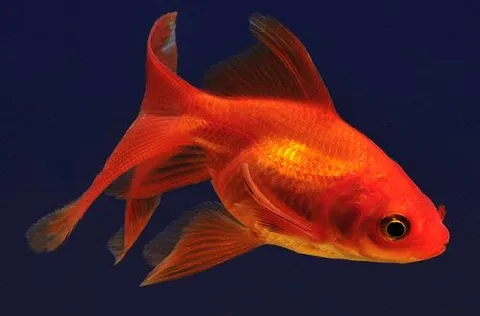
Carassius auratus
Among the decorative species of aquarium fish, Fantail Goldfish and their Japanese counterparts, Ryukin, hold a special place. These fish are specifically bred for various exhibitions, showcasing their unique beauty.…
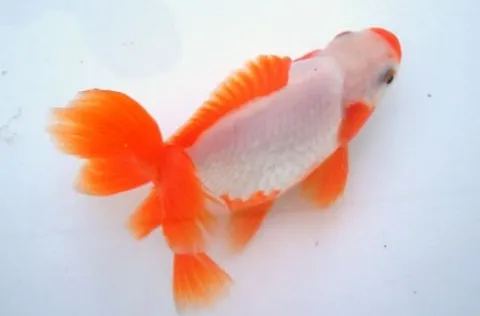
Carassius auratus
Among the many varieties of Goldfish, the Jikin is the rarest. It is almost impossible to find in amateur aquariums, as its distribution has been significantly restricted since 1958, when it was listed as a protected…
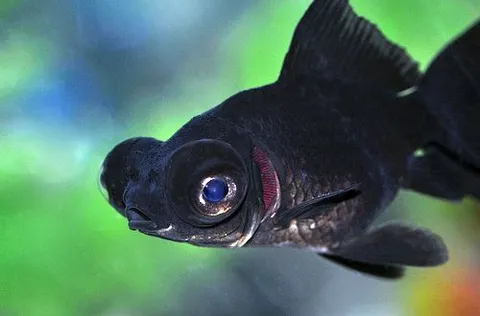
Carassius auratus
Among the varieties of Telescope Goldfish, the Black Moor stands out, known as the Black Moor Goldfish. This fish is easily recognized by its short, rounded or egg-shaped body and characteristic large eyes that…
Carassius auratus
This interesting variety of goldfish came into being between 1748 and 1750, having been bred in the Japanese Izumo region, now known as Shimane Prefecture. Curiously, despite its Japanese origin, the fish's name has…