Temperature18 – 22 °C
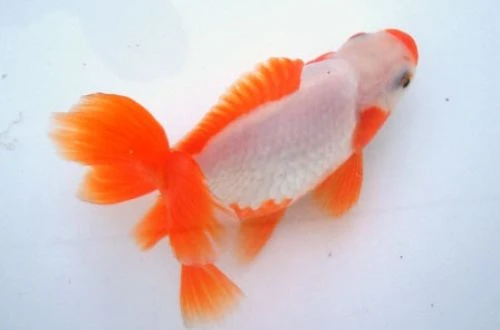
Among the many varieties of Goldfish, the Jikin is the rarest. It is almost impossible to find in amateur aquariums, as its distribution has been significantly restricted since 1958, when it was listed as a protected species in Aichi Prefecture, Japan. The history of this unique fish dates back to the 17th century. At that time, the Ryukin was bred from the common Goldfish, and it was a side branch of this selective breeding that led to the emergence of the Jikin. For many hundreds of years, its development was actively carried out in the region now known as Nagoya Prefecture.
The Jikin is a rare selectively bred form of goldfish, developed in Japan. Its body has a streamlined shape, similar to a Wakin, but shorter and wider. The main feature of the breed is its caudal fin, which is divided into four lobes that form an “X” shape when viewed from behind. Due to this characteristic, the fish is often called the “peacock tail.” The standard coloration implies a white body with bright red or orange areas on the lips, gill covers, and all fins. Adult specimens reach a size of about 15 cm.
The species is an artificially bred selective form and is not found in the wild. Historically, the breed developed in Japan, in the Nagoya region (Aichi Prefecture), where it is still considered a cultural heritage and a protected species. In aquarium conditions, it requires stable water parameters consistent with the keeping of other ornamental goldfish varieties.
The Jikin has a peaceful and calm temperament. It is an active fish that coexists well with its own kind and other non-aggressive species of similar size. Intraspecific aggression is practically absent. Due to the peculiarities of their fin structure and their slowness compared to ordinary fish, Jikins are best kept in a species-specific tank or with other calm goldfish.
For keeping one specimen, an aquarium of at least 75 liters is required, but more spacious tanks are preferable. Water parameters: temperature 18–22°C, pH 6.0–8.0, hardness 5–19 dGH. Powerful filtration and regular water changes are necessary, as the fish produce a lot of organic waste. Fine gravel or sand is best used as substrate to avoid fin damage. Lighting should be moderate, with open swimming areas.
The Jikin is an omnivorous fish. The diet should include both dry foods in the form of flakes or pellets, and vegetable supplements, which are necessary for normal digestion. Periodic feeding with live or frozen foods is beneficial. It is important to avoid overfeeding and products high in fat. Feeding frequency is 1–2 times a day in small portions that the fish can consume within a few minutes.
Breeding jikin is considered a challenging task even for experienced aquarists. Spawning is paired or group, usually stimulated by an increase in water temperature. Eggs are laid on fine-leaved plants or substrate. Parents tend to eat the eggs, so they should be removed immediately after the process is complete. Fry grow slowly and require careful care and sorting, as only a small portion of the offspring inherit the ideal breed characteristics.
The fish are sensitive to water quality; the accumulation of ammonia and nitrites quickly leads to diseases. Fin infections, such as fin rot, and parasitic infestations, for example, ichthyophthiriasis, are common. Prevention includes maintaining cleanliness in the aquarium, avoiding sudden temperature fluctuations, and quarantining new specimens. Due to their selective breeding, they may be predisposed to swim bladder problems.
When purchasing, choose active fish with clean fins, free from signs of damage, film, or ulcers. A healthy jikin should have clear eyes and even breathing. It is important to consider that the breed is extremely rare, so a high price and the need for proof of origin are common factors. It is recommended to observe the fish's behavior in the store: avoid specimens that stay near the surface or lie on the bottom.
The essentials: size, tank volume, water parameters and care
An adult reaches 15 cm in length. Plan the tank around the maximum size: the fish quickly outgrows a cramped setup.
The recommended volume is 100 L. A smaller tank speeds up nitrate build-up and raises stress levels.
Temperature 18–22 °C, pH 6–8, hardness 5–19 dGH. Stability matters more than exact values: sudden swings are harder on the fish than a small deviation from the ideal.
Around 15 years when kept properly. Lifespan depends directly on tank volume, water quality and a varied diet.
Temperament: semi-peaceful (dangerous to smaller ones). Not a predatory species, but small fish that fit in its mouth will eventually be eaten.
Recommended setup: mixed (solitary / pair / group). Ignoring this is a common cause of stress and disease.
Diet type: any (universal). Feed small portions that are finished within a couple of minutes — overfeeding does more harm than underfeeding.
The scientific name of the species is Carassius auratus, family Cyprinids (Cyprinidae). It also appears in the literature as: Carasius auratus, Carassius buergeri, Carassius burgeri.
The water suits 196 of 208 plants in the catalogue — the easiest ones are shown first.
Afzelius's AnubiasAnacharisAnubiasBrazilian PennywortDwarf CloverDwarf CloverDwarf HygrophilaDwarf SagittariaDwarf ValGuppy GrassHornwortJava FernJava MossMoneywortMud SwordNarrow Leaf AnacharisNarrow-leaf CloverStringy MossSüsswassertangTaiwan MossTape GrassTemple PlantUssuri WatermilfoilWater Wisteria
Matched by family, categories and overlapping keeping conditions
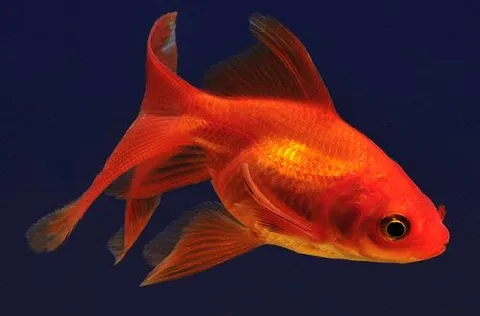
Carassius auratus
Among the decorative species of aquarium fish, Fantail Goldfish and their Japanese counterparts, Ryukin, hold a special place. These fish are specifically bred for various exhibitions, showcasing their unique beauty.…
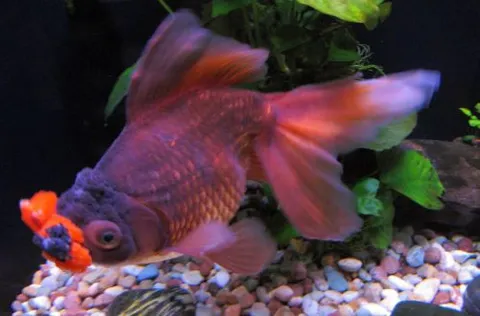
Carassius auratus
The true history of the origin of Goldfish remains somewhat unclear. Nevertheless, only two countries are often cited as their possible ancestral home: Japan and China. Pompon-type goldfish have a unique characteristic…
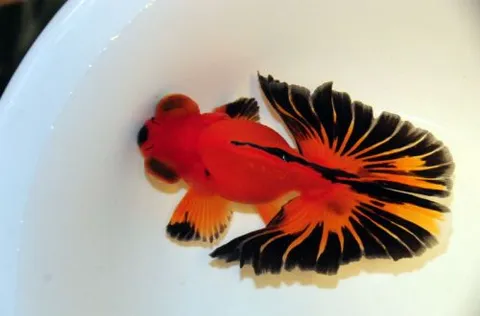
Carassius auratus
This relatively young goldfish breed only became widespread in the 1980s. It originated in China, although nowadays its main supplies come from Japan. This breed is the result of further selective breeding of the…
Carassius auratus
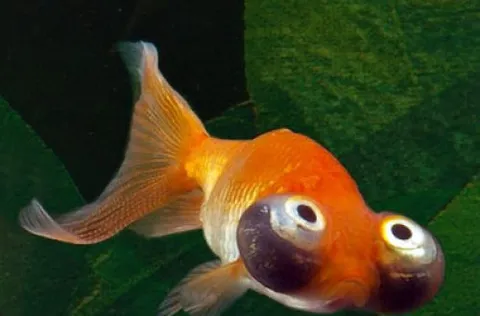
The Celestial, or Stargazer, is a unique variety of goldfish characterized by an unusual eye structure. The eyes of this fish protrude significantly from the sides of the head and are always directed upwards. The…