Temperature23 – 27 °C
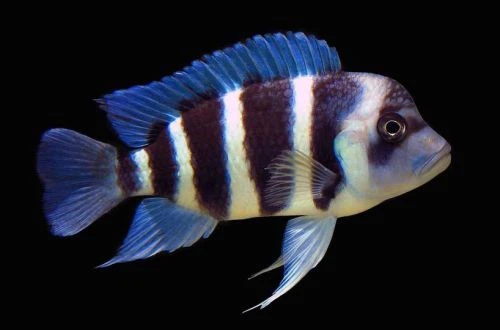
Cyphotilapia frontosa, or the Humphead Cichlid Zebra, also known as the Queen of Tanganyika, belongs to the Cichlidae family. In common parlance, it is often called Frontosa Blue, which is a Russian pronunciation of the English trade name “Blue Zaire Mikula”.
Adults can reach a length of 25 cm. This species has a prominent hump on its forehead, which is much more pronounced in males. Other external differences between the sexes are subtle. The body coloration is characterized by broad dark vertical stripes on a light background, and the fins and tail can be blue or dark blue.
The species is endemic to the African Lake Tanganyika, where it inhabits the northern part of the water body. Frontosas prefer deep-water areas at depths of 20 to 60 meters or more, staying in rocky biotopes with an abundance of boulders and crevices. In nature, the water in these places is characterized by high hardness, alkaline reaction (pH 8.0–9.0), and high parameter stability, which is due to the significant depth of their habitat.
It is recommended to keep these fish in groups of at least 6–10 individuals. Within the group, relationships are built on the dominance of one or two alpha males, who have the right to mate with females. Their attitude towards other species depends entirely on their size. Fish of similar size are not threatened, while smaller species may be eaten.
For a group of 6–10 fish, a spacious aquarium of 800–1000 liters will be required. For decoration, it is sufficient to use a substrate of sand or gravel, as well as piles of stones and rock formations. From these materials, shelters in the form of caves and grottoes are formed. Simple ceramic pots, tipped on their side, or various decorative objects will also serve as shelters. Lighting should be subdued, imitating the natural conditions in the water column. The presence of aquatic plants is not required. Given the size of the fish and their diet, it is important to pay special attention to water quality and its hydrochemical composition. In addition to weekly water changes of 20–25% of the volume, it is necessary to install a powerful filtration system and regularly clean the substrate from organic waste.
The species is a carnivorous predator. In the wild, its diet consists of small fish, invertebrates, mollusks, as well as algae, which are consumed when prey is eaten from rocks and stones. In an aquarium environment, it is recommended to offer high-quality foods such as live or frozen brine shrimp, mosquito larvae, shrimp and mussel meat. Additionally, vegetable supplements, such as spirulina flakes, should be included. The use of live small fish for feeding is not mandatory. Specialized foods from some manufacturers, developed for predatory cichlids of Lakes Malawi and Tanganyika, are available for sale and can be an excellent alternative. They must not be fed mammalian or avian meat: the lipids it contains cannot be properly metabolised by the fish and lead to excess fat deposits and even organ degeneration.
Male frontosas are polygamous, so they should be kept with at least 3–4 females. When the breeding season arrives and there is a suitable cave-like shelter in the aquarium, the female lays several dozen large eggs. After fertilization, she collects the eggs in her mouth. For the next 35–50 days, the eggs, and then the fry, remain in the female's mouth until they reach a certain size, after which they begin to swim independently. During this period, the fry feed inside the female's mouth on micro-food that she ingests. If a cave or grotto is absent, spawning can occur directly on the open substrate, but this deprives the female of shelter and can lead to harassment by the male and other fish.
Inappropriate keeping conditions and poor-quality food are the main causes of most diseases in Lake Tanganyika cichlids, often leading to ailments such as African bloat. Upon detecting the first symptoms, it is extremely important to check water parameters and ensure the absence of high concentrations of ammonia, nitrites, nitrates, and other dangerous substances. If necessary, all parameters should be normalized, and only then should treatment begin.
When selecting individuals, attention should be paid to the purity of coloration: dark stripes should be clearly defined, and light areas of the body should not have a gray or cloudy film, which often indicates stress or poor health. Fish should be active, have clear eyes without cloudiness, and breathe evenly. Specimens with signs of emaciation, sunken bellies, or skin damage should be avoided. It is recommended to acquire young individuals from the same group, as adult fish adapt to new conditions with more difficulty.
The essentials: size, tank volume, water parameters and care
An adult reaches 22–25 cm in length. Plan the tank around the maximum size: the fish quickly outgrows a cramped setup.
The recommended volume is 800 L. A smaller tank speeds up nitrate build-up and raises stress levels.
Temperature 23–27 °C, pH 8–9, hardness 10–25 dGH. Stability matters more than exact values: sudden swings are harder on the fish than a small deviation from the ideal.
Around 20 years when kept properly. Lifespan depends directly on tank volume, water quality and a varied diet.
Temperament: semi-peaceful (dangerous to smaller ones). Not a predatory species, but small fish that fit in its mouth will eventually be eaten.
Recommended setup: group (8–10 individuals). Ignoring this is a common cause of stress and disease.
Diet type: mixed diet (meat + plant-based). Feed small portions that are finished within a couple of minutes — overfeeding does more harm than underfeeding.
The scientific name of the species is Cyphotilapia frontosa, family Cichlids (Cichlidae). It also appears in the literature as: Paratilapia frontosa, Pelmatochromis frontosus.
The water suits 71 of 208 plants in the catalogue — the easiest ones are shown first.
Amazon SwordAnacharisArrowhead CryptAsian WatermossBalansa Water TrumpetBarth's SwordBlue BuceBoivin's AponogetonCreeping JennyCrinkled AponogetonDelta ArrowheadDitch StonecropDwarf CloverDwarf CloverDwarf HairgrassEelgrassGuppy GrassHornwortMoneywortMud SwordNair's LagenandraNarrow Leaf AnacharisNarrow-leaf CloverUssuri Watermilfoil
Matched by family, categories and overlapping keeping conditions
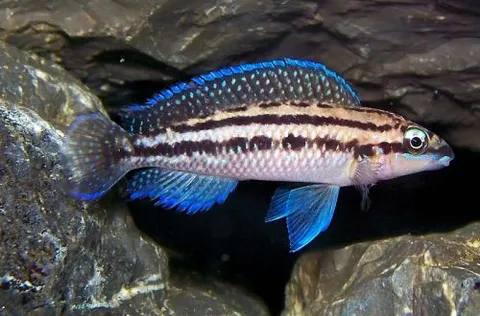
Julidochromis dickfeldi
Julidochromis dickfeldi, scientifically known as Julidochromis dickfeldi, belongs to the Cichlidae family. These fish form strong pair bonds and display pronounced jealousy towards their conspecifics. However, they can…
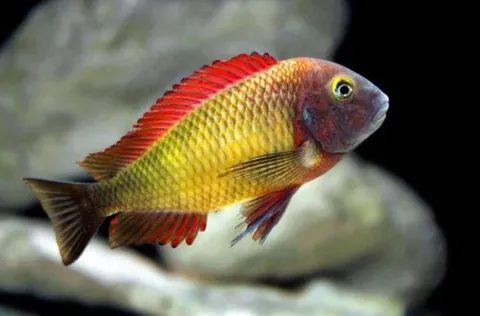
Tropheus moorii
Tropheus moorii, known as the Tropheus moorii or Blunt-nosed Cichlid, belongs to the family Cichlidae. This species is endemic to East Africa's Lake Tanganyika, preferring to inhabit shallow waters among rocky…
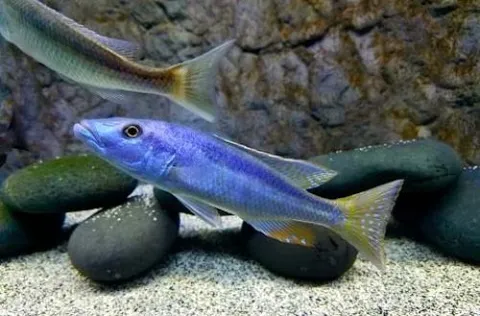
Champsochromis caeruleus
Champsochromis, also known as the Trout Cichlid, bears the scientific name Champsochromis caeruleus and belongs to the family Cichlidae. This species is endemic to Lake Malawi, also known by its older name, Lake Nyasa.…
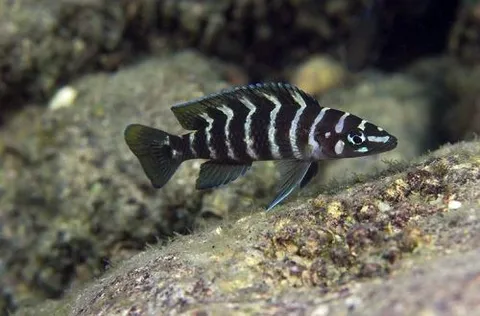
Neolamprologus cylindricus
Lamprologus cylindricus, or Neolamprologus cylindricus, belongs to the family Cichlidae. It is an unpretentious fish to keep and is easy to breed. Nevertheless, its aggressive nature seriously limits the choice of…