Temperature20 – 28 °C
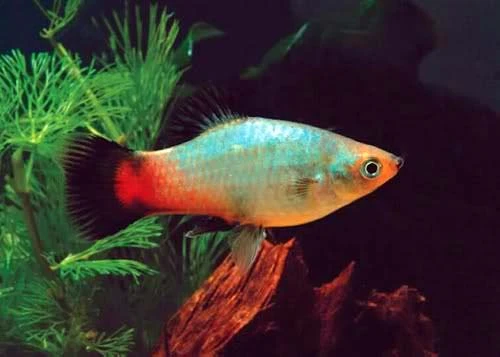
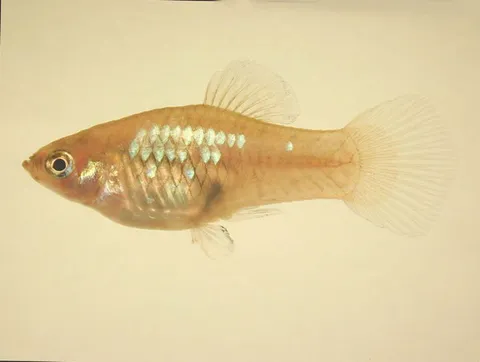
The Rainbow Platy, also known by its English trade name Platy Rainbow, is an artificially bred color variation of the common Platy (Xiphophorus maculatus). This fish is not found in the wild. Its body has an iridescent greenish-blue hue, a silvery belly, and a tail distinguished by a red base and a black fin.
The Rainbow Platy is a selective breeding form, possessing a compact, rounded body with a relatively large head. Adult males reach 5 cm in length, while females are larger and can grow up to 7 cm. Unlike their drab wild relatives, ornamental specimens are distinguished by a variety of colors, including combinations of red, gold, blue, and green shades. Sexual dimorphism is clearly expressed: males have a gonopodium — a modified anal fin used for fertilization.
In nature, the species inhabits river systems of Central America, including water bodies in Mexico and Nicaragua. The fish prefer shallow areas with slow currents, backwaters, swamps, and flooded pastures densely overgrown with aquatic vegetation. The natural environment is characterized by a wide range of temperatures and water hardness, which explains the high adaptability of the species to aquarium conditions.
These are peaceful and active fish, suitable for community tanks. They get along well with similarly sized species, such as swordtails or guppies. Intraspecific relationships are characterized by relative tolerance, but to reduce competition among males, it is recommended to keep a group where the number of females predominates over the number of males.
The unpretentiousness of Rainbow Platies makes them an excellent choice for beginner aquarists. For keeping 3–4 individuals, an aquarium of 50–60 liters is sufficient. It is important to provide it with dense plant thickets, which serve as shelters and a potential food source. Platies need plant-based food, so they may lightly nibble on soft plant parts or algae. Therefore, it is recommended to choose hardy varieties such as Anubias, Vallisneria, as well as various types of aquatic mosses and ferns. Although the fish are quite adaptable, they prefer warm, slightly alkaline water. Maintaining an optimal habitat requires regular aquarium maintenance, including partial water changes and waste removal, as well as the uninterrupted operation of equipment and a balanced diet. Often, water quality deterioration occurs due to overfeeding: uneaten food residues begin to decompose, which is especially common among beginner aquarists.
There is a universal recommendation regarding feeding: at one time, you should give as much food as the fish can eat in 5 minutes. If the water temperature is cool, one feeding per day is sufficient. Choosing suitable food will not be difficult, as these fish readily accept most popular dry, frozen, and live foods.
As with most livebearing species, breeding platies presents no particular difficulties, and no specific conditions are required for it. Fry will appear almost guaranteed in any freshwater aquarium where mature male and female are present. However, parental instincts in these fish are poorly developed, and they may eat their offspring. In a spacious aquarium with enough hiding places, many fry can survive and reach adulthood. If the goal is to save the entire brood, the fry should be transferred to a separate tank.
Platies have strong immunity, especially individuals phenotypically close to their wild ancestors. Diseases most often arise from violations of keeping conditions or abrupt changes in water parameters. The most common problems include bacterial infections and fungal lesions, which occur due to poor aquarium hygiene. Prevention involves regular water changes and maintaining stable hydrochemical parameters.
When selecting fish, attention should be paid to the cleanliness of the skin and the absence of plaque or spots. Healthy individuals should be active, show interest in food, and have a plump, not emaciated body. Avoid purchasing fish from aquariums where dead or obviously sick specimens are present, as the risk of transferring infection to your home system is very high.
The essentials: size, tank volume, water parameters and care
An adult reaches 5–7 cm in length. Plan the tank around the maximum size: the fish quickly outgrows a cramped setup.
The recommended volume is 60 L. A smaller tank speeds up nitrate build-up and raises stress levels.
Temperature 20–28 °C, pH 7–8.2, hardness 10–30 dGH. Stability matters more than exact values: sudden swings are harder on the fish than a small deviation from the ideal.
Around 4 years when kept properly. Lifespan depends directly on tank volume, water quality and a varied diet.
Temperament: peaceful (regular). Keep this in mind when choosing tank mates.
Recommended setup: mixed (solitary / pair / group). Ignoring this is a common cause of stress and disease.
Diet type: any (universal). Feed small portions that are finished within a couple of minutes — overfeeding does more harm than underfeeding.
The scientific name of the species is Xiphophorus maculatus, family Poeciliidae. It also appears in the literature as: Platypoecilus aurata, Platypoecilus cyanellus, Platypoecilus maculatus.
The water suits 114 of 208 plants in the catalogue — the easiest ones are shown first.
African Onion PlantAfzelius's AnubiasAmazon FrogbitAmazon SwordAnacharisAnubiasArrowhead CryptDwarf CloverDwarf CloverDwarf HygrophilaDwarf SagittariaDwarf ValGuppy GrassHornwortJava MossMoneywortMud SwordNair's LagenandraNarrow Leaf AnacharisNarrow-leaf CloverStringy MossTaiwan MossTape GrassUssuri Watermilfoil
Matched by family, categories and overlapping keeping conditions
Xiphophorus maculatus
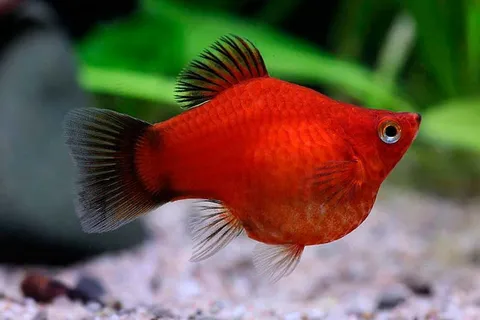
The Balloon Platy, also known as the Disc Platy, is known in the English-speaking commercial world as the Balloon Platy. A distinctive feature of this fish is its peculiar appearance: it has a strongly arched, hunched…
Xiphophorus maculatus
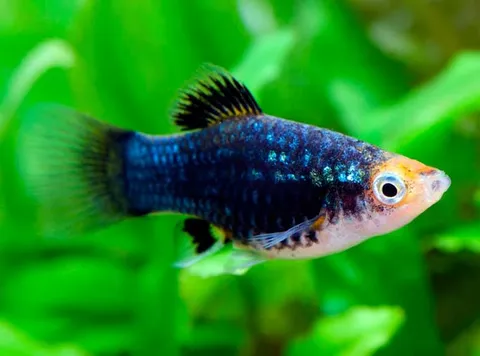
Platy Black is the trade name for this variety of Black Platy in the English-speaking market. This fish is not found in nature, as it is an artificially bred color variation derived from the common Platy (Xiphophorus…
Xiphophorus maculatus
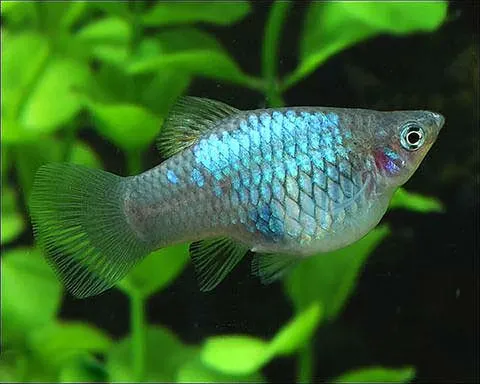
The Blue Platy, also known by the commercial English names Platy Blue, Blue Moon Platy, and Platy Neon Blue, is a selectively bred form of the common Platy and does not exist in the wild. Its main distinguishing feature…
Xiphophorus maculatus
The Platy, or Spotted Platy (scientific name Xiphophorus maculatus), belongs to the family Poeciliidae. Its hardiness and vibrant coloration make it one of the most sought-after aquarium fish. However, it should be…