Temperature20 – 28 °C
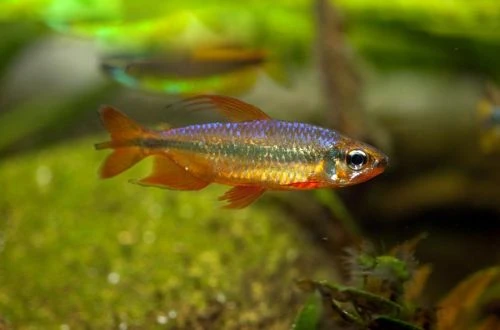
Alestopetersius brichardi is the scientific name for this species, which belongs to the family Alestidae (African Tetras). In the aquarium hobby, it is known by various names: Red Congo Tetra, Cherry Congo Tetra, or Brichard's Congo Tetra, named after the Belgian ichthyologist Pierre Brichard. Sometimes another synonymous designation can be found – Cherry Red Congo Tetra. This fish has gained wide popularity among aquarists due to its bright coloration, unpretentious care, and good compatibility with many other freshwater tankmates. All these qualities make it an excellent choice for a home aquarium.
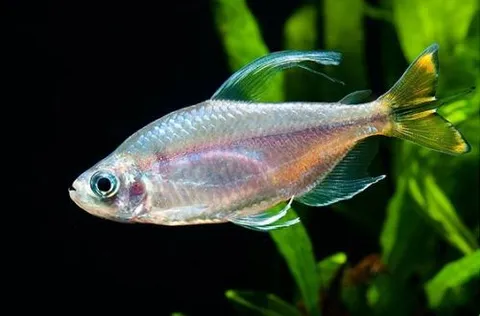
Adult specimens of this fish reach a length of 7 to 8 cm. Males are distinguished by brighter coloration and elongated fins compared to females. A characteristic feature is the elongated central rays of the caudal fin, creating a distinctive protrusion. The outer rays of the dorsal fin are curved and resemble a sickle or an inverted crescent. The overall coloration of the fish is reddish, becoming significantly more intense during the breeding season. A distinct dark horizontal stripe runs along the entire length of the body, from head to tail.
The natural habitat of these fish is the middle basin of the Congo River, located on the African continent, within the Democratic Republic of Congo. They prefer to live in small streams and tributaries of large rivers flowing through dense equatorial forests. Typically, the beds of these water bodies are abundant with snags, fallen leaves, and various aquatic vegetation, among which the fish find shelter.
Red Congo Tetras are known as peaceful, schooling fish, and it is recommended to keep them in groups of at least 8–10 individuals. If kept in small numbers or in an aquarium with large fish, they may exhibit shyness. This species coexists well with other non-predatory and non-aggressive tankmates of comparable size.
For a group of 8–10 of these fish, the optimal aquarium volume starts from 100 liters. The aquascape is at the discretion of the aquarist and can be chosen arbitrarily. However, it has been observed that fish display their brightest and most vibrant colors in conditions that closely mimic their natural environment: shaded areas with abundant driftwood and aquatic vegetation. While this is only one factor influencing coloration, its significance should not be underestimated. It is important to note that Cherry Congo Tetras require high water quality. When keeping them, it is necessary to maintain stable water parameters within acceptable temperature and hydrochemical ranges. Regular aquarium maintenance plays a key role: this includes weekly water changes of 20–30% of the volume with fresh water, timely removal of organic waste, equipment prophylaxis, and monitoring of pH and dGH levels. It is also crucial to monitor for the absence of dangerous concentrations of nitrogen cycle products — ammonia, nitrites, and nitrates.
These fish are not particularly demanding regarding food and readily accept most common feeds. Their daily diet can include dry flakes and granules. Additionally, live or frozen foods such as Artemia, Daphnia, and bloodworms can be offered.
Breeding is possible but rarely succeeds. Fill the spawning tank with soft, slightly acidic water at around pH 6.5 and add spawning mops or fine-leaved plants for the adhesive eggs. Remove the breeders after spawning — they eat the clutch. Raise the fry on infusoria and liquid foods, moving on to brine shrimp nauplii later. Males are more colourful than females and have extended dorsal, pelvic, anal and caudal fins; in breeding dress they turn bright red.
Specific diseases that affect only this particular fish species have not been identified. When kept in suitable conditions, including high water quality, a balanced diet, and peaceful tank mates, health issues usually do not arise. The most common cause of illness is a deterioration of living conditions, which weakens the immune system and makes the fish susceptible to infections that are always present in their environment. Upon noticing initial signs of sickness (such as lethargy, emaciation, refusal to eat, or clamped fins), it is crucial to immediately check the basic water parameters. Often, restoring acceptable living conditions will lead to self-recovery, but if the fish is too weak or has suffered visible damage, medicinal treatment may be required.
When selecting individuals, attention should be paid to their activity and skin condition. Healthy fish should exhibit characteristic schooling behavior, be active, and show no visible damage, ulcers, or signs of fin damage. It is important to avoid purchasing fish that appear emaciated, apathetic, or have an unnaturally swollen abdomen. Since this species is sensitive to water quality, it is recommended to assess the cleanliness of the aquarium in the store and ensure that the fish do not show signs of stress or labored breathing. It is best to purchase a group of 8–10 individuals at once, as keeping them alone or in small numbers leads to shyness and a loss of vibrant coloration.
The essentials: size, tank volume, water parameters and care
An adult reaches 7–8 cm in length. Plan the tank around the maximum size: the fish quickly outgrows a cramped setup.
The recommended volume is 100 L. A smaller tank speeds up nitrate build-up and raises stress levels.
Temperature 20–28 °C, pH 5–7, hardness 1–10 dGH. Stability matters more than exact values: sudden swings are harder on the fish than a small deviation from the ideal.
Around 6 years when kept properly. Lifespan depends directly on tank volume, water quality and a varied diet.
Temperament: peaceful (regular). Keep this in mind when choosing tank mates.
Recommended setup: group (8–10 individuals). Ignoring this is a common cause of stress and disease.
Diet type: any (universal). Feed small portions that are finished within a couple of minutes — overfeeding does more harm than underfeeding.
The scientific name of the species is Alestopetersius brichardi, family African Tetras (Alestidae). It also appears in the literature as: Hemigrammopetersius brichardi.
The water suits 198 of 208 plants in the catalogue — the easiest ones are shown first.
Afzelius's AnubiasAnacharisAnubiasBrazilian PennywortDwarf CloverDwarf CloverDwarf HygrophilaDwarf SagittariaDwarf ValGuppy GrassHornwortJava FernJava MossMoneywortMud SwordNair's LagenandraNarrow Leaf AnacharisNarrow-leaf CloverStringy MossSüsswassertangTaiwan MossTape GrassTemple PlantUssuri Watermilfoil
Matched by family, categories and overlapping keeping conditions
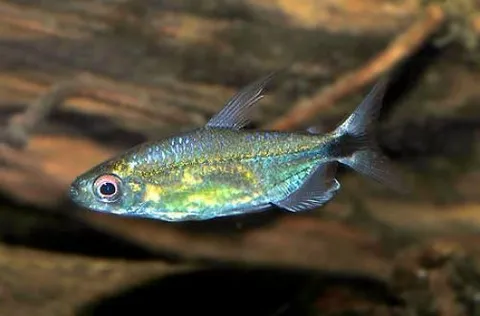
Alestopetersius smykalai
Alestopetersius smykalai, known as the Blue Diamond Tetra, belongs to the family Alestidae (African Tetras). This species is rarely found in home aquariums. In their natural habitat, they have practically disappeared,…
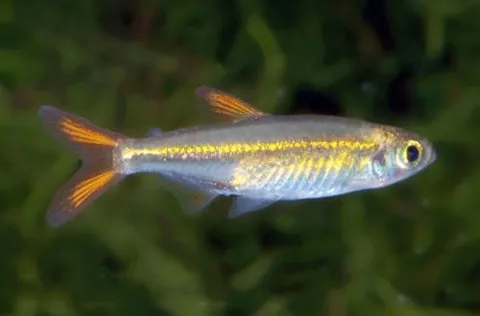
Ladigesia roloffi
Ladigesia roloffi, scientifically known as Ladigesia roloffi, belongs to the family Alestidae, or African tetras. In the wild, this species of tetra is becoming increasingly rare due to the destruction of its natural…
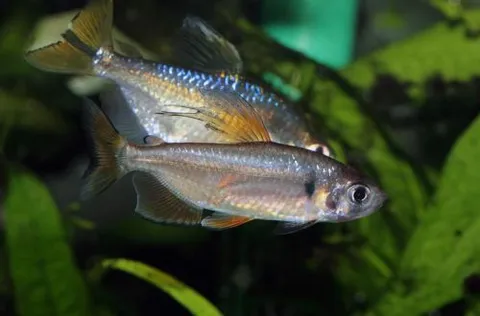
Alestopetersius nigropterus
The Red Alestopetersius, also known by the scientific designations Alestopetersius nigropterus or Alestopetersius ansorgii, belongs to the African tetra family (Alestidae). To date, this species has not yet received a…
Alestopetersius caudalis
Alestopetersius caudalis, known as the Yellow-tailed Congo Tetra or Congo Gold Tetra, belongs to the family Alestidae. Although this species may not be as widely distributed as some other African tetras, it can be…