Temperature15 – 25 °C
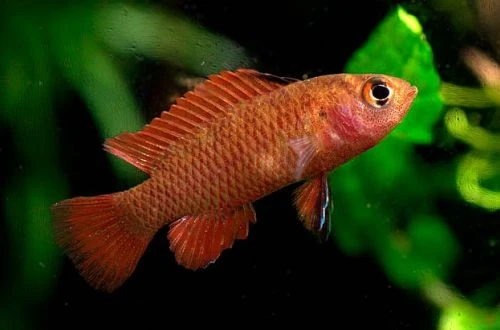
The Scarlet Badis, scientifically known as Dario hysginon, belongs to the family Badidae. These fish share a common ancestor with groups familiar to aquarists, such as Gouramis and Bettas. In terms of appearance, several behavioral characteristics, and breeding methods, they show a noticeable morphological similarity to Bettas.
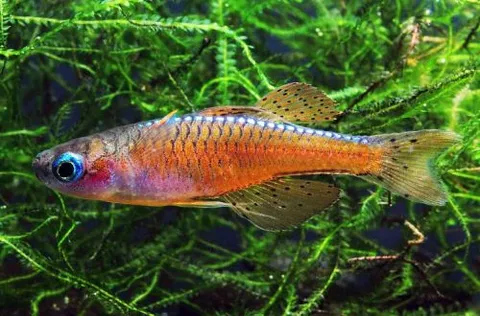
Adult males can reach up to 3 cm in length and are distinguished by well-developed fins. A characteristic black spot can usually be observed on their dorsal fin. Females are generally slightly smaller, not exceeding 2 cm; they have shorter fins and a less robust build. The coloration of both sexes is uniformly reddish.
This fish is native to Southeast Asia. It is considered an endemic species, found exclusively in limited sections of the Irrawaddy River system, located in Kachin State, Myanmar. Its preferred habitats are stagnant, swampy waters rich in dense aquatic vegetation and with soft substrates. Kachin State stands out as one of the world's largest biodiversity hotspots, home to numerous endemic species. However, it should be noted that significant areas have already suffered from illegal logging.
Males display competitive behavior, vying for territory and the attention of females. For this reason, in a small aquarium, it is recommended to keep only one male with one or more females. Otherwise, the Red Melon Dario exhibits a peaceful disposition and successfully coexists with other species of comparable size, such as Rasboras or Danios. However, to avoid aggression, it should not be kept with close relatives, such as Badis scarlet or Chameleon Badis.
For a group of 3–4 fish, the optimal aquarium volume starts from 40 liters. For decor, it is preferable to use a soft substrate and create zones with dense plant thickets, including floating species. Natural driftwood and certain tree leaves can be an excellent addition to the design. When keeping multiple males, it is important to ensure spatial separation. Since each male will occupy a territory of approximately 20×20 cm, it is advisable to provide shelters in the center of each such zone and leave open areas between territories. Although the Red Melon Dario originates from tropical latitudes, a comfortable water temperature for it is within 15–25°C, which allows it to be kept even in unheated aquariums. pH levels should be acidic with low water hardness. In their natural environment, these fish feed on insect larvae, small crustaceans, and other zooplankton. In the aquarium, they should be offered similar foods, such as live or frozen brine shrimp and daphnia. In rare cases, they can be accustomed to dry foods. It is highly undesirable to feed bloodworms, as they cause obesity, which, in turn, makes the fish vulnerable to various diseases due to digestive problems.
In their natural environment, these individuals feed on insect larvae, small crustaceans, and other zooplankton. When kept in an aquarium, it is important to provide them with similar nutrition, offering, for example, live or frozen brine shrimp or daphnia. Sometimes they can be accustomed to dry foods, although this is uncommon. Feeding bloodworms should be avoided, as it promotes obesity, making the fish susceptible to various ailments due to digestive disorders. Breeding is quite feasible even in a community tank.
Breeding is quite feasible even in a community tank. It has been observed that spawning begins at temperatures close to the maximum permissible values — 24–25°C. When the breeding season arrives, the male actively courts the female, inviting her to the center of his territory. Typically, the female lays her eggs, attaching them to the underside of a large leaf, after which her participation in the breeding process concludes. The male remains near the clutch, guarding it from intrusions, until the fry emerge. The incubation period usually lasts 2–3 days. The hatched fry remain in place for about a week, feeding on the remnants of their yolk sac, and only then begin to swim freely in search of food. As a first food for the fry, microscopic infusoria are suitable, followed by brine shrimp nauplii, or specialized liquid or powdered foods for young aquarium fish. Given their specific diet, it is more advisable to raise the fry in a separate tank rather than in a community aquarium.
Fish of this species are sensitive to water quality and sudden changes in its parameters, which can lead to a weakened immune system and the development of secondary bacterial infections. The main preventive measures are maintaining a stable environment, regular partial water changes, and avoiding overfeeding, which quickly spoils water in small volumes. In poor keeping conditions, fin and skin damage are possible, requiring improved aquarium hygiene.
When purchasing, choose active individuals with clean fins and no visible body damage. It is important to pay attention to behavior: healthy fish show curiosity, even if they are naturally timid. Avoid specimens with signs of emaciation, sunken bellies, or uncharacteristic spots on their scales. It is advisable to acquire fish from sellers who can confirm that the individuals are already accustomed to eating frozen foods, as transitioning to an unfamiliar diet can cause stress and refusal to eat.
The essentials: size, tank volume, water parameters and care
An adult reaches 1.5–3 cm in length. Plan the tank around the maximum size: the fish quickly outgrows a cramped setup.
The recommended volume is 40 L. A smaller tank speeds up nitrate build-up and raises stress levels.
Temperature 15–25 °C, pH 6.5–7.5, hardness 1–5 dGH. Stability matters more than exact values: sudden swings are harder on the fish than a small deviation from the ideal.
Around 3 years when kept properly. Lifespan depends directly on tank volume, water quality and a varied diet.
Temperament: peaceful (regular). Keep this in mind when choosing tank mates.
Recommended setup: harem (1 male and several females). Ignoring this is a common cause of stress and disease.
Diet type: mixed diet (meat + plant-based). Feed small portions that are finished within a couple of minutes — overfeeding does more harm than underfeeding.
The scientific name of the species is Dario hysginon, family Badidae.
The water suits 195 of 208 plants in the catalogue — the easiest ones are shown first.
Afzelius's AnubiasAnacharisAnubiasBrazilian PennywortDwarf CloverDwarf CloverDwarf HygrophilaDwarf SagittariaDwarf ValGuppy GrassHornwortJava FernJava MossMoneywortMud SwordNarrow Leaf AnacharisNarrow-leaf CloverStringy MossSüsswassertangTaiwan MossTape GrassTemple PlantUssuri WatermilfoilWater Wisteria
Matched by family, categories and overlapping keeping conditions
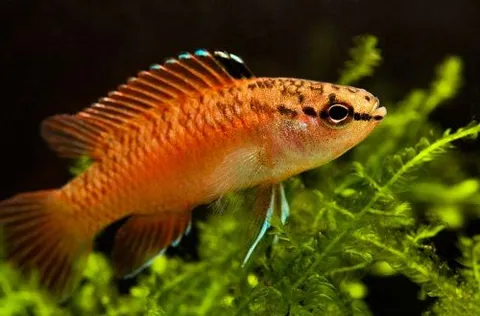
Dario kajal
Dario kajal is the scientific name for this species, which belongs to the Badidae family, or Badis. This fish was first recognized as a distinct species in 2013, and before that, it was known as Dario "Bangladesh."
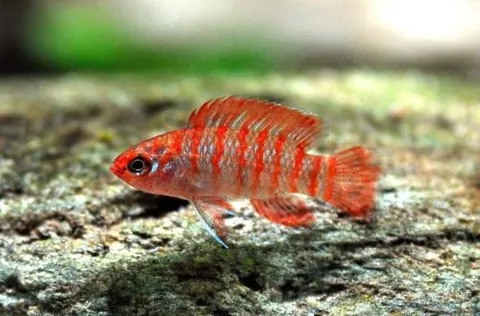
Dario dario
The Scarlet Badis, also known as Dario dario (its scientific name), belongs to the Badidae family. On this website, the species is classified into the Labyrinth Fish group (which includes the Gourami and Betta families)…
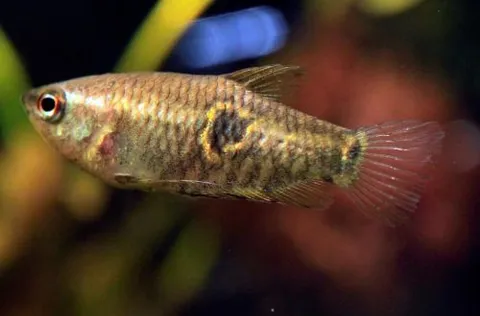
Parasphaerichthys ocellatus
The Ocellated Gourami, also known as Parasphaerichthys ocellatus, belongs to the family Osphronemidae. Among aquarists, it is sometimes called the Dwarf or Burmese Chocolate Gourami. This species is considered…
Pseudomugil sp. «Red neon»
Pseudomugil sp. "Red neon", or Red Neon Blue-eye, belongs to the family Pseudomugilidae. This species, which appeared on the market in 2011, has relatively recently attracted the attention of aquarists. A distinctive…