Temperature22 – 26 °C
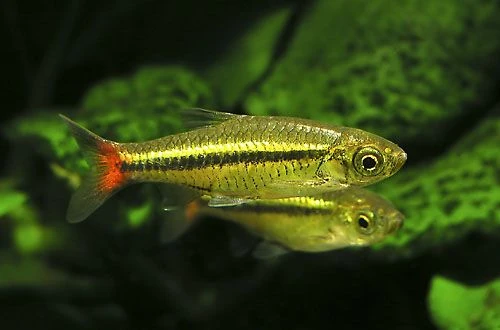
Rasbora borapetensis, also known as the Red-tailed or Black-striped Rasbora, belongs to the family Cyprinidae. This attractive aquarium fish is valued for its unpretentiousness in care, compatibility with many other species, and distinctive coloration. All these qualities make it an excellent choice even for beginner aquarists.
Adults reach a length of approximately 5 cm. Females are usually slightly larger and have less intense coloration than males. The main body color is gray, complemented by bright horizontal yellow and black stripes running along the midline. A bright red spot at the base of the tail adds a special touch to its appearance.
This species is widespread throughout Southeast Asia, found in Thailand (western part), Cambodia, Laos, Vietnam, and peninsular Malaysia. These fish can also be found in the Philippines and large islands of the Sunda Archipelago. They usually inhabit small rivers and streams with slow currents, as well as calm backwaters of large rivers, ponds, and reservoirs. The ability to adapt allows the Red-tailed Rasbora to successfully exist even in conditions of increased pollution, so they are often seen near human settlements, for example, in rice fields or ditches.
This is a peaceful, schooling species that needs to be kept in a group of at least 8–10 individuals. They coexist perfectly with other popular aquarium fish — cyprinids, characins, livebearers — provided that the neighbors are comparable in size and have a similar temperament. As suitable neighbors, one can consider fish from the same region of habitat, for example, some varieties of Gourami, Danios, Barbs, and other Rasboras.
For a school of 10 individuals, an aquarium of at least 100 liters will be required. Although the choice of decorations is not critical, it has been noted that a dark substrate helps the fish display more expressive coloration. To create a natural environment, add floating plants, as well as rooted species and various snags. It is important to note that the Red-tailed Rasbora does not tolerate strong currents, so the filtration system should be moderate. In addition to the filter, the minimum set of equipment includes a lighting system, a heater, and an aerator. Optimal water parameters are slightly acidic or neutral pH with low hardness. Details on pH, dGH, and methods for changing them can be found in the section “Hydrochemical composition of water.” Aquarium care includes weekly water changes of 10–15% with fresh water, as well as regular cleaning of the substrate from organic residues and glass from plaque.
The diet of these fish can include all standard types of food for aquarium inhabitants: dry, frozen, and live. A balanced diet, including, for example, flakes or granules in combination with bloodworms and daphnia, positively affects the vitality of the fish and the brightness of their coloration.
The Red-tailed Rasbora is an egg-laying species: females scatter eggs in the water, which males then fertilize. Parental instincts in these fish are poorly developed, so after spawning, adults may eat both their eggs and the hatched fry. For successful breeding, it is recommended to use a separate spawning aquarium to ensure the safety of the offspring. The design of such an aquarium should be simple, but the substrate is of key importance: it should consist of sufficiently large particles that are loosely adjacent to each other and form voids. These can be, for example, pebbles or decorative glass beads. When the eggs sink to the bottom, most of them fall into these voids, becoming inaccessible to the fish. A similar effect can be achieved by using a fine-mesh net fixed to the bottom. Another way to preserve the eggs is to use low-growing, fine-leaved plants or mosses, such as Riccia fluitans or Java moss, which are planted over most of the substrate (in this case, the type of substrate does not matter). Dense plant thickets provide reliable shelter for the eggs no worse than a special substrate. The size of the spawning aquarium is usually 50–70 liters. Equipment includes an aerator, a heater, and a low-power sponge filter that prevents accidental suction of eggs and fry. Spawning occurs in dim lighting, so light is not necessary at the initial stage. The stimulus for the start of the spawning period is an increase in water temperature to the upper permissible limit, maintaining a slightly acidic pH, and daily feeding with high-protein food (live or frozen). After some time, the females noticeably round out, and the males begin to actively court them. At this point, it is necessary to prepare a separate tank, filling it with water from the main aquarium, and transfer several females and the brightest males there. Spawning can be provoked by adding cool water every few hours, lowering the temperature by 2–3 degrees. Females lay eggs in portions, so spawning can last 4–5 days. The end of spawning is easily determined by the slender females. After this, the fish are returned to the main aquarium. Fry will hatch after 24–48 hours, and after another 3–4 days, they will begin to swim freely. They should be fed specialized micro-food for aquarium fish fry.
Balanced nutrition and properly selected keeping conditions are the best prevention of diseases in freshwater fish. If the first signs of illness appear, such as changes in coloration or behavior, the first step should be to check the water parameters and quality. If necessary, all values should be brought back to normal, and only then should treatment begin.
When choosing a Red-tailed Rasbora, pay attention to the activity of the fish: healthy individuals should be mobile and constantly move within the school. Avoid specimens with signs of emaciation, fin damage, film on the body, or an unnaturally swollen abdomen. It is important to assess the cleanliness of the water and the general condition of the aquariums in the store, as fish are sensitive to the accumulation of organic waste. In the store, they should display bright coloration with clear longitudinal stripes, which indicates the absence of stress and good keeping conditions.
The essentials: size, tank volume, water parameters and care
An adult reaches 5 cm in length. Plan the tank around the maximum size: the fish quickly outgrows a cramped setup.
The recommended volume is 100 L. A smaller tank speeds up nitrate build-up and raises stress levels.
Temperature 22–26 °C, pH 6–7.5, hardness 2–12 dGH. Stability matters more than exact values: sudden swings are harder on the fish than a small deviation from the ideal.
Around 4 years when kept properly. Lifespan depends directly on tank volume, water quality and a varied diet.
Temperament: peaceful, active/mobile. Keep this in mind when choosing tank mates.
Recommended setup: group (8–10 individuals). Ignoring this is a common cause of stress and disease.
Diet type: any (universal). Feed small portions that are finished within a couple of minutes — overfeeding does more harm than underfeeding.
The scientific name of the species is Rasbora borapetensis, family Cyprinids (Cyprinidae).
The water suits 197 of 208 plants in the catalogue — the easiest ones are shown first.
Afzelius's AnubiasAnacharisAnubiasBrazilian PennywortDwarf CloverDwarf CloverDwarf HygrophilaDwarf SagittariaDwarf ValGuppy GrassHornwortJava FernJava MossMoneywortMud SwordNair's LagenandraNarrow Leaf AnacharisNarrow-leaf CloverStringy MossSüsswassertangTaiwan MossTape GrassTemple PlantUssuri Watermilfoil
Matched by family, categories and overlapping keeping conditions
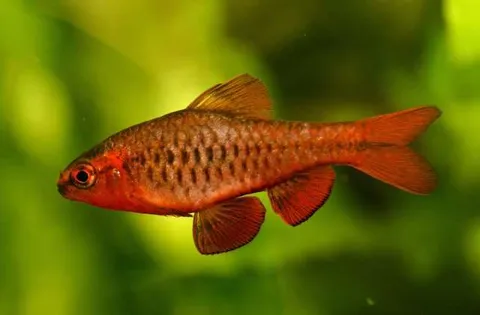
Puntius titteya
This species, the Cherry Barb, or Cherry Puntius (Puntius titteya), belongs to the Cyprinidae family. Thanks to its vibrant red coloration, this fish can brighten up any aquarium. It easily becomes a true pet due to its…
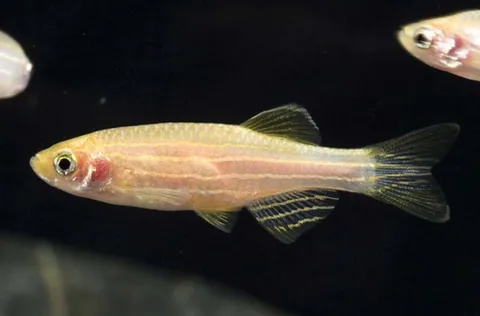
Danio rerio
The Albino Zebra Danio, scientifically known as Danio rerio, is a member of the Cyprinidae family. This fish is a natural morphological form of the Zebra Danio and is found in the wild. Its key difference from its…
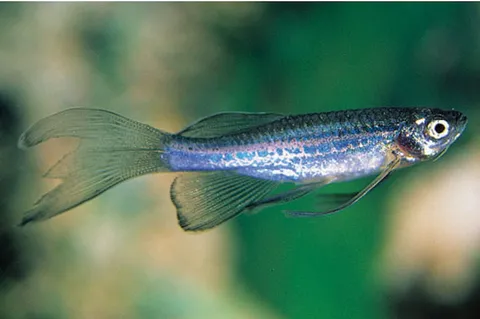
Danio rerio
The Blue Danio, known by its scientific name Danio rerio, belongs to the carp family (Cyprinidae). This variation of the classic Danio rerio stands out for its silvery-blue coloration, consisting of numerous small…
Danio rerio
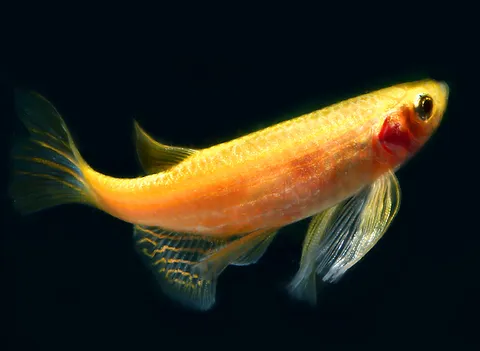
A representative of the Cyprinidae family, known as the Gold Danio, bearing the scientific name Danio rerio, is similar in appearance and behavior to its brethren, with the exception of one important feature – its…