Temperature20 – 25 °C
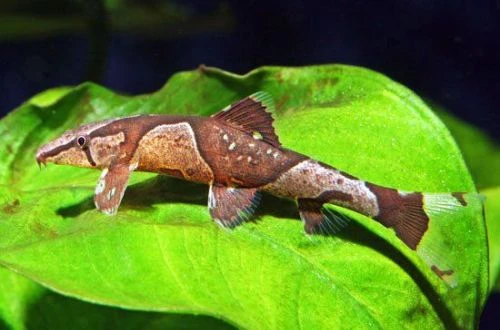
Homaloptera orthogoniata, more commonly known as the Saddled Hillstream Loach, is a member of the Balitoridae family (River Loaches). This species is still quite rare among aquarists, and often other closely related species are referred to by this name. With its peaceful nature, the Saddled Hillstream Loach can harmoniously coexist with many tropical fish. However, it is worth noting that keeping this fish has certain requirements, so beginner aquarists should choose more undemanding pets.
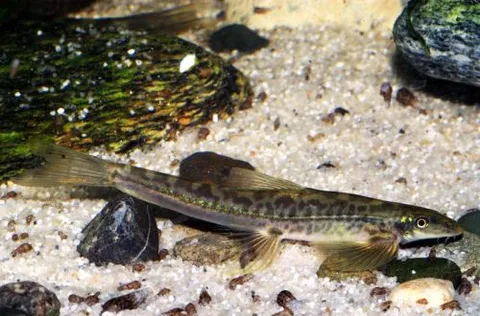
Adults reach approximately 9 cm in length. Sexual dimorphism in these fish is weakly expressed: females are usually slightly larger than males. The body coloration includes both light and dark brown shades. Marks resembling a saddle are visible on the back, which gave this species its name. There is also a closely related species, Homaloptera parclitella, whose coloration is almost identical. Since the keeping conditions for both species do not have significant differences, they can be conditionally considered synonyms.
For a long time, it was assumed that the habitat of this species covered a significant part of Indochina. However, subsequent studies clarified that the Saddled Hillstream Loach is endemic to the island of Borneo, while its closest relatives inhabit the continental part. These fish prefer the upper reaches of rivers, where the water is fast, clear, and rich in oxygen. Their natural habitat is characterized by gravel or rocky substrates covered with a layer of algae and microorganisms forming a biofilm. Vegetation in riverbeds and streams is rare, but the banks are usually densely overgrown.
This fish is characterized by a calm and non-aggressive nature, which makes it compatible with other species of similar size and temperament. Cyprinids will make excellent tank mates. It is advisable to keep Saddled Hillstream Loaches in a group of 5–6 individuals, as a smaller number can lead to the fish becoming timid, refusing food, or losing their characteristic coloration.
For comfortable keeping of a group of 5–6 fish, the minimum aquarium volume should be at least 100 L. For decoration, sand or gravel substrate (or a combination thereof), boulders, large stones, and snags can be used. It is recommended to place several hardy plants along the side walls. When caring for the Saddled Hillstream Loach, it is extremely important to maintain moderate water movement, a high level of dissolved oxygen, and timely removal of organic waste, such as food remnants, excrement, and fallen plant fragments.
The recommended diet should consist of live or frozen foods, such as brine shrimp, bloodworms, and daphnia, with the obligatory addition of plant components, for example, spirulina flakes. Dry packaged foods are permissible as a supplement to the main diet but should not form its basis. Unfortunately, some unscrupulous suppliers, in an effort to simplify and reduce the cost of transportation, neglect proper feeding, using exclusively dry products. Such a diet depletes the fish, and new owners often have to specially fatten them up after purchase, preferably in a separate aquarium to avoid competition for food.
As of the preparation of this article, there are no documented cases of successful breeding of this loach species in home aquarium conditions. This is largely due to their relatively weak distribution among aquarists.
Non-ornamental fish species that have retained a close resemblance to their wild relatives usually exhibit high endurance, strong immunity, and resistance to various diseases. The occurrence of health problems most often indicates unsuitable keeping conditions. Therefore, before proceeding with treatment, it is strongly recommended to check the water quality and parameters. Only after all indicators have been brought back to normal should treatment begin, if it is still necessary.
When choosing a Saddled Hillstream Loach, caution should be exercised, as fish of this species often go on sale in a state of severe emaciation. A healthy individual should be active, not have a sunken belly, and show no signs of skin or fin damage. Avoid buying fish that appear lethargic, lie on their side, or have an unnaturally thin body, as the rehabilitation of such specimens requires special conditions and can be difficult. — Inspect the fish for the absence of wounds, spots, and scale damage. — Make sure the loach shows no signs of emaciation, as this is a common problem during transportation. — Observe their behavior in the store: healthy fish usually actively explore the bottom or cling to surfaces, rather than simply lying motionless in the corner of the aquarium.
The essentials: size, tank volume, water parameters and care
An adult reaches 9 cm in length. Plan the tank around the maximum size: the fish quickly outgrows a cramped setup.
The recommended volume is 100 L. A smaller tank speeds up nitrate build-up and raises stress levels.
Temperature 20–25 °C, pH 6–7.5, hardness 1–10 dGH. Stability matters more than exact values: sudden swings are harder on the fish than a small deviation from the ideal.
Around 6 years when kept properly. Lifespan depends directly on tank volume, water quality and a varied diet.
Temperament: peaceful (regular). Keep this in mind when choosing tank mates.
Recommended setup: small group (5–6 individuals). Ignoring this is a common cause of stress and disease.
Diet type: meat / protein (live, frozen, fresh). Feed small portions that are finished within a couple of minutes — overfeeding does more harm than underfeeding.
The scientific name of the species is Homaloptera orthogoniata, family River Loaches (Balitoridae).
The water suits 196 of 208 plants in the catalogue — the easiest ones are shown first.
Afzelius's AnubiasAnacharisAnubiasBrazilian PennywortDwarf CloverDwarf CloverDwarf HygrophilaDwarf SagittariaDwarf ValGuppy GrassHornwortJava FernJava MossMoneywortMud SwordNarrow Leaf AnacharisNarrow-leaf CloverStringy MossSüsswassertangTaiwan MossTape GrassTemple PlantUssuri WatermilfoilWater Wisteria
Matched by family, categories and overlapping keeping conditions
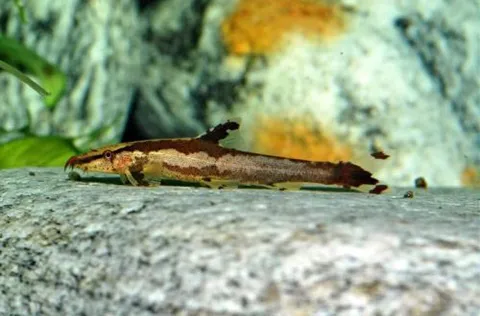
Homaloptera bilineata
Homaloptera bilineata, also known as the Two-lined Homaloptera, belongs to the family Balitoridae, or river loaches. Although this species is undemanding to keep and peaceful, its breeding in aquarium conditions…
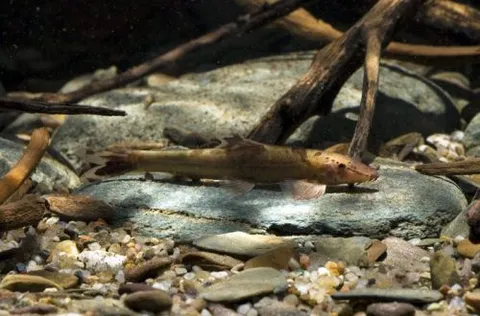
Homaloptera confuzona
The fish Homaloptera confuzona, known by its scientific name Homaloptera confuzona, is a member of the Balitoridae family (River loaches). Although representatives of this group are often found among aquarium…
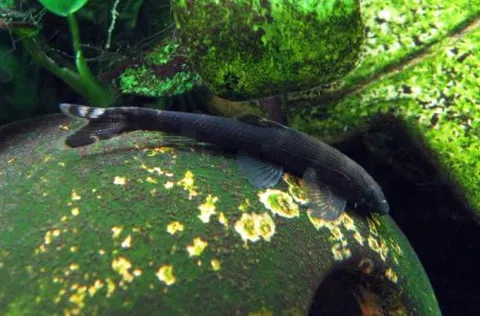
Balitoropsis zollingeri
The fish known as Zollinger's Balitorid, or Balitoropsis zollingeri by its scientific name, belongs to the family Balitoridae, which includes river loaches. It was named in honor of the Swiss botanist Heinrich Zollinger…
Annamia normani
The fish named Annamia normani (scientific name Annamia normani) belongs to the Balitoridae family, known as River Loaches. It was named after the Annam region, now central Vietnam, and in memory of the British…