Temperature26 – 30 °C
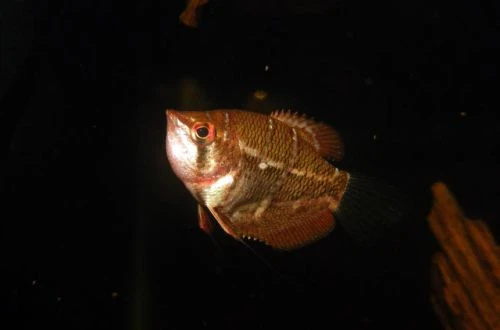
The Selatan Gourami, also known as the Cross Chocolate Gourami under its scientific name Sphaerichthys selatanensis, belongs to the Osphronemidae family. The fish owes its name to the Indonesian province of Selatan, located in the southern part of Borneo. This species is considered relatively easy to keep, provided a suitable environment is created, and it successfully breeds in home aquariums. It can be recommended to aquarists who already have some experience.
It is considered a closely related species to the Chocolate Gourami, with which it shares many common characteristics. Adult individuals can reach approximately 4 cm in length. These fish have a high body with a noticeably pointed head. Their coloration varies from gray-brown to reddish hues, adorned with a light horizontal stripe and several rows of vertical stripes. Some specimens feature reddish tints on their fins, and several researchers suggest this might be a separate subspecies. However, as of the time of this information's compilation, no official separation has occurred. Sexual dimorphism is not pronounced. Males differ from females by a slightly more rounded lower part of the head; otherwise, they are almost identical.
Its natural habitat is in Southeast Asia, in the southern Indonesian part of Kalimantan (Borneo) island. These fish prefer peat swamps hidden under dense tropical forest cover, as well as associated rivers and streams. A typical habitat is a shallow body of water where the water acquires a rich brown hue due to the high concentration of tannins, which are formed during the decomposition of plant organic matter. The bottom of these waters is usually covered with a thick layer of fallen leaves, branches, and permeated by numerous tree roots. Aquatic vegetation is mainly found along the shoreline.
This slow-moving and peaceful fish may struggle to compete for food with more active species, significantly increasing the likelihood of malnutrition. They coexist well with other calm fish, such as Rasboras, some types of Danios, and loaches. These fish prefer to be in a group of their own kind, so it is advisable to acquire them in quantities of 6 or more individuals. Co-housing with Chocolate Gouramis should be avoided to minimize the risk of hybridization of offspring.
For a pair of fish, the optimal aquarium volume starts from 50 liters. Although this species is not overly demanding regarding keeping conditions, it is preferable to create an environment as close as possible to its natural biotope. The aquarium setup should include numerous shelters. These can be dense thickets of shade-loving plants, snags, or specialized decorative elements for aquariums. It is advisable to use a dark, soft substrate, on top of which leaves from certain trees, such as beech, oak, or Indian almond, are often placed. They not only serve as part of the decor but also contribute to creating the chemical composition of the water characteristic of the natural habitats of the Cross Chocolate Gourami. Long-term and successful keeping depends on maintaining the stability of the aquatic environment within acceptable temperature and hydrochemical limits. This requires regular aquarium maintenance procedures and equipping it with necessary equipment, primarily a filtration system.
Generations of fish that have grown up in artificial aquarium conditions have successfully adapted to consuming alternative foods, such as flakes and granules. To enrich their daily diet, it is recommended to include live or frozen foods, such as Artemia, Daphnia, bloodworms, and others.
There are some discrepancies regarding the breeding strategy of this Gourami species. Some indicate the construction of foam nests, while others describe the male incubating the eggs in his mouth until the fry emerge. The latter statement is closer to the truth, but this role is performed by the female. During the breeding period, the fish's coloration becomes more intense, and the stripes acquire a golden hue. The male, or alpha male in group housing, initiates courtship. The fish press against each other in a peculiar dance, during which spawning occurs. The female takes the fertilized eggs into her mouth and incubates them for up to 20 days, after which 10–40 fully formed fry emerge. During this period, the female refuses food and seeks a secluded, safe place. In some cases, it may be advisable to temporarily transfer her to a separate tank with identical water conditions.
Most health problems in fish often arise from unsuitable keeping conditions. Maintaining a stable and comfortable habitat is a key factor for successful keeping. If symptoms of illness appear, the first step is to check the water quality. If deviations are found, it is important to take immediate measures to eliminate them. If the symptoms do not disappear or worsen, medicinal treatment may be required.
When selecting individuals, special care should be taken, as this species is sensitive to transportation and keeping conditions. Avoid purchasing fish that show signs of lethargy, fin damage, or sunken flanks, which may indicate emaciation or the presence of parasites. Healthy specimens should be active, have a clear pattern, and clean eyes. Since this species is often imported from the wild, it can be susceptible to stress and infectious diseases. Before purchasing, it is recommended to inquire how long the fish has been in the store and whether it has undergone quarantine. It is highly desirable to observe the group's behavior in the aquarium: lack of timidity and a normal appetite during feeding are good indicators of adaptation. Avoid purchasing fish from aquariums where dead or visibly sick individuals are present.
The essentials: size, tank volume, water parameters and care
An adult reaches 4–5 cm in length. Plan the tank around the maximum size: the fish quickly outgrows a cramped setup.
The recommended volume is 50 L. A smaller tank speeds up nitrate build-up and raises stress levels.
Temperature 26–30 °C, pH 4–6.5, hardness 1–5 dGH. Stability matters more than exact values: sudden swings are harder on the fish than a small deviation from the ideal.
Around 5 years when kept properly. Lifespan depends directly on tank volume, water quality and a varied diet.
Temperament: peaceful (regular). Keep this in mind when choosing tank mates.
Recommended setup: mixed (solitary / pair / group). Ignoring this is a common cause of stress and disease.
Diet type: any (universal). Feed small portions that are finished within a couple of minutes — overfeeding does more harm than underfeeding.
The scientific name of the species is Sphaerichthys selatanensis, family Osphronemidae. It also appears in the literature as: Sphaerichthys osphromenoides, Sphaerichthys osphronemoides.
The water suits 174 of 208 plants in the catalogue — the easiest ones are shown first.
Afzelius's AnubiasAnacharisAnubiasBrazilian PennywortDwarf CloverDwarf CloverDwarf HygrophilaDwarf SagittariaDwarf ValGuppy GrassHornwortJava FernJava MossMoneywortMud SwordNair's LagenandraNarrow Leaf AnacharisNarrow-leaf CloverSüsswassertangTaiwan MossTape GrassTemple PlantUssuri WatermilfoilWater Wisteria
Matched by family, categories and overlapping keeping conditions
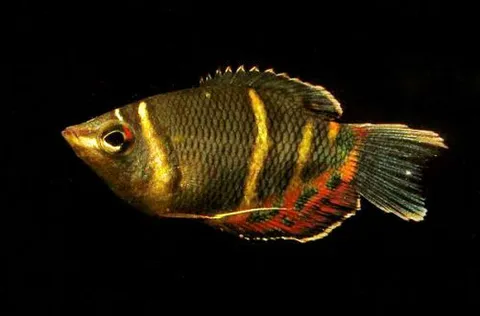
Sphaerichthys osphromenoides
Sphaerichthys osphromenoides, known as the Chocolate Gourami, belongs to the family Osphronemidae. This peaceful fish is distinguished by its attractive appearance and coexists well with many species that require…
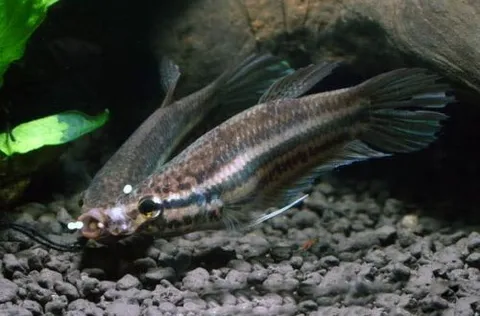
Betta prima
Betta prima, also known as Betta prima, is a member of the family Osphronemidae. This peaceful and calm fish coexists well with other similarly sized species. Its care and breeding do not present any particular…
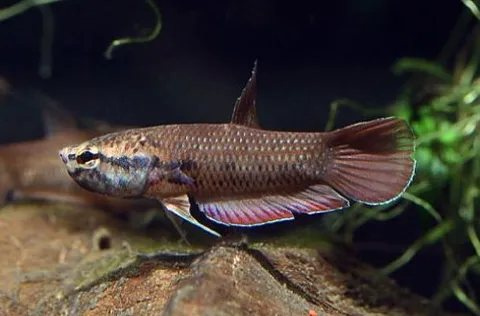
Betta falx
Betta falx, or Falx Betta, belongs to the family Osphronemidae. This fish, known by the scientific name Betta falx, is a representative of the fighting fish group, yet its calm disposition distinguishes it from its more…
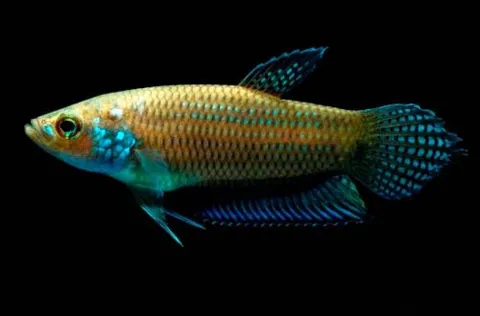
Betta stigmosa
The Stigmosa Betta, officially known as Betta stigmosa, belongs to the family Osphronemidae. It is a calm and undemanding fish, but it is not suited to the ordinary community aquarium: it is kept on its own or with very…