Temperature22 – 28 °C
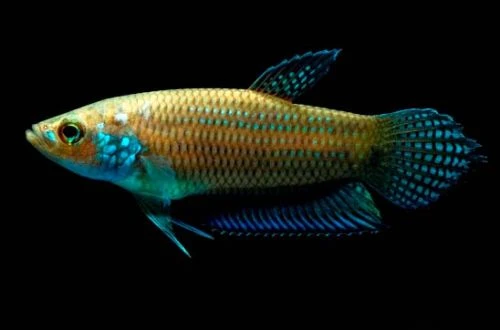
The Stigmosa Betta, officially known as Betta stigmosa, belongs to the family Osphronemidae. It is a calm and undemanding fish, but it is not suited to the ordinary community aquarium: it is kept on its own or with very peaceful species of similar size that will not crowd it or take its food. However, it should be noted that its coloration may appear somewhat subdued.
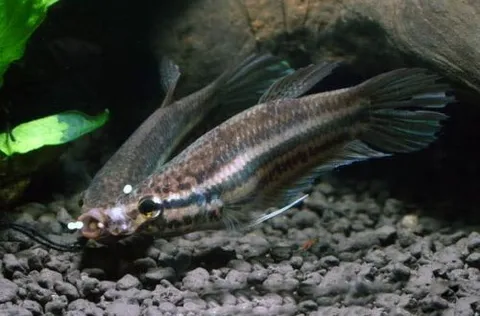
Adults reach a length of 4–5 cm. Their body appears quite massive, while their fins seem relatively small. The main body color is gray. Males are generally larger than females and are distinguished by the presence of turquoise pigment on their bodies, which is most prominent on the fins and tail.
The natural habitat of this species is in Southeast Asia, specifically on the Malay Peninsula, in the Malaysian state of Terengganu. Type specimens of Betta stigmosa were found in the Sekayu Recreational Forest area, located near the city of Kuala Berang. Since 1985, this picturesque area has become a tourist attraction, known for its numerous waterfalls among hills covered with lush tropical forest. The fish prefer to inhabit shallow streams and rivers where the water is clean and clear, and the bottom consists of rocks and gravel, strewn with fallen leaves and tree branches.
Despite these fish belonging to the fighting fish group, their temperament is peaceful and calm; in this case, the classification is merely a conventional name. Although there is competition between males for a dominant position in the hierarchy, serious conflicts or injuries usually do not occur. They get along well with other non-aggressive species of similar size, provided they can live in similar conditions.
For the comfortable existence of a single pair or a small group of these fish, the minimum aquarium volume starts from 50 L. Optimal keeping conditions are those that are as close as possible to their natural habitat. Of course, fully recreating a natural biotope in an aquarium is a difficult task, and often there is no urgent need for it. Over many generations of life in an aquarium environment, Betta stigmosa has successfully adapted to altered conditions. The aquarium decor can be chosen at your discretion, but it is important to provide several shaded areas created with snags and dense plant thickets. The main attention should be paid to maintaining high water quality within acceptable hydrochemical parameters and preventing the accumulation of organic waste, such as food residues and excrement. This is achieved through regular aquarium maintenance and the uninterrupted operation of installed equipment, especially the filtration system.
As a rule, fish offered in pet stores readily accept a variety of aquarium foods — both dry and frozen or live. A balanced diet can include flakes and granules, supplemented with Artemia, Daphnia, bloodworms, mosquito larvae, Drosophila flies, and other small insects.
Stigmosa Bettas exhibit extraordinary parental care for fish. Through evolution, they have developed a unique way of protecting their offspring: instead of laying eggs on the bottom or among plants, the male collects fertilized eggs in his mouth and incubates them there until the fry emerge. The breeding process is quite simple. It is important to provide the fish with suitable living conditions and a balanced diet. Given the presence of a sexually mature male and female, the appearance of offspring is very likely. Spawning is marked by prolonged mutual courtship, culminating in a peculiar “embrace dance.”
Most health problems in fish often arise from unsuitable keeping conditions. Maintaining a stable and comfortable habitat is a key factor for successful keeping. If symptoms of illness appear, the first step is to check the water quality. If deviations are found, it is important to take immediate measures to eliminate them. If the symptoms do not disappear or worsen, medicinal treatment may be required.
When selecting individuals, attention should be paid to the cleanliness of the fins, the absence of plaque, ulcers, or visible parasites on the body. A healthy fish should be active, interested in its surroundings, and not show signs of apathy or constant presence at the water surface, unless caused by fright. In a store environment, fish may appear paler due to stress, but the coloration should be natural, without unnatural spots. — avoid purchasing individuals with signs of emaciation or sunken bellies — check the integrity of the fins, as damage may indicate bacterial infections — observe group behavior to rule out the presence of aggressive or injured fish.
The essentials: size, tank volume, water parameters and care
An adult reaches 4–5 cm in length. Plan the tank around the maximum size: the fish quickly outgrows a cramped setup.
The recommended volume is 50 L. A smaller tank speeds up nitrate build-up and raises stress levels.
Temperature 22–28 °C, pH 5–7, hardness 1–5 dGH. Stability matters more than exact values: sudden swings are harder on the fish than a small deviation from the ideal.
Around 3 years when kept properly. Lifespan depends directly on tank volume, water quality and a varied diet.
Temperament: peaceful (regular). Keep this in mind when choosing tank mates.
Recommended setup: mixed (solitary / pair / group). Ignoring this is a common cause of stress and disease.
Diet type: any (universal). Feed small portions that are finished within a couple of minutes — overfeeding does more harm than underfeeding.
The scientific name of the species is Betta stigmosa, family Osphronemidae.
The water suits 197 of 208 plants in the catalogue — the easiest ones are shown first.
Afzelius's AnubiasAnacharisAnubiasBrazilian PennywortDwarf CloverDwarf CloverDwarf HygrophilaDwarf SagittariaDwarf ValGuppy GrassHornwortJava FernJava MossMoneywortMud SwordNair's LagenandraNarrow Leaf AnacharisNarrow-leaf CloverStringy MossSüsswassertangTaiwan MossTape GrassTemple PlantUssuri Watermilfoil
Matched by family, categories and overlapping keeping conditions
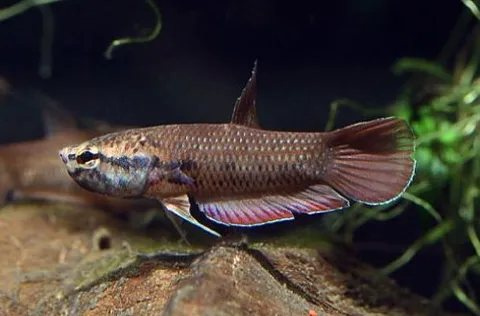
Betta falx
Betta falx, or Falx Betta, belongs to the family Osphronemidae. This fish, known by the scientific name Betta falx, is a representative of the fighting fish group, yet its calm disposition distinguishes it from its more…
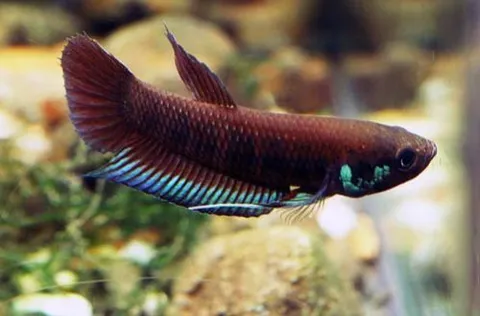
Betta krataios
Betta krataios, or Krataios Betta, is classified as a member of the family Osphronemidae and bears the scientific name Betta krataios. This species belongs to the group of Fighting Fish, however, its temperament and…
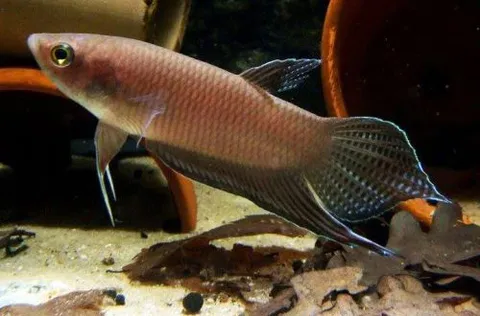
Betta balunga
The scientific name Betta balunga refers to a fish known as Betta balunga or Balunga Betta, belonging to the family Osphronemidae. These fish are named after the region on the island of Borneo where they were first…
Betta prima
Betta prima, also known as Betta prima, is a member of the family Osphronemidae. This peaceful and calm fish coexists well with other similarly sized species. Its care and breeding do not present any particular…