Temperature22 – 28 °C
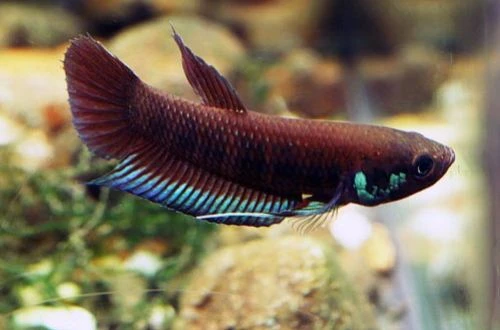
Betta krataios, or Krataios Betta, is classified as a member of the family Osphronemidae and bears the scientific name Betta krataios. This species belongs to the group of Fighting Fish, however, its temperament and coloration do not correspond to the qualities for which other varieties are usually famous. It is precisely because of these characteristics that it has not become widespread among amateur aquarists.
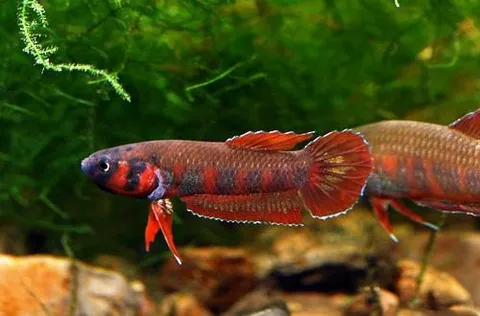
The species was identified not long ago, and previously it was often mistaken for a variety of Betta dimidiata, so it often appears under this name in trade. Both fish are indeed very similar, but they can be distinguished by the shape of their tail. In Betta dimidiata, it appears larger and has a more rounded shape. Adults grow to about 4 cm in length. A distinctive feature of this fish is its elongated and robust physique, which is reflected in its scientific name. The word "Krataios" means "strong, robust." The fish's coloration is dark grey, with turquoise iridescence on the lower jaw and along the edges of the fins. Sexual dimorphism is weakly expressed: males stand out with longer fin tips, unlike females.
Its natural habitat is in Southeast Asia, on the island of Borneo. This species is considered endemic to the lower reaches of the Kapuas River, located in the Indonesian province of West Kalimantan (Kalimantan Barat). The fish prefers shallow forest rivers, streams, and swampy areas. The dense forest canopy over these bodies of water allows little light to pass through, providing dim conditions. There are almost no aquatic plants here, but the banks are densely overgrown. The bottom of the reservoirs is covered with a thick layer of fallen leaves, branches, and other woody debris, permeated by tree roots. The water acquires a rich brown hue due to the release of tannins formed during the decomposition of organic matter.
Despite the fact that Betta krataios belongs to the Fighting Fish group, its behavior does not correspond to the typical characteristics of this group. It is a peaceful and calm species that can be easily intimidated by larger or too active tankmates, pushing it to the periphery of the aquarium. Such isolation can lead to malnutrition if the Betta is driven away from the food source. It is recommended to keep these fish individually, in pairs (male/female), in groups with conspecifics, or together with other non-aggressive fish of comparable size.
For one or two Betta krataios, an aquarium of at least 40 L is recommended. Regarding decor, this species is undemanding. For example, many breeders, wholesale suppliers, and pet stores often use almost empty tanks containing only the necessary equipment. However, of course, such an environment is not ideal. Therefore, in a home aquarium, one should strive to recreate conditions as close to natural as possible. Dark substrate, driftwood, thickets of shade-loving aquatic plants (including floating ones), and various decorative items can be used as main decor elements. If desired, dry leaves of some trees can be added, after soaking them beforehand and placing them on the bottom. They will not only complement the decor but also enrich the water with tannins, creating an environment characteristic of natural bodies of water. The long-term well-being of the fish directly depends on stable water quality. It is important to prevent the accumulation of organic waste and avoid sharp fluctuations in temperature and hydrochemical parameters. The stability of the aquatic environment is ensured by the regular operation of equipment, primarily the filtration system, and timely execution of all necessary aquarium maintenance procedures.
Being an omnivorous species, the fish readily accepts most standard aquarium fish foods. The daily diet can consist of dry flakes or granules, supplemented with live or frozen Artemia, Daphnia, bloodworms, and other similar foods.
Under suitable conditions, breeding this species is quite successful and not uncommon. The fish exhibit an unusual way of protecting their future offspring. During spawning, the male collects the eggs in his mouth and incubates them throughout the incubation period, which lasts from one to two weeks. The breeding process includes mutual courtship and a so-called "embrace dance," where the fish press closely against each other.
Most health problems in fish often arise from unsuitable keeping conditions. Maintaining a stable and comfortable habitat is a key factor for successful keeping. If symptoms of illness appear, the first step is to check the water quality. If deviations are found, it is important to take immediate measures to eliminate them. If the symptoms do not disappear or worsen, medicinal treatment may be required.
When purchasing, choose active individuals with clean fins and no visible damage or sores on the body. Avoid fish that appear emaciated, have a sunken belly, or stay at the surface of the water, breathing heavily, as this may be a sign of chronic stress or infection. In the store, pay attention to their behavior: healthy Betta krataios show calm curiosity, not apathy or signs of strong fright when a person approaches. Given that the species is often supplied from natural habitats, it is important to ask the seller about the fish's adaptation period to aquarium conditions to minimize the risk of death during transfer to a new aquarium.
The essentials: size, tank volume, water parameters and care
An adult reaches 4–4.5 cm in length. Plan the tank around the maximum size: the fish quickly outgrows a cramped setup.
The recommended volume is 40 L. A smaller tank speeds up nitrate build-up and raises stress levels.
Temperature 22–28 °C, pH 5–7, hardness 1–5 dGH. Stability matters more than exact values: sudden swings are harder on the fish than a small deviation from the ideal.
Around 4 years when kept properly. Lifespan depends directly on tank volume, water quality and a varied diet.
Temperament: peaceful (regular). Keep this in mind when choosing tank mates.
Recommended setup: mixed (solitary / pair / group). Ignoring this is a common cause of stress and disease.
Diet type: any (universal). Feed small portions that are finished within a couple of minutes — overfeeding does more harm than underfeeding.
The scientific name of the species is Betta krataios, family Osphronemidae.
The water suits 197 of 208 plants in the catalogue — the easiest ones are shown first.
Afzelius's AnubiasAnacharisAnubiasBrazilian PennywortDwarf CloverDwarf CloverDwarf HygrophilaDwarf SagittariaDwarf ValGuppy GrassHornwortJava FernJava MossMoneywortMud SwordNair's LagenandraNarrow Leaf AnacharisNarrow-leaf CloverStringy MossSüsswassertangTaiwan MossTape GrassTemple PlantUssuri Watermilfoil
Matched by family, categories and overlapping keeping conditions
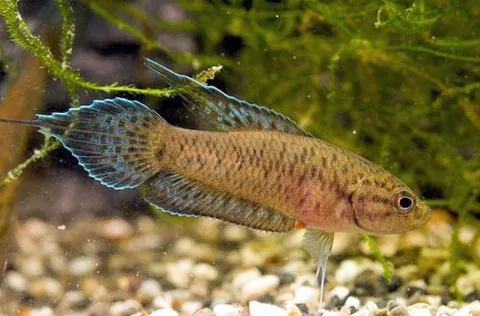
Malpulutta kretseri
Malpulutta kretseri, also known as Kretser's Paradise Fish, bears the scientific name Malpulutta kretseri and belongs to the family Osphronemidae. It was named in honour of the Sri Lankan lawyer De Kretser, who…
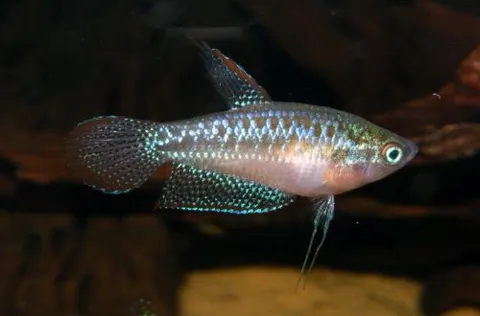
Trichopsis pumila
The Dwarf Gourami, or Pumila, known scientifically as Trichopsis pumila, is a member of the Osphronemidae family. This aquarium fish is popular due to its interesting coloration, as well as its ease of care and…
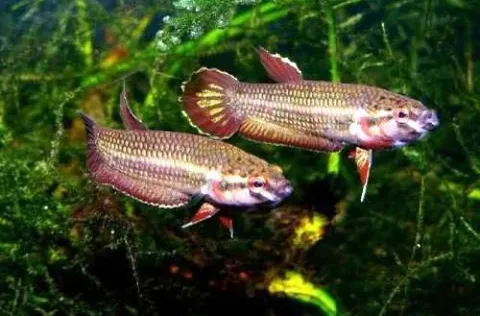
Betta dennisyongi
Betta dennisyongi, also known as Dennis Yong's Betta, belongs to the family Osphronemidae. This fish received its scientific name in honour of Dennis Yong Ghong Chong, a naturalist deeply versed in the fauna and flora…
Betta rubra
The Red Betta, scientifically known as Betta rubra and belonging to the family Osphronemidae, has been present in the aquarium hobby since 2009. Initially, until 2013, it was often confused with and supplied under the…