Temperature22 – 27 °C
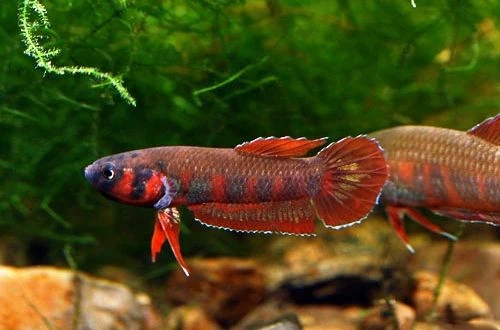
The Red Betta, scientifically known as Betta rubra and belonging to the family Osphronemidae, has been present in the aquarium hobby since 2009. Initially, until 2013, it was often confused with and supplied under the name Betta dennisyongi, until it was recognized as a separate species. During this period, interbreeding occurred between the two described species in aquarium conditions, so today, under both names, the same fish is often implied.
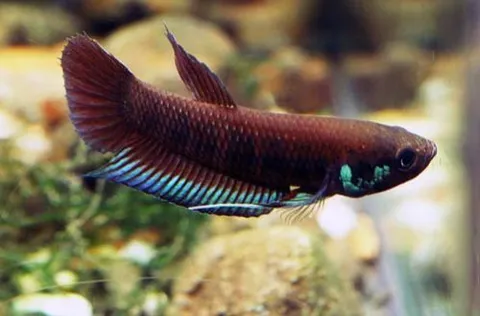
Adults reach a length of 3 to 4 cm. Their body is slender and elongated, ending in a rounded caudal fin. The pelvic and dorsal fins are pointed, and the anal fin extends from the middle of the body to the tail. Males are generally larger and have brighter coloration compared to females. Their dark red color is complemented by distinct longitudinal stripes, and the fin edges are highlighted in white. Females look noticeably different, which can lead to mistakenly perceiving them as a completely different species. Their primary color is gray, and their body is adorned with a single black stripe running from head to tail.
Its natural habitat is located in Southeast Asia, on the Indonesian part of Sumatra Island. This area, separated from the rest of Sumatra by the Barisan Mountains, is recognized as a unique ichthyofaunal zone due to the significant number of endemic species. The fish inhabit shallow, swampy sections of rivers located in tropical rainforests. The typical biotope is characterized by shallow waters, whose bottom is covered with a layer of fallen vegetation — such as leaves, branches, and grass — and permeated by numerous tree roots. The water here has a characteristic brown tint, due to the high concentration of tannins released during the decomposition of organic plant material.
Males of this species live up to their fighting fish relatives, as they show a propensity for territorial skirmishes and vying for the attention of females. Similarly colored fish of other species can also become targets of their aggression. Females, though less combative, may start competing with each other if there is insufficient space. It is worth noting that serious injuries are rare in intraspecific conflicts, but a weaker individual will likely be pushed to the periphery and may not receive enough food. A similar situation can arise if the fish is kept in the same aquarium with large tankmates. It is recommended to keep the Red Betta alone, in a pair (male and female), or in the company of peaceful fish of comparable size.
For keeping one or two Red Bettas, the optimal aquarium volume starts from 40 liters. The placement of decor elements is at the discretion of the aquarist. Although these fish can adapt even in a relatively empty tank, such conditions are not ideal. They look most appealing under soft lighting, on a dark substrate, among driftwood. The presence of aquatic plants is not mandatory, but floating species on the water surface can create excellent shading. Submerged leaves of some trees, pre-soaked, can be a good addition; they will not only add naturalness to the decor but also change the chemical composition of the water by releasing tannins. The environment must remain stable within acceptable temperature and hydrochemical parameters. It is extremely important to prevent the accumulation of nitrogen cycle products. Maintaining biological balance depends on the reliable operation of equipment and regular performance of mandatory aquarium care procedures. These procedures include weekly partial water changes and the removal of organic debris, including uneaten food and excrement. When choosing a filtration system, opt for models that do not create strong currents, as this is very important for these fish, which naturally inhabit stagnant waters. In small aquariums, a simple air-driven sponge filter can be successfully used.
Red Betta fish, after successful acclimatization, adapt well to a diet of common commercial foods. For example, their daily menu can consist of dry flakes or pellets, supplemented with live or frozen brine shrimp, daphnia, and bloodworms. They can also be offered Drosophila or mosquito larvae.
This group of fish is characterized by mouthbrooding, which is a strategy for protecting offspring similar to that demonstrated by Malawian cichlids. With the onset of the breeding season, the male and female begin active courtship, accompanied by peculiar embraces where the fish entwine around each other. At this moment, the eggs are fertilized and then placed in the male's mouth. The incubation period lasts from 10 to 17 days. The fry emerge fully formed and are capable of growing in the same aquarium with their parents.
Most health problems in fish often arise from unsuitable keeping conditions. Maintaining a stable and comfortable habitat is a key factor for successful keeping. If symptoms of illness appear, the first step is to check the water quality. If deviations are found, it is important to take immediate measures to eliminate them. If the symptoms do not disappear or worsen, medicinal treatment may be required.
When choosing a Red Betta, it is important to consider that this species is often sold under the name of the closely related species Betta dennisyongi. A healthy fish should have clean fins without signs of erosion, tightly pressed scales, and clear eyes. Avoid individuals with visible spots, film, or damage on the body, as well as fish that appear emaciated or constantly stay at the water surface with rapid breathing. In the store, pay attention to their behavior: healthy fish show cautious activity and do not exhibit signs of lethargy or apathy. Since the species is prone to intraspecific aggression, fish with damaged fins due to skirmishes may be present in the store's community tank. It is recommended to purchase individuals that have already confidently started accepting offered food, as adaptation to artificial diets can take time for wild-caught specimens.
The essentials: size, tank volume, water parameters and care
An adult reaches 3–4 cm in length. Plan the tank around the maximum size: the fish quickly outgrows a cramped setup.
The recommended volume is 40 L. A smaller tank speeds up nitrate build-up and raises stress levels.
Temperature 22–27 °C, pH 5–6.5, hardness 1–5 dGH. Stability matters more than exact values: sudden swings are harder on the fish than a small deviation from the ideal.
Around 3 years when kept properly. Lifespan depends directly on tank volume, water quality and a varied diet.
Temperament: peaceful (regular). Keep this in mind when choosing tank mates.
Recommended setup: pair (male/female). Ignoring this is a common cause of stress and disease.
Diet type: any (universal). Feed small portions that are finished within a couple of minutes — overfeeding does more harm than underfeeding.
The scientific name of the species is Betta rubra, family Osphronemidae.
The water suits 197 of 208 plants in the catalogue — the easiest ones are shown first.
Afzelius's AnubiasAnacharisAnubiasBrazilian PennywortDwarf CloverDwarf CloverDwarf HygrophilaDwarf SagittariaDwarf ValGuppy GrassHornwortJava FernJava MossMoneywortMud SwordNair's LagenandraNarrow Leaf AnacharisNarrow-leaf CloverStringy MossSüsswassertangTaiwan MossTape GrassTemple PlantUssuri Watermilfoil
Matched by family, categories and overlapping keeping conditions
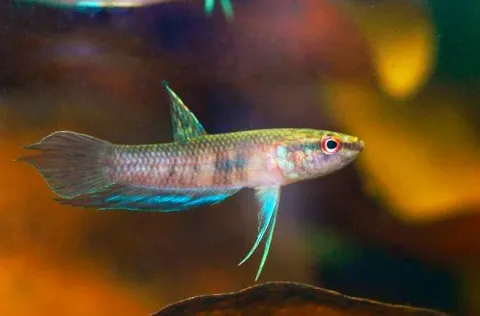
Betta dimidiata
The Dimidata Betta, also known as Betta dimidiata (scientific name Betta dimidiata), belongs to the family Osphronemidae. The Latin word "dimidiata" in its name translates to "halved," reflecting the modest size of this…
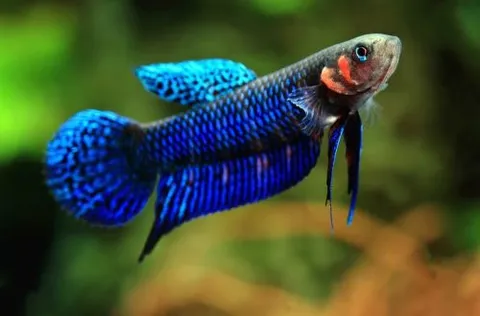
Betta hendra
The scientific name Betta hendra was given to Hendra's Betta, or Betta hendra, within the family Osphronemidae. This species was named after the Indonesian naturalist Hendra Tommy, who first discovered it. This fish is…
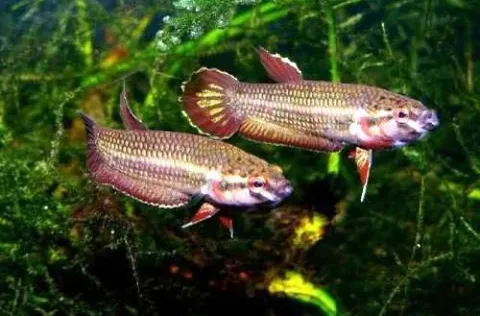
Betta dennisyongi
Betta dennisyongi, also known as Dennis Yong's Betta, belongs to the family Osphronemidae. This fish received its scientific name in honour of Dennis Yong Ghong Chong, a naturalist deeply versed in the fauna and flora…
Betta krataios
Betta krataios, or Krataios Betta, is classified as a member of the family Osphronemidae and bears the scientific name Betta krataios. This species belongs to the group of Fighting Fish, however, its temperament and…