Temperature22 – 27 °C
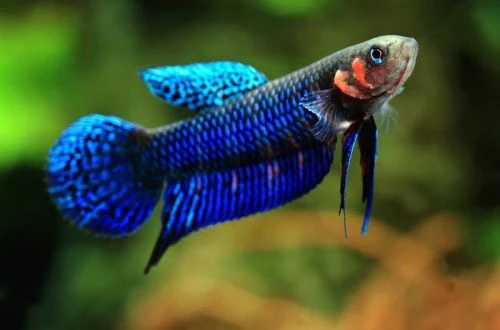
The scientific name Betta hendra was given to Hendra's Betta, or Betta hendra, within the family Osphronemidae. This species was named after the Indonesian naturalist Hendra Tommy, who first discovered it. This fish is not often found in home aquariums, as its keeping cannot be called simple, and it is usually available in limited quantities.
Adult individuals of this fish reach 3–4 cm in length. The appearance of Betta hendra is similar to Betta foerschi, which indicates their close relationship. Males are noticeably larger and have more saturated coloration; their colors can vary from bright to dark blue, depending on the keeping conditions. Characteristic red spots can be seen on their gill covers. During spawning, males display turquoise hues. Females look completely different: gray tones dominate their coloration, and the pattern consists of several rows of dark stripes.
The homeland of this fish is the Indonesian part of Borneo Island, located in Southeast Asia. It is endemic to the swampy forest areas within Sebangau National Park, in Central Kalimantan province, just 3 kilometers from its capital Palangkaraya. These swamps are fed by streams of the Sebangau river basin, as well as by tropical downpours. Typical for them is a dimly lit body of water, whose bottom is covered with fallen leaves, twigs, and snags. The water here acquires a rich brown hue due to the high concentration of humic acids and other tannins, which are formed during the decomposition of organic matter. The water level is irregular, its depth varies from 5 to 50 cm, and sometimes the bodies of water become significantly shallower, leaving the fish in shallow puddles for several weeks.
This species belongs to the group of fighting fish. Males compete with each other for hierarchical position and the attention of females, but this rivalry rarely leads to serious injuries. Nevertheless, in a small aquarium, it is wiser to limit oneself to only one male, who can be accompanied by one or more females, as well as other non-aggressive species of similar size.
For keeping a pair or a small group of fish, an aquarium of 40 liters or more will be optimal. Successful breeding of Betta hendra is possible by creating conditions as close as possible to its natural habitat — this is achieved both through properly selected decor and by maintaining appropriate hydrochemical water parameters. The fish look most harmonious in dim lighting, surrounded by snags and shade-loving plants, against a dark substrate covered with a layer of fallen leaves from certain trees. Leaves not only serve as a decorative element but also enrich the water with tannins, which is characteristic of the natural habitats of these fish. It is extremely important to ensure very low pH and dGH values, keeping them within acceptable limits. The stability of these conditions is guaranteed by regular aquarium maintenance, including waste removal and partial water changes, as well as the impeccable operation of equipment, primarily the filtration system. Other important aspects include maintaining a warm and humid air layer above the water surface and the absence of strong currents. The former is ensured by the presence of an aquarium lid, the latter by the type and model of filters, which are the main source of water movement.
In their natural habitat, the diet of these fish consists of small insects and other invertebrates. In aquarium conditions, acclimatized individuals successfully adapt to alternative food sources. Their daily menu can consist of dry foods, which are recommended to be combined with live or frozen daphnia, artemia, bloodworms, as well as mosquito larvae and Drosophila flies. Specialized foods for Bettas, offered by many manufacturers, will be an excellent choice.
When fish are kept in favorable conditions and receive a balanced diet, the probability of spawning significantly increases. An obvious sign of the beginning of the breeding period is a change in the coloration of males — they will develop turquoise hues — and the construction of a nest from air bubbles and plant debris either on the water surface or in some shelter. Spawning is accompanied by specific embraces of the male and female; at the culminating moment, the female releases eggs. The male collects all fertilized eggs and transfers them to the nest. The total number of eggs in one clutch can vary from 20 to 50. The incubation period lasts 24–72 hours. The hatched fry remain in the clutch for several more days. Throughout this time, the male cares for the offspring, picking up those who accidentally detach from the nest. However, as soon as the fry begin to swim freely, the parents lose interest in them, but, unlike other cohabiting fish, they do not attempt to eat their brood.
Most health problems in fish often arise from unsuitable keeping conditions. Maintaining a stable and comfortable habitat is a key factor for successful keeping. If symptoms of illness appear, the first step is to check the water quality. If deviations are found, it is important to take immediate measures to eliminate them. If the symptoms do not disappear or worsen, medicinal treatment may be required.
When purchasing, choose active individuals with clean fins and no visible damage to their scales. Due to the rarity of the species, it is important to ensure there are no signs of exhaustion or stress, which manifest as pale coloration and apathetic behavior. It is recommended to acquire fish from trusted breeders, as the species is extremely rare in stores and may be weakened due to unsuitable keeping conditions that do not meet the specific requirements for water parameters. Before purchasing, it is advisable to clarify whether the fish is adapted to eating dry foods, as wild-caught individuals may require exclusively live or frozen food.
The essentials: size, tank volume, water parameters and care
An adult reaches 3–4 cm in length. Plan the tank around the maximum size: the fish quickly outgrows a cramped setup.
The recommended volume is 40 L. A smaller tank speeds up nitrate build-up and raises stress levels.
Temperature 22–27 °C, pH 4–6.5, hardness 1–5 dGH. Stability matters more than exact values: sudden swings are harder on the fish than a small deviation from the ideal.
Around 3 years when kept properly. Lifespan depends directly on tank volume, water quality and a varied diet.
Temperament: peaceful (regular). Keep this in mind when choosing tank mates.
Recommended setup: mixed (solitary / pair / group). Ignoring this is a common cause of stress and disease.
Diet type: any (universal). Feed small portions that are finished within a couple of minutes — overfeeding does more harm than underfeeding.
The scientific name of the species is Betta hendra, family Osphronemidae.
The water suits 197 of 208 plants in the catalogue — the easiest ones are shown first.
Afzelius's AnubiasAnacharisAnubiasBrazilian PennywortDwarf CloverDwarf CloverDwarf HygrophilaDwarf SagittariaDwarf ValGuppy GrassHornwortJava FernJava MossMoneywortMud SwordNair's LagenandraNarrow Leaf AnacharisNarrow-leaf CloverStringy MossSüsswassertangTaiwan MossTape GrassTemple PlantUssuri Watermilfoil
Matched by family, categories and overlapping keeping conditions
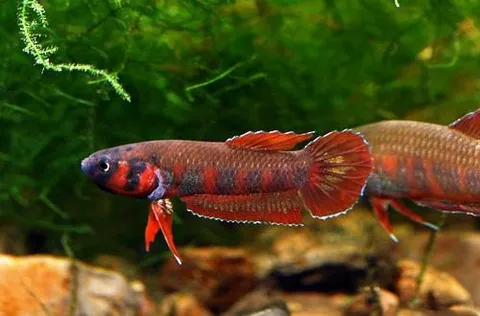
Betta rubra
The Red Betta, scientifically known as Betta rubra and belonging to the family Osphronemidae, has been present in the aquarium hobby since 2009. Initially, until 2013, it was often confused with and supplied under the…
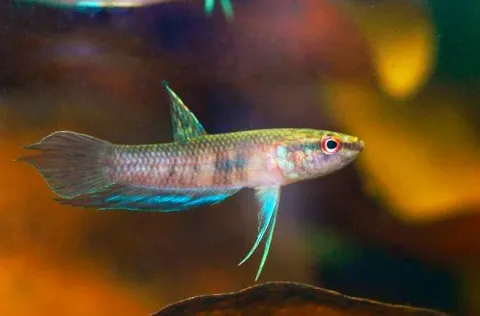
Betta dimidiata
The Dimidata Betta, also known as Betta dimidiata (scientific name Betta dimidiata), belongs to the family Osphronemidae. The Latin word "dimidiata" in its name translates to "halved," reflecting the modest size of this…
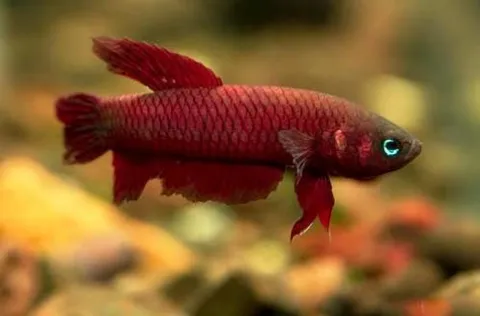
Betta tussyae
Tussy's Betta, scientifically known as Betta tussyae, belongs to the family Osphronemidae, or Gouramies. It was named after Tussy Nagy, the wife of Australian aquarist Peter Nagy, who introduced the first specimens of…
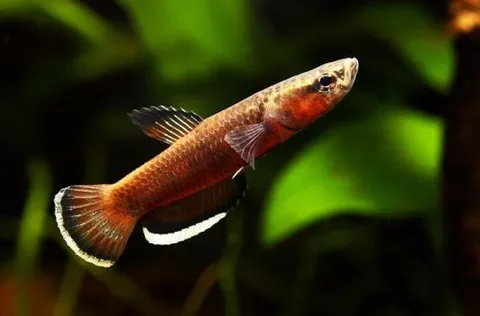
Betta albimarginata
Betta albimarginata, or the White-Seam Betta (scientific name Betta albimarginata), belongs to the family Osphronemidae. This miniature fish has a bright and attractive appearance, but these characteristics mainly apply…