Temperature22 – 27 °C
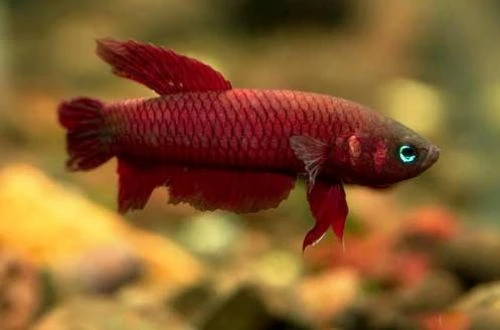
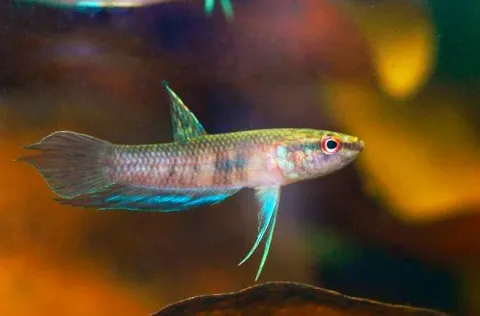
Tussy's Betta, scientifically known as Betta tussyae, belongs to the family Osphronemidae, or Gouramies. It was named after Tussy Nagy, the wife of Australian aquarist Peter Nagy, who introduced the first specimens of these amazing fish to the European public in 1979.
Adults of this fish grow to approximately 3 centimeters in length. Males are distinguished by a brighter, richer dark red coloration. Females, on the other hand, are gray with a characteristic pattern of two light, broad stripes running from head to tail. Their fins are transparent, sometimes with a slight bluish tint.
This fish originates from Southeast Asia, where it can be found in the peat swamps of the eastern part of the Malay Peninsula, within Malaysia. Their typical habitats are shallow bodies of water, hidden deep within tropical forests, with dense riparian vegetation. Daylight penetrates dimly due to the thick tree canopy. The bottom of such waters is usually covered with a thick layer of fallen leaves, branches, and snags. The water acquires a rich brown hue due to the high concentration of tannins released during the decomposition of organic matter. The dissolved mineral content here is generally low, and the pH level can reach extremely low values of 3.0–4.0. In certain seasons, the waters may dry up, leaving only moist mud with plant debris, but the fish are able to survive for some time in these conditions, awaiting the rains.
When choosing tank mates for these miniature fish, it is advisable to opt for other small species that can thrive in similar conditions. These may include small cyprinids, such as Rasboras, as well as Corydoras catfish and some loaches. In an aquarium environment, males compete for the attention of females. If the aquarium is small, it is advisable to keep one male with one or more females. In more spacious aquariums, where many hiding places are provided, cohabitation of several males is permissible.
For 2-3 fish, an aquarium of 40 L or more is generally considered optimal. The internal design of the aquarium can be chosen at the owner's discretion. It should be noted that many aquarists prefer to do without substrate and decorative elements for ease of maintenance. However, Tussy's Betta will appear most natural and harmonious in an environment resembling its natural waters. Such an arrangement usually includes a soft dark substrate, natural driftwood, and shade-loving plants, including floating ones. Bark and dried tree leaves will look organic. Lighting should be subdued. For long-term keeping of these fish, special attention should be paid to water composition: it is important to maintain acidic, soft pH and GH values. The presence of tannins has a positive effect; these can be added artificially using ready-made solutions or obtained naturally from decomposing leaves. Leaves from many temperate trees or Indian almond leaves are suitable for this purpose. The absence of internal current in the aquarium is important. Filters are most often the source of current; a simple air-driven sponge filter is quite sufficient for Bettas, as it does not create excessive flow but effectively cleans the water in small tanks. In their natural habitat, the diet of these fish consists of small insects and zooplankton. In aquarium conditions, they adapt well to popular dry foods. Freeze-dried, fresh, or frozen brine shrimp, as well as bloodworms, daphnia, small or crushed gammarus, and similar foods, will be an excellent addition.
In nature, these fish prefer to feed on small insects and zooplankton. In aquarium conditions, they adapt well to popular dry foods. Excellent dietary supplements include freeze-dried, fresh, or frozen brine shrimp, as well as bloodworms, daphnia, and small or crushed gammarus. Breeding Tussy's Betta is quite possible in a home aquarium, provided the necessary keeping conditions are met, and the diet is balanced and rich in protein. When the breeding period arrives, the male chooses a secluded spot among the plants and builds a bubble nest on the water's surface.
Breeding in a home aquarium is quite feasible, provided the fish are kept in suitable conditions and receive a balanced, high-protein diet. When Bettas are ready to spawn, the male selects a specific spot among the vegetation and builds a bubble nest on the water's surface. After a brief courtship period and mating dance, the pair proceeds to lay eggs. The female usually swims away afterward, leaving the male to guard the nest. The incubation period for the eggs lasts 1–2 days. The hatched fry remain in the nest for another 3–4 days until the yolk sac is completely absorbed. After this time, the young begin to swim actively in search of food, and the male ceases to guard the clutch. It is worth noting that adult Bettas generally do not eat their own offspring. However, other fish species in a community tank may exhibit predatory instincts. Therefore, it is recommended to transfer the fry to a separate tank with identical water parameters, which will help ensure their safety and simplify the feeding process. The main diet for the fry should consist of microscopic foods: specialized powders, suspensions, and, if possible, live infusoria or Artemia nauplii.
The species is sensitive to water quality and requires strict adherence to parameters characteristic of peat swamps. If the pH shifts to the alkaline side or organic waste accumulates, the fish are susceptible to bacterial infections, fin rot, and mycoses. Prevention involves maintaining high acidity, regular water changes with purified water, and using natural conditioners (almond leaves, alder cones) that enrich the water with tannins and suppress pathogenic flora.
When purchasing, select active individuals with clean fins free of any signs of film or erosion. A healthy fish should show curiosity, have vibrant coloration, and a plump body without a sunken belly. Avoid individuals that constantly lie on the bottom, breathe heavily, or have clamped fins, as these can be signs of chronic stress or infectious diseases. In the store, the fish should be kept in conditions close to their natural environment, without excessive lighting.
The essentials: size, tank volume, water parameters and care
An adult reaches 3–4 cm in length. Plan the tank around the maximum size: the fish quickly outgrows a cramped setup.
The recommended volume is 40 L. A smaller tank speeds up nitrate build-up and raises stress levels.
Temperature 22–27 °C, pH 3–6, hardness 1–8 dGH. Stability matters more than exact values: sudden swings are harder on the fish than a small deviation from the ideal.
Around 4 years when kept properly. Lifespan depends directly on tank volume, water quality and a varied diet.
Temperament: peaceful (regular). Keep this in mind when choosing tank mates.
Recommended setup: mixed (solitary / pair / group). Ignoring this is a common cause of stress and disease.
Diet type: plant-based (algae, vegetables). Feed small portions that are finished within a couple of minutes — overfeeding does more harm than underfeeding.
The scientific name of the species is Betta tussyae, family Osphronemidae.
The water suits 171 of 208 plants in the catalogue — the easiest ones are shown first.
African Onion PlantAmazon FrogbitAmazon SwordAnacharisAnubiasArrowhead CryptDwarf CloverDwarf CloverDwarf HygrophilaDwarf SagittariaGuppy GrassHornwortJava FernJava MossMoneywortMud SwordNair's LagenandraNarrow Leaf AnacharisNarrow-leaf CloverStringy MossSüsswassertangTaiwan MossTemple PlantUssuri Watermilfoil
Matched by family, categories and overlapping keeping conditions
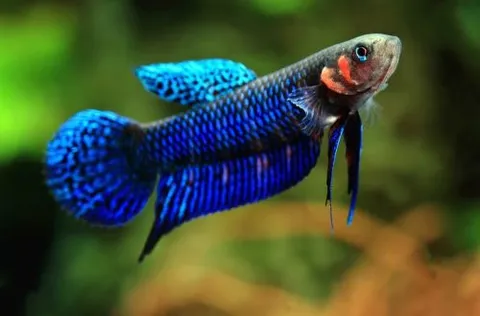
Betta hendra
The scientific name Betta hendra was given to Hendra's Betta, or Betta hendra, within the family Osphronemidae. This species was named after the Indonesian naturalist Hendra Tommy, who first discovered it. This fish is…
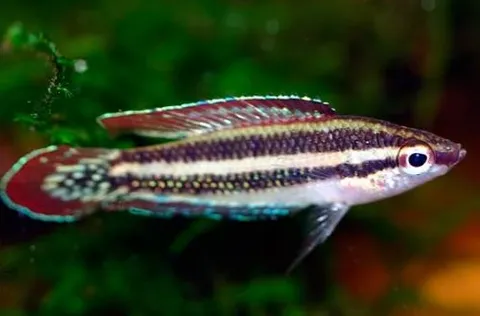
Parosphromenus quindecim
Parosphromenus quindecim, known as the Fifteen-rayed Licorice Gourami or Fifteen-rayed Betta, is a member of the Osphronemidae family. Its unusual name is due to the structure of its dorsal fin: unlike most relatives,…
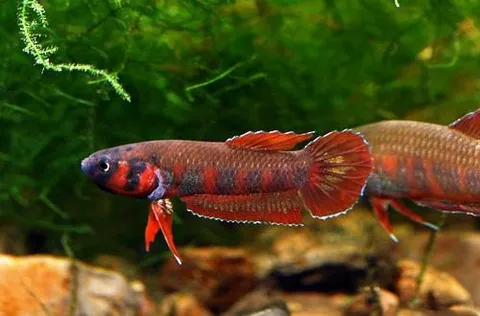
Betta rubra
The Red Betta, scientifically known as Betta rubra and belonging to the family Osphronemidae, has been present in the aquarium hobby since 2009. Initially, until 2013, it was often confused with and supplied under the…
Betta dimidiata
The Dimidata Betta, also known as Betta dimidiata (scientific name Betta dimidiata), belongs to the family Osphronemidae. The Latin word "dimidiata" in its name translates to "halved," reflecting the modest size of this…