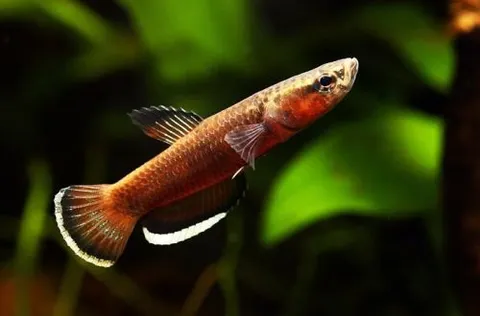
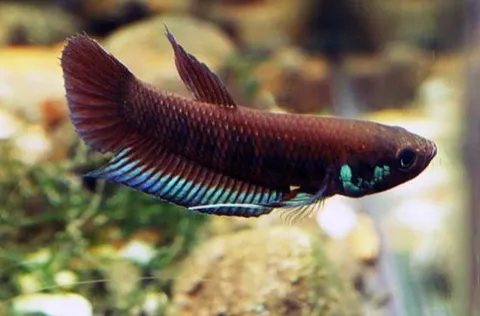
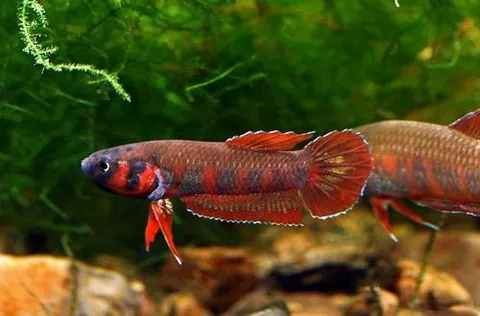
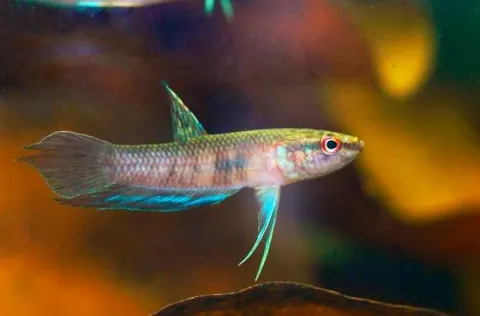
For keeping a single pair of these fish, an aquarium of at least 40 L will be optimal. It can be minimally decorated or fully furnished, although many aquarists choose not to use substrate to simplify maintenance. Nevertheless, the presence of decorative elements is highly desirable, as Bettas look more harmonious in an environment resembling their natural habitat. Dim lighting is recommended, and diffused light can be created using floating plants. Various shelters can be formed from natural snags and clusters of aquatic mosses or ferns, creating shaded areas. To give the aquarium a more natural look, dried leaves of certain trees can be added to a dark substrate. If decorative arrangement is not a priority, any artificial elements, such as ceramic pots lying on their side or fragments of PVC pipes, can serve as shelters. Successful long-term keeping is only possible with the maintenance of a stable aquatic environment with low pH and dGH values. When preparing water for the aquarium or during its weekly maintenance (partial water changes), especially in regions with hard water, it may be necessary to acquire additional devices, such as a reverse osmosis system. You can also refer to our articles for recommendations on reducing hydrochemical parameters. Filters that do not create strong water movement should be used, as Bettas, originating from stagnant waters, are not adapted to strong currents. The filtration system in small aquariums is critically important. For a pair of fish in a small tank, a simple air-driven sponge filter will suffice.