Temperature20 – 26 °C
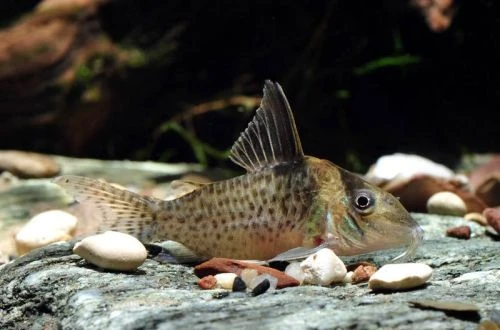
The Short-snouted Corydoras, or Short-snouted Cory catfish, scientifically known as Corydoras brevirostris, belongs to the armored catfish family. Although this fish was described back in 1947 and has long been kept in home aquariums, it was for a long time referred to by other names. This is due to identification difficulties, as this species is practically indistinguishable from its close relatives.
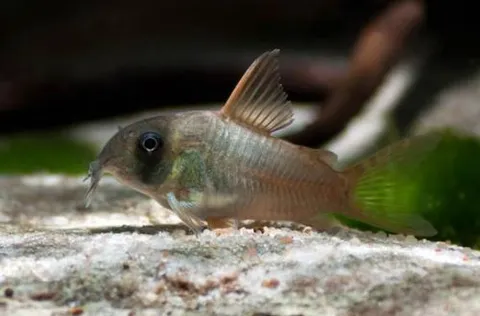
Adults typically reach 5–6 cm in length. Their coloration is predominantly gray, with noticeable yellow hues. The catfish's body is dotted with black speckles, and its head and the base of its dorsal fin are adorned with dark vertical stripes. Outwardly, Corydoras brevirostris is almost identical to its closest relative, the Spotted Corydoras. The main difference lies in a more intense spotted pattern on the tail and a characteristic shortened snout, which gave this species its name.
The species was described from the Orinoco drainage in Venezuela; its range is only vaguely defined and is usually given as the Orinoco system plus unnamed coastal rivers in Suriname. It has not been recorded from the Amazon. In nature, it lives in slow-flowing rivers, tributaries, and streams with sandy or silty bottoms. Typical biotopes are characterized by fallen leaves, snags, and dense vegetation, which provide shelter. The water in its habitat is usually soft, with an acidic or neutral pH.
This is a peaceful, schooling fish that is active during the day. The catfish constantly explore the substrate in search of food, moving along the bottom of the aquarium. Due to their strong schooling instinct, it is recommended to keep a group of 6–8 individuals, which reduces stress levels in the fish and promotes natural behavior. They are well compatible with most non-aggressive fish species inhabiting the middle and upper water layers.
This hardy and unpretentious fish will not pose great difficulties even for a beginner aquarist. It is important to ensure and maintain a stable hydrochemical composition of the water, an optimal temperature regime, and timely feeding, while avoiding overfeeding. The key to biological balance will be preventing the accumulation of waste, such as food residues and excrement, which is achieved through the uninterrupted operation of equipment, primarily the filtration system, and regular aquarium maintenance. No specific care procedures are required for it. In terms of nutrition, Corydoras brevirostris is undemanding. It readily accepts a variety of popular aquarium foods, including dry, live, and frozen. It is advisable to use small sinking products so that the catfish can easily swallow them. Behavior and compatibility: The peaceful nature of the Short-snouted Corydoras and its ability to adapt to various conditions allow for a wide range of tank mates. Excellent choices would be equally calm and non-aggressive fish of comparable size. It is recommended to purchase these catfish in groups of 4–6 individuals.
An omnivorous species, in nature it feeds on small invertebrates, insect larvae, and organic detritus. In the aquarium, they accept specialized dry foods in the form of sinking tablets or granules, as well as frozen foods such as Artemia, Daphnia, or bloodworms. For maintaining health, a varied diet including both animal and plant components is recommended.
Breeding is similar to other members of the genus. Spawning is paired or communal, stimulated by frequent water changes with cooler water and an increased proportion of protein food in the diet. Eggs are laid on the substrate: broad plant leaves, decorations, or aquarium glass. Parents may eat the eggs, so it is recommended to remove the adults after spawning is complete. Fry hatch after 3–5 days and begin to feed independently.
Fish are sensitive to water quality and substrate condition. When kept on sharp or coarse gravel, their delicate barbels are often damaged, opening the way for bacterial infections. It is important to keep the substrate clean, siphon it regularly, and avoid the accumulation of organic waste. With proper water parameters and feeding, they have good immunity.
When choosing, pay attention to the fish's activity: healthy individuals are constantly moving and actively exploring the bottom. The body should be clean, without ulcers, film, or fin damage. An important sign of health is intact, undamaged barbels around the mouth. Avoid purchasing fish that appear emaciated, apathetic, or show signs of rapid breathing.
The essentials: size, tank volume, water parameters and care
An adult reaches 5–6 cm in length. Plan the tank around the maximum size: the fish quickly outgrows a cramped setup.
The recommended volume is 80 L. A smaller tank speeds up nitrate build-up and raises stress levels.
Temperature 20–26 °C, pH 5.5–7.5, hardness 2–12 dGH. Stability matters more than exact values: sudden swings are harder on the fish than a small deviation from the ideal.
Around 5 years when kept properly. Lifespan depends directly on tank volume, water quality and a varied diet.
Temperament: peaceful (regular). Keep this in mind when choosing tank mates.
Recommended setup: small group (5–6 individuals). Ignoring this is a common cause of stress and disease.
Diet type: sinking (any). Feed small portions that are finished within a couple of minutes — overfeeding does more harm than underfeeding.
The scientific name of the species is Corydoras brevirostris, family Armored Catfish (Callichthyidae).
The water suits 198 of 208 plants in the catalogue — the easiest ones are shown first.
Afzelius's AnubiasAnacharisAnubiasBrazilian PennywortDwarf CloverDwarf CloverDwarf HygrophilaDwarf SagittariaDwarf ValGuppy GrassHornwortJava FernJava MossMoneywortMud SwordNair's LagenandraNarrow Leaf AnacharisNarrow-leaf CloverStringy MossSüsswassertangTaiwan MossTape GrassTemple PlantUssuri Watermilfoil
Matched by family, categories and overlapping keeping conditions
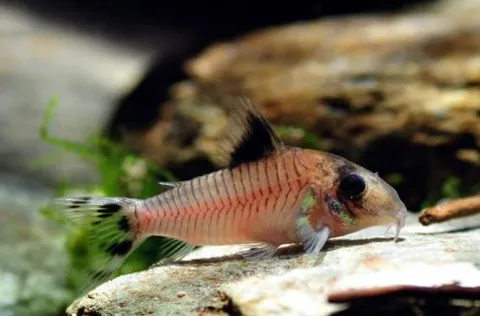
Corydoras condiscipulus
Corydoras condiscipulus, or the Condiscipulus Catfish (scientific name Corydoras condiscipulus), belongs to the family Callichthyidae, known as armored or callichthyid catfishes. The name itself comes from the Latin…
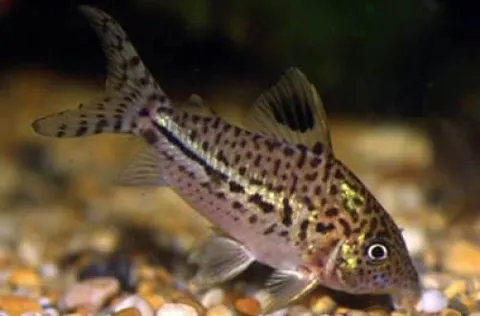
Corydoras gomezi
The scientific name Corydoras gomezi was given to this species of fish, belonging to the family of armored, or callichthyid, catfishes. It was named in honour of Dr Juan A. Gomez. These wild catfishes inhabit the upper…
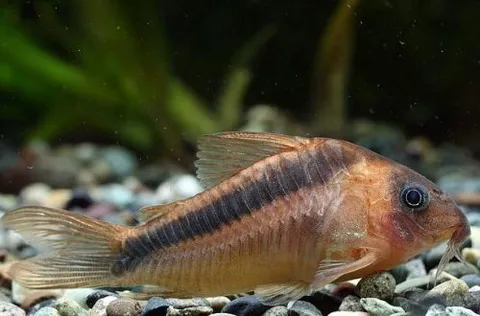
Corydoras rabauti
Rabaut's Corydoras, also known as the Orange or Rusty Corydoras, bears the scientific name Corydoras rabauti and is classified in the family Callichthyidae. Its natural habitat is located in the Javarí River basin,…
Corydoras concolor
Corydoras concolor, also known as the Concolor Cory, belongs to the family Callichthyidae. Its scientific name is Corydoras concolor. This name accurately reflects a key feature of this fish: its coloration is…