Temperature20 – 26 °C
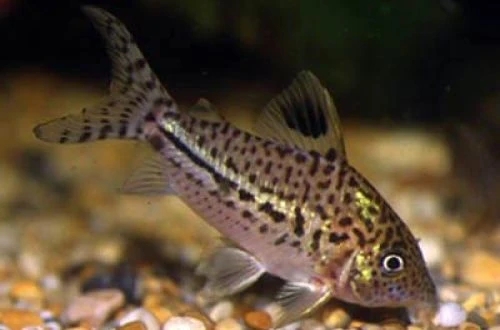
The scientific name Corydoras gomezi was given to this species of fish, belonging to the family of armored, or callichthyid, catfishes. It was named in honour of Dr Juan A. Gomez. These wild catfishes inhabit the upper reaches of the Amazon River, occupying vast territories in northern Peru and eastern Colombia, located in South America.
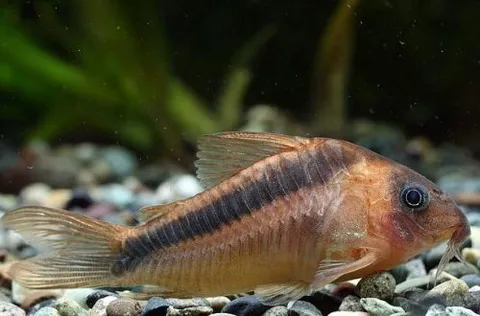
Adults of this fish typically reach a length of 5 to 6 cm. A spotted pattern is visible on the silvery body, resembling the coloration of other closely related Corydoras species. However, the differences lie in the specifics of the pattern. Black speckles are observed all over the body, forming distinct dotted lines, one of which even turns into a continuous line. The dorsal fin is adorned with a prominent black spot, and six vertical, slightly curved stripes can be distinguished on the tail.
The species inhabits South America, in the Amazon River basin within Colombia. The type locality is the vicinity of the city of Leticia. In nature, it populates river sections with soft, slightly acidic or neutral water, preferring sandy substrates and areas with abundant aquatic vegetation and shelters in the form of snags.
A peaceful schooling fish, predominantly active in the bottom layers of the aquarium. Intraspecific behavior requires keeping them in a group of six or more individuals, which reduces stress levels and promotes natural behavior patterns. They are highly compatible with other non-aggressive fish species, such as tetras, rasboras, and small cichlids.
These fish, being originally unpretentious and hardy, have become even less demanding in terms of keeping conditions after many generations spent in aquariums. Even a novice aquarist will have no difficulty successfully keeping Gomez's Corydoras. It is important to provide them with a sufficiently spacious aquarium of at least 80 liters (for a group of 4–6 individuals) with a sandy substrate at the bottom and several shelters. The stability of the aquatic environment is maintained by the uninterrupted operation of equipment, primarily the filtration system, and regular aquarium maintenance. Such maintenance includes weekly water changes of 15–20% of the total volume of water with fresh water, as well as timely removal of organic waste, such as leftover food and excrement. As for feeding, a varied diet including dry, frozen, and live foods is considered optimal. However, the catfish can also be content with dry flakes and pellets. The main condition for all types of food is that they must be sinking, as these fish spend most of their lives near the bottom. Behavior and compatibility: These fish have a peaceful and friendly disposition. Their calm nature and ability to adapt to various aquatic conditions significantly expand the list of potential aquarium mates.
An omnivorous species that, in natural conditions, feeds on small invertebrates and organic particles found in the substrate. In the aquarium, high-quality sinking foods should be used, supplementing the diet with live or frozen foods such as Artemia, bloodworms, or Daphnia. It is recommended to feed small portions once or twice a day.
Data on breeding in captivity are limited. It is assumed that the spawning process is similar to other members of the genus and involves laying eggs on the substrate. Stimulation can be provided by regular water changes with softer and fresher water, as well as imitation of seasonal temperature changes. Successful breeding requires a separate breeding aquarium.
The species is susceptible to diseases typical for armored catfishes when keeping conditions are violated. The main threat is damage to the delicate barbels due to the use of coarse or sharp substrate, which can lead to secondary bacterial infections. They are sensitive to the accumulation of organic waste in the water, therefore requiring regular filtration and water changes.
When purchasing, active fish with clean skin without visible damage, spots, or ulcers should be chosen. It is important to inspect the condition of the barbels — they should be intact, without signs of erosion. Avoid individuals that appear emaciated, apathetic, or have sunken bellies, as this may indicate the presence of internal parasites or chronic stress.
The essentials: size, tank volume, water parameters and care
An adult reaches 5–6 cm in length. Plan the tank around the maximum size: the fish quickly outgrows a cramped setup.
The recommended volume is 80 L. A smaller tank speeds up nitrate build-up and raises stress levels.
Temperature 20–26 °C, pH 6–7.5, hardness 2–12 dGH. Stability matters more than exact values: sudden swings are harder on the fish than a small deviation from the ideal.
Around 7 years when kept properly. Lifespan depends directly on tank volume, water quality and a varied diet.
Temperament: peaceful (regular). Keep this in mind when choosing tank mates.
Recommended setup: small group (5–6 individuals). Ignoring this is a common cause of stress and disease.
Diet type: sinking (any). Feed small portions that are finished within a couple of minutes — overfeeding does more harm than underfeeding.
The scientific name of the species is Corydoras gomezi, family Armored Catfish (Callichthyidae).
The water suits 197 of 208 plants in the catalogue — the easiest ones are shown first.
Afzelius's AnubiasAnacharisAnubiasBrazilian PennywortDwarf CloverDwarf CloverDwarf HygrophilaDwarf SagittariaDwarf ValGuppy GrassHornwortJava FernJava MossMoneywortMud SwordNair's LagenandraNarrow Leaf AnacharisNarrow-leaf CloverStringy MossSüsswassertangTaiwan MossTape GrassTemple PlantUssuri Watermilfoil
Matched by family, categories and overlapping keeping conditions
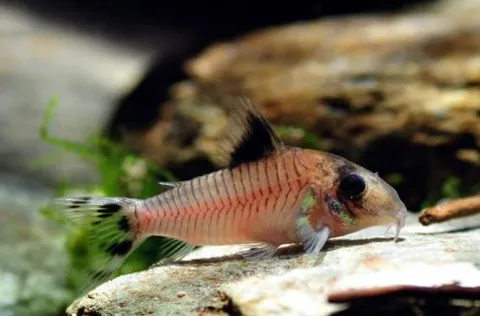
Corydoras condiscipulus
Corydoras condiscipulus, or the Condiscipulus Catfish (scientific name Corydoras condiscipulus), belongs to the family Callichthyidae, known as armored or callichthyid catfishes. The name itself comes from the Latin…
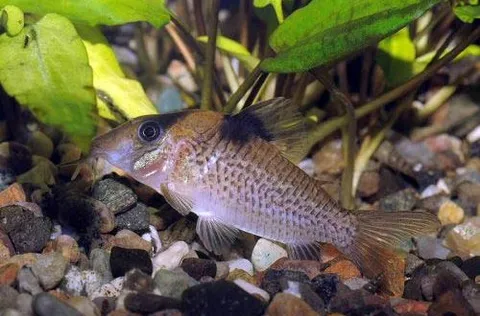
Corydoras ephippifer
Corydoras ephippifer, also known as the Saddle Corydoras, bears the scientific name Corydoras ephippifer. It is a member of the Callichthyidae family, which includes armored or callichthyid catfishes. Its name is…
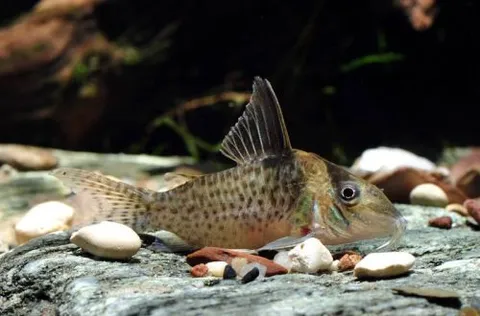
Corydoras brevirostris
The Short-snouted Corydoras, or Short-snouted Cory catfish, scientifically known as Corydoras brevirostris, belongs to the armored catfish family. Although this fish was described back in 1947 and has long been kept in…
Corydoras rabauti
Rabaut's Corydoras, also known as the Orange or Rusty Corydoras, bears the scientific name Corydoras rabauti and is classified in the family Callichthyidae. Its natural habitat is located in the Javarí River basin,…