Temperature20 – 25 °C
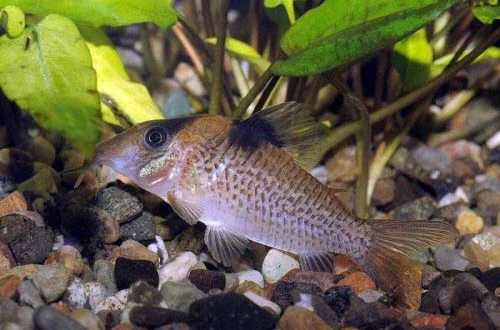
Corydoras ephippifer, also known as the Saddle Corydoras, bears the scientific name Corydoras ephippifer. It is a member of the Callichthyidae family, which includes armored or callichthyid catfishes. Its name is derived from the Latin word "ephippium," meaning "saddle," hinting at the distinctive pattern on the upper part of its body that resembles a piece of harness with the same name.
This species is a close relative of other corydoras such as the Ambiacus, Agassiz's, Short-nosed, Pigmy Corydoras, and other similar species. Their kinship is expressed in the general style of their coloration and body pattern. Adult specimens of this catfish typically reach a length of 5 to 6 centimeters. Their body coloration is grey, adorned with numerous dark speckles. The main distinguishing features are black markings on the head and at the base of the dorsal fin, which are precisely what gave rise to the name "saddle-bearer." A notable feature is also the absence of any spotted patterns on the fins and tail of these fish; they remain solid-colored and semi-transparent.
The species inhabits South America, specifically in Amapá State in northeastern Brazil. In nature, it lives in slow-flowing bodies of water with soft, slightly acidic or neutral water. It prefers areas with sandy or fine gravel bottoms, where there is abundant vegetation and hiding places, providing protection and foraging grounds.
A peaceful and schooling fish, most active in the evening. To ensure their comfort and natural behavior, a group of at least 4–6 individuals should be kept. It is well-suited for community aquariums with non-aggressive fish species that occupy other water levels.
This undemanding and hardy fish is perfect for beginner aquarists, as it demonstrates high adaptability to a wide range of conditions. It thrives in both soft, slightly acidic water and hard, slightly alkaline water. Corydoras ephippifer has no special requirements for aquarium decor: a soft sandy substrate and a few hiding places at the bottom will suffice. Natural driftwood, dense thickets of live plants, or other decorative elements can be used as hiding places. An important condition for its keeping is maintaining substrate cleanliness and stable hydrochemical water parameters within acceptable temperature ranges. This can be achieved by regularly performing essential aquarium maintenance procedures, such as water changes, cleaning the substrate and decorative elements, and by installing the necessary equipment. The minimum equipment set includes filtration, heating, and lighting systems. As for feeding, the fish readily accepts most popular foods of appropriate size. Sinking foods are preferable so that the catfish does not have to rise to the surface to eat. Due to its peaceful nature and ability to adapt to various conditions, the Saddle Corydoras easily coexists in almost any community of freshwater fish, provided that tankmates are not aggressive and are not too large.
An omnivorous species that feeds on small invertebrates and organic detritus in nature. In the aquarium, it accepts most types of sinking dry foods, as well as frozen and live foods such as bloodworms or brine shrimp. One should not rely on the fish feeding solely on leftover food from other inhabitants; it is necessary to provide a complete diet to maintain health.
Reliable data on the captive breeding of this species is virtually nonexistent. It is assumed that the spawning process is similar to other members of the genus: eggs are laid on flat surfaces, such as plant leaves or aquarium walls. To stimulate spawning, it is recommended to maintain high water quality and simulate the rainy season through regular water changes.
The species is susceptible to typical diseases of armored catfishes, often associated with poor water quality or unsuitable substrate. Sharp substrate particles can damage the delicate barbels, opening the way for bacterial infections. Prevention involves maintaining a clean bottom and using soft sand, as well as regular water changes to prevent the accumulation of organic matter.
When selecting specimens, attention should be paid to the integrity of the fins and the absence of body damage. A healthy fish should be active, show interest in foraging at the bottom, and not exhibit signs of emaciation. Avoid purchasing fish with damaged or missing barbels, as this often indicates unsatisfactory keeping conditions in the store.
The essentials: size, tank volume, water parameters and care
An adult reaches 5–6 cm in length. Plan the tank around the maximum size: the fish quickly outgrows a cramped setup.
The recommended volume is 80 L. A smaller tank speeds up nitrate build-up and raises stress levels.
Temperature 20–25 °C, pH 6–7.5, hardness 2–15 dGH. Stability matters more than exact values: sudden swings are harder on the fish than a small deviation from the ideal.
Around 5 years when kept properly. Lifespan depends directly on tank volume, water quality and a varied diet.
Temperament: peaceful (regular). Keep this in mind when choosing tank mates.
Recommended setup: small group (5–6 individuals). Ignoring this is a common cause of stress and disease.
Diet type: sinking (any). Feed small portions that are finished within a couple of minutes — overfeeding does more harm than underfeeding.
The scientific name of the species is Corydoras ephippifer, family Armored Catfish (Callichthyidae).
The water suits 196 of 208 plants in the catalogue — the easiest ones are shown first.
Afzelius's AnubiasAnacharisAnubiasBrazilian PennywortDwarf CloverDwarf CloverDwarf HygrophilaDwarf SagittariaDwarf ValGuppy GrassHornwortJava FernJava MossMoneywortMud SwordNarrow Leaf AnacharisNarrow-leaf CloverStringy MossSüsswassertangTaiwan MossTape GrassTemple PlantUssuri WatermilfoilWater Wisteria
Matched by family, categories and overlapping keeping conditions
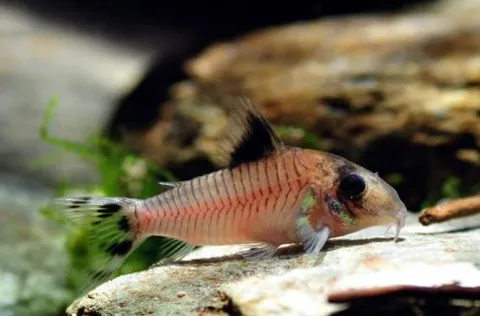
Corydoras condiscipulus
Corydoras condiscipulus, or the Condiscipulus Catfish (scientific name Corydoras condiscipulus), belongs to the family Callichthyidae, known as armored or callichthyid catfishes. The name itself comes from the Latin…
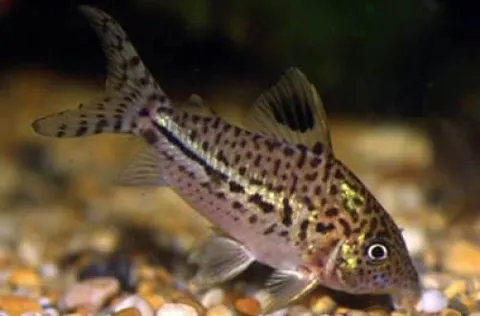
Corydoras gomezi
The scientific name Corydoras gomezi was given to this species of fish, belonging to the family of armored, or callichthyid, catfishes. It was named in honour of Dr Juan A. Gomez. These wild catfishes inhabit the upper…
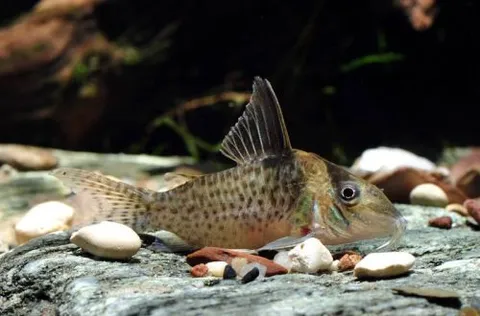
Corydoras brevirostris
The Short-snouted Corydoras, or Short-snouted Cory catfish, scientifically known as Corydoras brevirostris, belongs to the armored catfish family. Although this fish was described back in 1947 and has long been kept in…
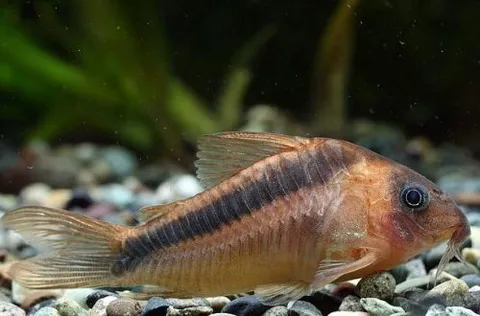
Corydoras rabauti
Rabaut's Corydoras, also known as the Orange or Rusty Corydoras, bears the scientific name Corydoras rabauti and is classified in the family Callichthyidae. Its natural habitat is located in the Javarí River basin,…