Temperature18 – 25 °C
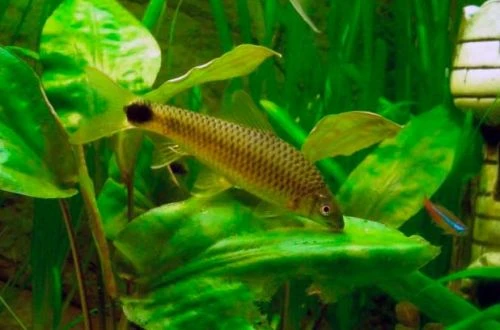
The scientific name Labeo forskalii indicates that the Silver Labeo belongs to the carp family (Cyprinidae). This fish originates from the African continent, specifically from the upper regions of the Nile River basin. Adults typically inhabit the main river channels, preferring open water spaces.
Adults grow up to 35 cm in length, although they rarely reach their maximum size in aquarium conditions. Young fish are uniformly colored in grey tones, with a noticeable dark spot at the base of the tail, which disappears as they mature. With age, the fish acquire a silvery hue with slight greenish iridescence.
The Silver Labeo inhabits freshwater bodies in Northeast and East Africa, primarily populating the upper Nile River basin. In nature, the fish prefer to stay in the main river channels, choosing open areas with moderate currents. The water in their habitats is characterized by softness and a slightly acidic reaction.
These fish are distinguished by their activity and mobility. They exhibit territorial behavior and may conflict with each other over the best areas of the aquarium bottom. However, several individuals can coexist peacefully in one tank if sufficient space is provided. Compatibility is only possible with strong fish of similar size. It is recommended to select species that inhabit the water column or surface to reduce competition for bottom zones.
For keeping one large Silver Labeo, an aquarium of at least 200 liters is required. If a group of fish is planned, the tank volume should be proportionally increased. When keeping two or more individuals, it is important to decorate the aquarium in such a way that each fish has its own secluded spot, including snags, large stones, and plant thickets. These individual areas should be located at a distance from each other, for example, near different walls, with open space between them. Optimal conditions for their keeping include soft, slightly acidic water. Regular partial water changes with fresh water, combined with substrate cleaning and continuous operation of the filtration system, will help prevent excessive accumulation of waste products.
In their natural habitat, the diet of juveniles primarily consists of zooplankton. As they mature, their dietary preferences change, and the fish begin to favor plant-based foods. Subadults should be fed foods with a high content of vegetable components. Sinking foods are recommended.
Breeding in aquarium conditions is considered a complex process. Fish reach sexual maturity at 2 to 3 years of age. Spawning requires a spacious tank with quality filtration and aeration, as well as the creation of conditions that mimic natural water parameters. During spawning, the male actively pursues the female, after which the eggs are laid on a substrate, such as plant leaves or decorations. After fertilization, the male may exhibit protective behavior. Fry hatch after 2–4 days and initially feed on the contents of their yolk sac, after which they transition to small foods.
No specific diseases exclusively characteristic of Labeo forskalii have been recorded. Like other members of the carp family, this species is susceptible to standard aquarium infections if husbandry conditions are violated. The most common are ichthyophthiriasis, caused by protozoa, and bacterial skin lesions, which arise due to poor water quality or mechanical injuries. The key factor in prevention is maintaining cleanliness in the aquarium, regular water changes, and monitoring environmental parameters. Fish are sensitive to the accumulation of organic waste, which can lead to a decrease in immunity and the development of fin rot. To prevent stress and injuries that provoke fungal diseases, it is necessary to provide individual hiding places in the aquarium, as territorial conflicts often lead to skin damage.
When purchasing, select active fish with clean fins and no visible damage to their scales. It is important to avoid individuals showing signs of emaciation, sluggish behavior, or unnatural coloration. Since the species exhibits pronounced territoriality, it is recommended to assess the aquarium size in advance, as the fish can grow to significant sizes and display aggression towards conspecifics or tank mates.
The essentials: size, tank volume, water parameters and care
An adult reaches 35 cm in length. Plan the tank around the maximum size: the fish quickly outgrows a cramped setup.
The recommended volume is 200 L. A smaller tank speeds up nitrate build-up and raises stress levels.
Temperature 18–25 °C, pH 5–7, hardness 1–15 dGH. Stability matters more than exact values: sudden swings are harder on the fish than a small deviation from the ideal.
Around 10 years when kept properly. Lifespan depends directly on tank volume, water quality and a varied diet.
Temperament: aggressive / incompatible / unfriendly. Keep this in mind when choosing tank mates.
Recommended setup: both solitary and in group (flexible). Ignoring this is a common cause of stress and disease.
Diet type: sinking (plant-based). Feed small portions that are finished within a couple of minutes — overfeeding does more harm than underfeeding.
The scientific name of the species is Labeo forskalii, family Cyprinids (Cyprinidae).
The water suits 197 of 208 plants in the catalogue — the easiest ones are shown first.
Afzelius's AnubiasAnacharisAnubiasBrazilian PennywortDwarf CloverDwarf CloverDwarf HygrophilaDwarf SagittariaDwarf ValGuppy GrassHornwortJava FernJava MossMoneywortMud SwordNarrow Leaf AnacharisNarrow-leaf CloverStringy MossSüsswassertangTaiwan MossTape GrassTemple PlantUssuri WatermilfoilWater Wisteria
Matched by family, categories and overlapping keeping conditions
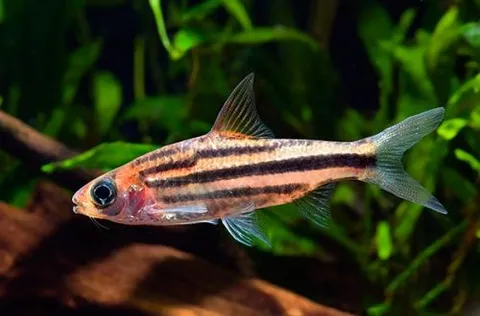
Desmopuntius trifasciatus
The Three-banded Barb, scientifically known as Desmopuntius trifasciatus, belongs to the carp family (Cyprinidae). Its name vividly reflects the characteristic body pattern, adorned with rows of dark stripes. This…
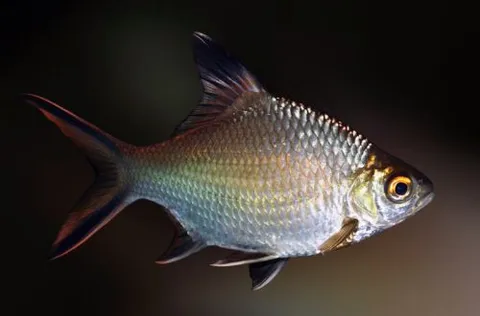
Barbonymus schwanefeldii
Barbonymus schwanefeldii, known as the Tinfoil Barb and belonging to the Cyprinidae family, attracts attention with its impressive size and characteristic silvery coloration. These fish, which have a schooling nature,…
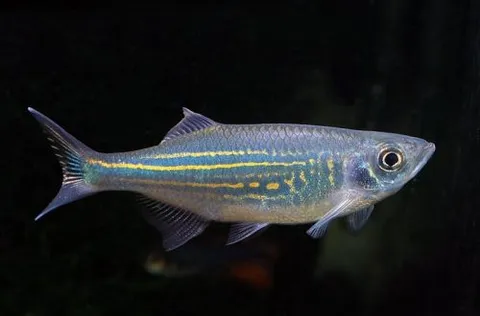
Devario malabaricus
The Malabar Danio, scientifically known as Devario malabaricus, belongs to the family Cyprinidae. These fish are undemanding in both keeping and breeding. They coexist perfectly with many freshwater species, making them…
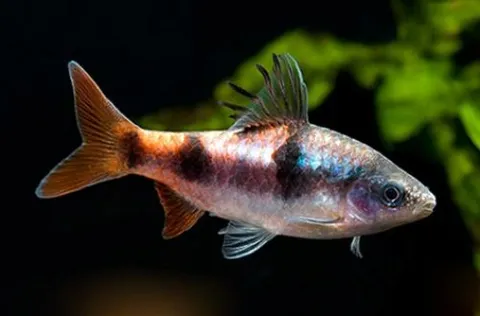
Dawkinsia tambraparniei
The fish known as the Tamirabarani Barb (scientific name Dawkinsia tambraparniei) belongs to the family Cyprinidae. Its name comes from the Tamirabarani River, which is the species' natural habitat. This species is…