Temperature18 – 28 °C
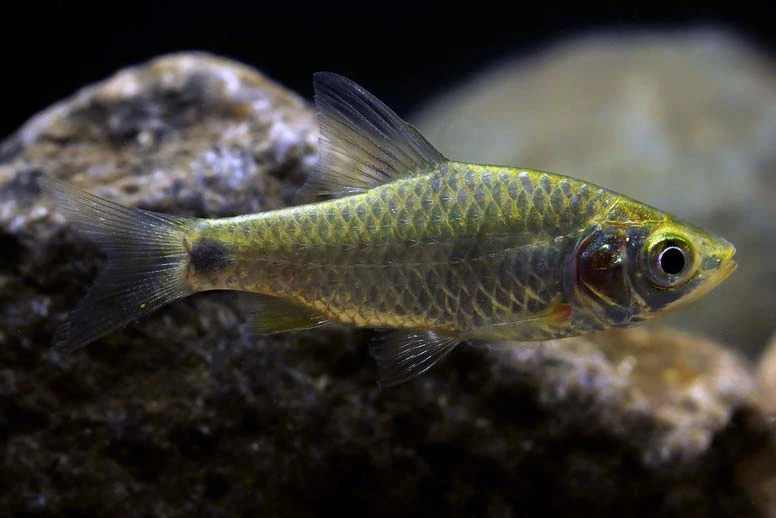
The Sophore Barb, or Puntius sophore according to its scientific name, belongs to the Carp family (Cyprinidae). Its natural habitat is found in the inland regions of Asia, specifically in countries such as India, Nepal, Bangladesh, Myanmar, Bhutan, Afghanistan, Pakistan, and China. This species prefers shallow waters, inhabiting diverse bodies of water: rivers, streams (including mountain streams), and lakes.
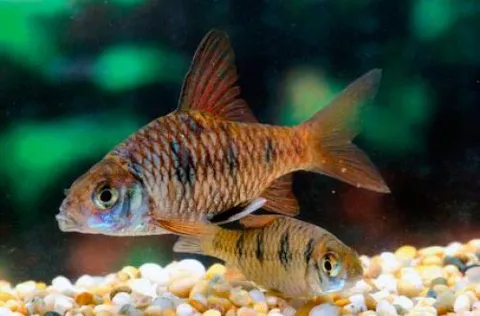
Adult specimens of this fish can grow up to 18–20 cm in length. Their body is characterized by a large, robust build. Their coloration is silvery, with a darker back, and a distinctive red stripe can be observed along the lateral line. Young individuals typically have a uniform coloration and lack the red stripe. The pelvic and anal fins have a reddish tint, while the other fins and tail are dark grey. Short barbels can be seen on the head, near the mouth.
The Sophore Barb is widespread in fresh and brackish waters of Asia, including rivers, streams, ponds, canals, and flooded fields. It is found in lowland and foothill regions of Pakistan, India, Nepal, Bangladesh, Myanmar, Bhutan, Afghanistan, and China. It prefers areas with diverse substrates such as sand, silt, gravel, and stones, and often inhabits turbid waters with pronounced seasonal regimes.
Despite its peaceful nature, this fish can sometimes be active, chasing smaller aquarium inhabitants. It coexists well with members of its own species and with other non-aggressive fish whose sizes are comparable to or larger than its own.
The Sophore Barb is considered a hardy and unpretentious fish, making its keeping quite simple. This species demonstrates high adaptability to various conditions: after a period of acclimatization, it successfully inhabits almost any aquarium, regardless of how soft or hard the water is. The aquarium setup is not critical and can be chosen at the owner's discretion or according to the needs of other fish species. Standard aquarium care includes regular (at least weekly) partial water changes with fresh water, timely removal of organic waste, and prophylactic equipment inspection.
This species is omnivorous and readily accepts all types of popular foods intended for aquarium fish. Its diet can include dry, frozen, and live foods, which it will consume with equal eagerness.
In nature, reproduction is seasonal and timed to the monsoon rains. Spawning is stimulated by increased rainfall and corresponding changes in water temperature. In aquarium conditions, hormonal stimulation is often used to successfully obtain offspring. Eggs are laid in a single spawning act; the incubation period is about 14–16 hours.
No specific diseases exclusively characteristic of this species have been described. Like other carp, it is susceptible to common infections and infestations when kept in improper conditions or under stress. Common problems include: — Ichthyophthiriasis (white spots on the body); — Infestation by monogenetic trematodes; — Bacterial infections arising from poor water quality. Prevention involves maintaining stable environmental parameters and avoiding overpopulation.
When purchasing, choose active fish that swim in a school and show interest in food. Healthy individuals have clean fins without signs of erosion, intact scales, and no visible spots or ulcers on the body. Avoid specimens that appear apathetic, stay at the water surface, or have an unnaturally bloated or, conversely, severely sunken abdomen.
The essentials: size, tank volume, water parameters and care
An adult reaches 20 cm in length. Plan the tank around the maximum size: the fish quickly outgrows a cramped setup.
The recommended volume is 150 L. A smaller tank speeds up nitrate build-up and raises stress levels.
Temperature 18–28 °C, pH 6–8, hardness 1–20 dGH. Stability matters more than exact values: sudden swings are harder on the fish than a small deviation from the ideal.
Around 5 years when kept properly. Lifespan depends directly on tank volume, water quality and a varied diet.
Temperament: peaceful (regular). Keep this in mind when choosing tank mates.
Recommended setup: mixed (solitary / pair / group). Ignoring this is a common cause of stress and disease.
Diet type: any (universal). Feed small portions that are finished within a couple of minutes — overfeeding does more harm than underfeeding.
The scientific name of the species is Puntius sophore, family Cyprinids (Cyprinidae). It also appears in the literature as: Barbus annandalei, Barbus chrysopterus, Barbus duvancelli.
The water suits 197 of 208 plants in the catalogue — the easiest ones are shown first.
Afzelius's AnubiasAnacharisAnubiasBrazilian PennywortDwarf CloverDwarf CloverDwarf HygrophilaDwarf SagittariaDwarf ValGuppy GrassHornwortJava FernJava MossMoneywortMud SwordNair's LagenandraNarrow Leaf AnacharisNarrow-leaf CloverStringy MossSüsswassertangTaiwan MossTape GrassTemple PlantUssuri Watermilfoil
Matched by family, categories and overlapping keeping conditions
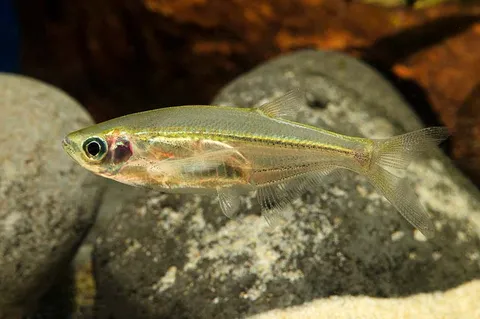
Parachela oxygastroides
Parachela oxygastroides, also known as the glass knifefish barb, is a member of the carp family (Cyprinidae). Its natural range covers areas of Southeast Asia, including Indochina, Thailand, as well as the islands of…
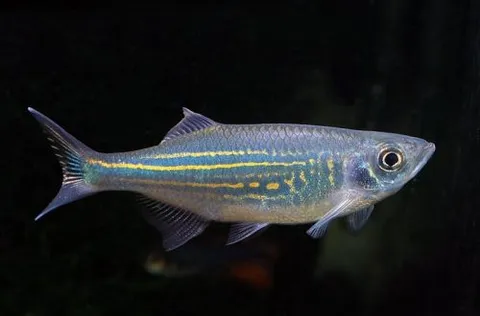
Devario malabaricus
The Malabar Danio, scientifically known as Devario malabaricus, belongs to the family Cyprinidae. These fish are undemanding in both keeping and breeding. They coexist perfectly with many freshwater species, making them…
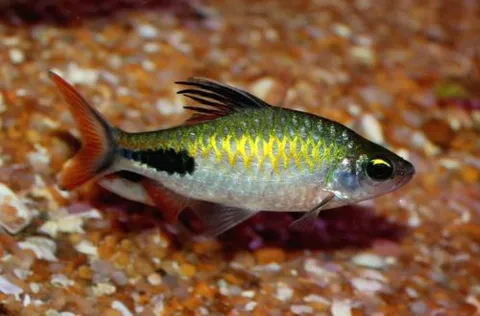
Dawkinsia rohani
The fish known as Rohan's Barb (Dawkinsia rohani by its scientific name) belongs to the family Cyprinidae. Its name is a tribute to two prominent biologist-ichthyologists, Richard Dawkins and Rohan Pethiyagoda. This…
Puntius sahyadriensis
Puntius sahyadriensis, or Maharashtra Barb, is a member of the Cyprinidae family. Among various barb species, it stands out with its distinctive angular body shape, making it easily recognizable. This species is easy to…