Temperature22 – 26 °C
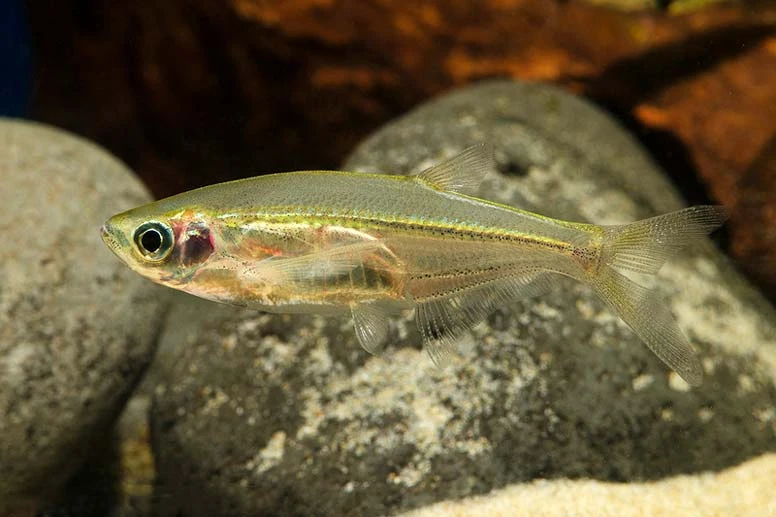
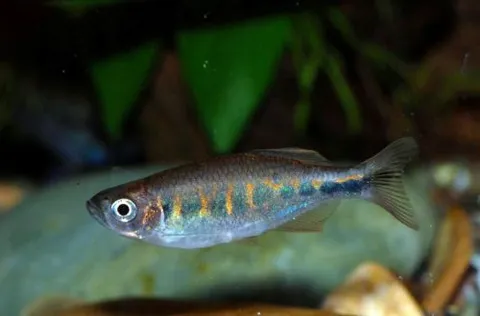
Parachela oxygastroides, also known as the glass knifefish barb, is a member of the carp family (Cyprinidae). Its natural range covers areas of Southeast Asia, including Indochina, Thailand, as well as the islands of Borneo and Java. These fish inhabit diverse aquatic environments: rivers, lakes, and swamps. During the rainy season, they can be found in flooded areas of tropical forests and even in rice paddies, which are part of agricultural lands.
Adults of this species can grow to approximately 20 centimeters in length. The name “glass” is given to the fish for a reason: it refers to a characteristic feature of its coloration. Young fish have an almost transparent body, which allows their skeleton and internal organs to be easily seen. However, with age, this translucency gives way to a uniform gray coloration, often with a noticeable bluish tint and a golden back.
The species is widespread in Southeast Asia, including the Mekong and Chao Phraya river basins, as well as on the Malay Peninsula, Sumatra, and Borneo. It inhabits rivers with slow to moderate currents, canals, and flooded forest areas. It prefers to stay in the middle and upper water layers, avoiding dense thickets, as it is an active swimmer that needs free space.
These fish are distinguished by their peaceful nature and prefer to stay in schools with their own kind or in the company of other fish species that are suitable in size and can coexist under similar conditions.
Keeping this fish does not present special requirements, as it successfully adapts to a wide range of conditions. Nevertheless, for maximum comfort, soft and slightly acidic water is recommended. In terms of diet, the glass knifefish barb is omnivorous and consumes any food that fits into its mouth. Dry foods, such as flakes and pellets, will be an optimal choice. Aquarium decoration also does not play a key role; however, creating shelters from dense plant thickets and driftwood will be beneficial for these fish.
In its natural environment, it feeds primarily on small insects falling onto the water surface, as well as zooplankton. In aquarium conditions, it accepts a variety of high-quality dry foods in the form of flakes or pellets suitable for surface-feeding fish. It is recommended to supplement the diet with live or frozen foods, such as Daphnia, Artemia, or small insect larvae.
There is no information on aquarium breeding. The fish keeps to shoals near the surface and, like other cyprinids of similar build, spawns in open water without caring for its offspring. No external sexual differences have been described; the species reaches the trade as wild-caught stock.
The species is sensitive to water quality and dissolved oxygen levels. If husbandry conditions are violated, such as the accumulation of organic waste or sharp fluctuations in parameters, the fish become susceptible to bacterial infections and the development of fin rot. Prevention includes regular water changes, effective filtration, and maintaining a stable hydrochemical regime.
When purchasing, choose active, mobile individuals without visible damage to scales or fins. It is important to pay attention to the integrity of the transparent body: the presence of cloudy spots, ulcers, or redness indicates poor health. The fish should show interest in food and not have signs of emaciation. Since the species is schooling, it is recommended to acquire a group of 6-8 individuals to reduce stress levels.
The essentials: size, tank volume, water parameters and care
An adult reaches 20 cm in length. Plan the tank around the maximum size: the fish quickly outgrows a cramped setup.
The recommended volume is 300 L. A smaller tank speeds up nitrate build-up and raises stress levels.
Temperature 22–26 °C, pH 6.3–7.5, hardness 5–15 dGH. Stability matters more than exact values: sudden swings are harder on the fish than a small deviation from the ideal.
Around 4 years when kept properly. Lifespan depends directly on tank volume, water quality and a varied diet.
Temperament: peaceful (regular). Keep this in mind when choosing tank mates.
Recommended setup: mixed (solitary / pair / group). Ignoring this is a common cause of stress and disease.
Diet type: any (universal). Feed small portions that are finished within a couple of minutes — overfeeding does more harm than underfeeding.
The scientific name of the species is Parachela oxygastroides, family Cyprinids (Cyprinidae). It also appears in the literature as: Chela johorensis, Chela megalolepis, Chela oxygastroides.
The water suits 197 of 208 plants in the catalogue — the easiest ones are shown first.
Afzelius's AnubiasAnacharisAnubiasBrazilian PennywortDwarf CloverDwarf CloverDwarf HygrophilaDwarf SagittariaDwarf ValGuppy GrassHornwortJava FernJava MossMoneywortMud SwordNair's LagenandraNarrow Leaf AnacharisNarrow-leaf CloverStringy MossSüsswassertangTaiwan MossTape GrassTemple PlantUssuri Watermilfoil
Matched by family, categories and overlapping keeping conditions
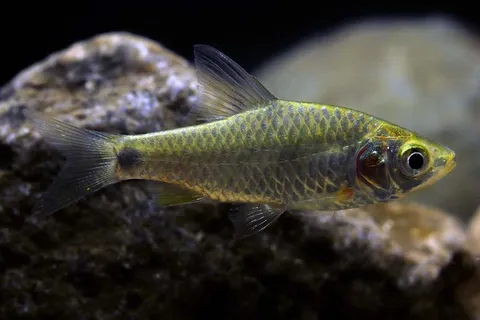
Puntius sophore
The Sophore Barb, or Puntius sophore according to its scientific name, belongs to the Carp family (Cyprinidae). Its natural habitat is found in the inland regions of Asia, specifically in countries such as India, Nepal,…
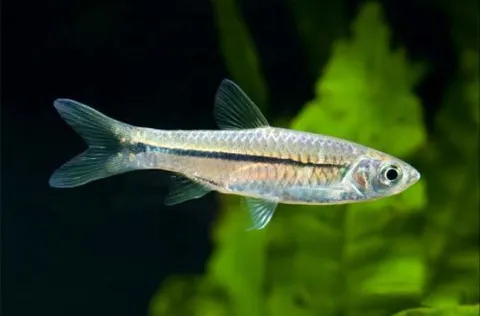
Rasbora paviana
The scientific name Rasbora paviana belongs to the family Cyprinidae, or carps. It is quite common to encounter the mistaken assumption that the name "Paviana" is associated with primates. However, this is not the case:…
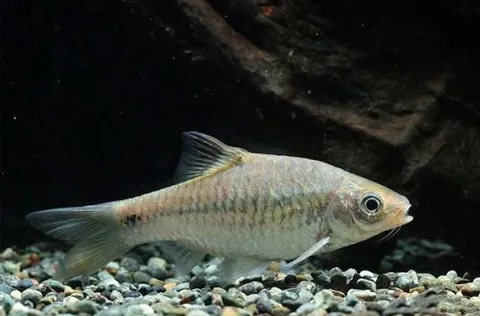
Barbodes binotatus
Barbodes binotatus, known as the Spotted Barb, belongs to the family Cyprinidae, or carps. This species, a typical inhabitant of Southeast Asian waters, is also called the Common Barb.
Devario pathirana
The Patirana Danio, or Ceylon Danio, also known as the Ceylon Tiger Danio (scientific name Devario pathirana), is a member of the Cyprinidae family. This name was given in honour of Ananda Pathirana, who made the…