Temperature23 – 26 °C
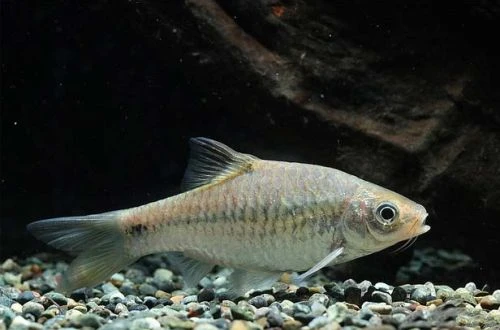
Barbodes binotatus, known as the Spotted Barb, belongs to the family Cyprinidae, or carps. This species, a typical inhabitant of Southeast Asian waters, is also called the Common Barb.
Adults can reach a maximum size of up to 20 cm, but in aquarium conditions, these fish usually grow no more than 9–11 cm. Their body coloration is grey-silver, with two dark spots located at the base of the dorsal fin and tail. Sometimes a black stripe may be visible along the lateral line. Sexual dimorphism in the species is weakly expressed; males and females show only minor visible differences. However, leading up to spawning, males develop characteristic carp tubercles on their heads, while females become noticeably rounded due to developing roe.
The natural habitats of this species extend across vast territories: from Myanmar, Thailand, and Peninsular Malaysia to the Greater Sunda Islands and the Philippines. It can be found in most key river systems of the region. The Spotted Barb inhabits diverse biotopes, from fast-flowing mountain rivers with clear, oxygen-rich water, to stagnant, swampy bodies of water densely overgrown with aquatic vegetation.
This active and mobile fish displays a peaceful attitude towards its aquarium neighbors. It coexists well with most other species of similar size and temperament, including loaches, which inhabit fast waters. It is recommended to keep groups of 6 or more individuals, as in a shoal, the fish's activity is directed towards maintaining internal hierarchy, which reduces aggression. If the number of individuals is fewer, aggressive behavior towards smaller fish may occur.
For maintaining a group of 6–8 individuals, the optimal aquarium volume starts from 200–250 liters. Since the Spotted Barb inhabits a wide variety of natural biotopes, it is considered a hardy and unpretentious species, capable of adapting to a wide range of conditions. The aquarium setup can be chosen arbitrarily, based on personal taste or the needs of other inhabitants. Caring for these fish will not present any particular difficulties. It is only important to maintain the hydrochemical parameters of the water within the recommended pH and dGH limits, and to avoid the accumulation of organic waste. To do this, it is necessary to ensure an effective filtration system and weekly replace about 50% of the water volume with fresh water. Being an omnivorous species, the Spotted Barb will readily accept most popular dry (flakes, granules), frozen, and live foods.
This species is omnivorous and readily accepts most common types of food: both dry (flakes, granules) and frozen or live.
Under favorable conditions, these fish spawn regularly. They scatter their eggs among dense plant thickets or directly over the aquarium substrate. Parental care is absent in Barbs, which often leads to eggs and hatched fry becoming food for adult individuals. To preserve the offspring, it is recommended to either arrange the spawning process in a separate tank or to timely transfer the already laid eggs or hatched fry into it.
Incorrect living conditions pose the primary threat to the health of Rosy Barbs. Poor food, polluted water, and injuries can weaken the fish's immune system, making it vulnerable to various infections. Upon the appearance of the first symptoms of illness (such as lethargy, changes in body shape, the appearance of spots on the skin, or refusal to eat), it is necessary first to check and normalize the living conditions, and only after that proceed with treatment.
When selecting individuals, attention should be paid to the cleanliness of the skin and fins: the absence of white spots, ulcers, plaque, or damage is an essential sign of health. Fish should be active, have even breathing, and not show signs of emaciation or unnatural abdominal distension. Avoid purchasing individuals that stay near the water surface, constantly hide in corners, or exhibit apathy, as this may indicate hidden diseases or stress from the conditions in the store.
The essentials: size, tank volume, water parameters and care
An adult reaches 9–11 cm in length. Plan the tank around the maximum size: the fish quickly outgrows a cramped setup.
The recommended volume is 200 L. A smaller tank speeds up nitrate build-up and raises stress levels.
Temperature 23–26 °C, pH 6.5–7.5, hardness 1–15 dGH. Stability matters more than exact values: sudden swings are harder on the fish than a small deviation from the ideal.
Around 6 years when kept properly. Lifespan depends directly on tank volume, water quality and a varied diet.
Temperament: peaceful (regular). Keep this in mind when choosing tank mates.
Recommended setup: medium group (6–8 individuals). Ignoring this is a common cause of stress and disease.
Diet type: any (universal). Feed small portions that are finished within a couple of minutes — overfeeding does more harm than underfeeding.
The scientific name of the species is Barbodes binotatus, family Cyprinids (Cyprinidae). It also appears in the literature as: Barbus binotatus, Barbus blitonensis, Barbus goniosoma.
The water suits 197 of 208 plants in the catalogue — the easiest ones are shown first.
Afzelius's AnubiasAnacharisAnubiasBrazilian PennywortDwarf CloverDwarf CloverDwarf HygrophilaDwarf SagittariaDwarf ValGuppy GrassHornwortJava FernJava MossMoneywortMud SwordNair's LagenandraNarrow Leaf AnacharisNarrow-leaf CloverStringy MossSüsswassertangTaiwan MossTape GrassTemple PlantUssuri Watermilfoil
Matched by family, categories and overlapping keeping conditions
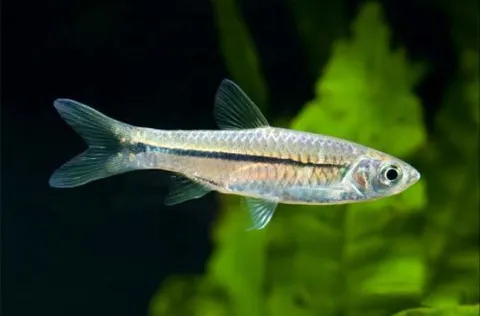
Rasbora paviana
The scientific name Rasbora paviana belongs to the family Cyprinidae, or carps. It is quite common to encounter the mistaken assumption that the name "Paviana" is associated with primates. However, this is not the case:…
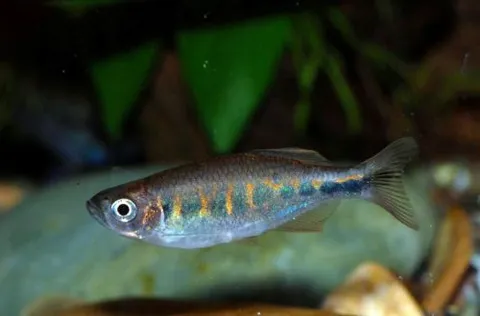
Devario pathirana
The Patirana Danio, or Ceylon Danio, also known as the Ceylon Tiger Danio (scientific name Devario pathirana), is a member of the Cyprinidae family. This name was given in honour of Ananda Pathirana, who made the…
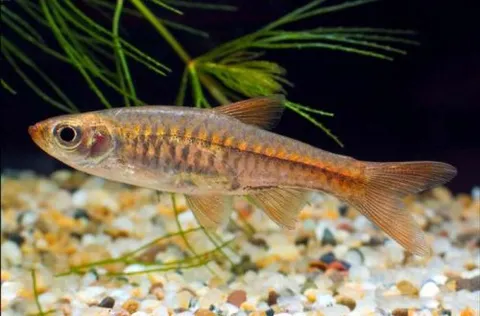
Rasbora vulcanus
The scientific name Rasbora vulcanus belongs to the Volcano Rasbora, a member of the family Cyprinidae, or carps. Its name is quite remarkable and has a simple explanation: dominant males display a bright orange-red…
Parachela oxygastroides
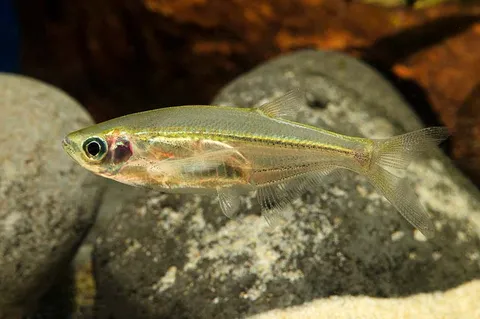
Parachela oxygastroides, also known as the glass knifefish barb, is a member of the carp family (Cyprinidae). Its natural range covers areas of Southeast Asia, including Indochina, Thailand, as well as the islands of…