Temperature23 – 26 °C
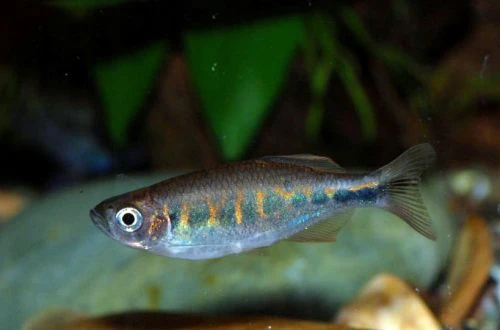
The Patirana Danio, or Ceylon Danio, also known as the Ceylon Tiger Danio (scientific name Devario pathirana), is a member of the Cyprinidae family. This name was given in honour of Ananda Pathirana, who made the describing authors aware of the new species. Other names for the fish are associated with its natural habitat – the island of Sri Lanka, which was historically known as Ceylon. In the wild, these fish are endangered, but due to the ease of breeding in aquarium conditions, they are widely represented in aquaristics. As a result, their total population in artificial environments even exceeds that in the wild.
Adults typically reach 6–8 cm in length. A distinctive feature of the fish is the unique pattern on its body: 7–11 blue parallel stripes against an orange background. Their back is gray, and the belly is silvery. Sexual dimorphism is not pronounced. The main differences between males and females lie in size, with females, especially during spawning, being slightly larger and having a more rounded shape.
This species is endemic to the island of Sri Lanka, located near the coast of India. Its main distribution is in the southwestern part of the island, particularly within the Kanneliya Forest Reserve. Much of the island's natural landscapes have been severely affected by human economic activity, leading to a significant reduction in local flora and fauna. The fish prefer small and shallow streams and rivers, up to half a meter deep, as well as associated water bodies. The bottom is usually stony, with inclusions of sand. In their natural habitat, many aquatic plants can be found, including Aponogetons familiar to aquarists. The water in these places is distinguished by its exceptional purity and transparency.
This species is known for its peaceful and active behavior. It coexists well with many freshwater fish of similar size. However, it is best to avoid keeping them with very small or slow-moving species, as the excessive activity of Patirana Danios can cause constant stress for them. These fish prefer to live in schools of 6–10 individuals. If kept in smaller numbers or alone, they may become timid and less active.
For a school of 6–10 Patirana Danios, an aquarium of at least 200 L is recommended. The aquarium decor can be varied, but several important conditions must be met: a rocky substrate and several areas with dense plant thickets, for example, along the side walls, to leave enough open space for swimming. Lighting should be subdued, so shade-loving species such as Anubias, aquatic mosses, and ferns are preferable for planting. In nature, the Ceylon Danio lives in bodies of water with crystal-clear water, which means it cannot tolerate the accumulation of organic waste and requires regular water changes. It is recommended to change at least 30–50% of the total aquarium volume weekly and to ensure the operation of a productive filtration system. It is extremely important to equip the aquarium with a lid to prevent the fish from accidentally jumping out.
These fish are not particularly demanding about their diet and readily accept most popular aquarium foods. They can be fed dry flakes, granules, as well as live or frozen brine shrimp, bloodworms, and daphnia.
The breeding strategy of the Ceylon Danio is typical for members of the Cyprinidae family. During spawning, the fish scatter their eggs among vegetation and do not show parental care. Under favorable conditions, spawning can occur year-round. The incubation period lasts approximately 24–36 hours, and within a couple of days after hatching, the fry begin to swim actively. However, in a community tank, the survival rate of the young will be extremely low, as they may become food for adult fish and face difficulties in finding suitable food. To preserve the fry, it is recommended to transfer them to a separate tank of about 20 L. The design of this aquarium is not critical; the minimum equipment set includes a simple air-driven filter and a heater. Feeding should be done with specialized powdered foods according to the manufacturer's instructions.
In a balanced aquarium ecosystem that meets the needs of this species, diseases are rare. Most often, ailments are provoked by deteriorating environmental conditions, contact with already sick fish, or mechanical damage. If the fish shows clear signs of illness, medicinal treatment should be applied.
When choosing Ceylon danios, it is important to ensure the individuals are active and mobile. Healthy fish should show curiosity, have clean, tightly folded fins without signs of erosion or film, and an even coloration without spots, ulcers, or unnatural abdominal bloating. Avoid purchasing fish that appear lethargic, stay at the water's surface, or show signs of emaciation. Since the species is schooling, it is recommended to acquire a group of 6 or more individuals to reduce stress levels. In the store, pay attention to the keeping conditions: the aquarium should have clean water and no dead fish. Given the rarity of the species, it is important to ask the seller about the fish's origin, as this species is endangered in the wild, and only individuals obtained through artificial breeding should be used for aquaristics.
The essentials: size, tank volume, water parameters and care
An adult reaches 6–8 cm in length. Plan the tank around the maximum size: the fish quickly outgrows a cramped setup.
The recommended volume is 200 L. A smaller tank speeds up nitrate build-up and raises stress levels.
Temperature 23–26 °C, pH 6–7.5, hardness 1–10 dGH. Stability matters more than exact values: sudden swings are harder on the fish than a small deviation from the ideal.
Around 4 years when kept properly. Lifespan depends directly on tank volume, water quality and a varied diet.
Temperament: peaceful (regular). Keep this in mind when choosing tank mates.
Recommended setup: group (8–10 individuals). Ignoring this is a common cause of stress and disease.
Diet type: any (universal). Feed small portions that are finished within a couple of minutes — overfeeding does more harm than underfeeding.
The scientific name of the species is Devario pathirana, family Cyprinids (Cyprinidae). It also appears in the literature as: Danio pathirana.
The water suits 197 of 208 plants in the catalogue — the easiest ones are shown first.
Afzelius's AnubiasAnacharisAnubiasBrazilian PennywortDwarf CloverDwarf CloverDwarf HygrophilaDwarf SagittariaDwarf ValGuppy GrassHornwortJava FernJava MossMoneywortMud SwordNair's LagenandraNarrow Leaf AnacharisNarrow-leaf CloverStringy MossSüsswassertangTaiwan MossTape GrassTemple PlantUssuri Watermilfoil
Matched by family, categories and overlapping keeping conditions
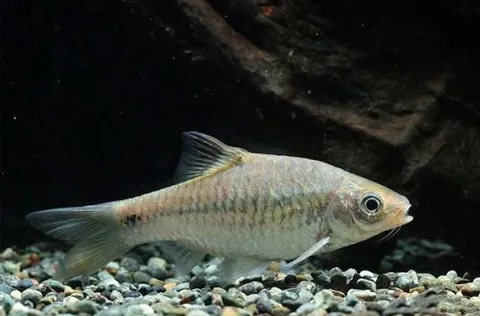
Barbodes binotatus
Barbodes binotatus, known as the Spotted Barb, belongs to the family Cyprinidae, or carps. This species, a typical inhabitant of Southeast Asian waters, is also called the Common Barb.
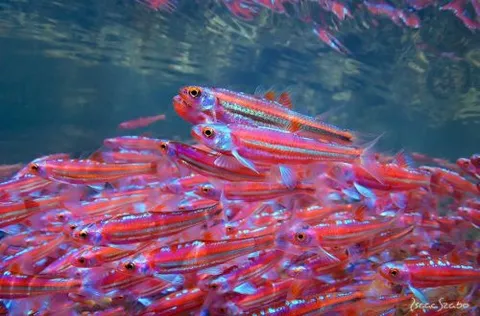
Notropis chrosomus
The fish known as the Rainbow Shiner, or Notropis chrosomus (scientific name Notropis chrosomus), belongs to the carp family (Cyprinidae). It first appeared on the European market after the Interzoo exhibition in…
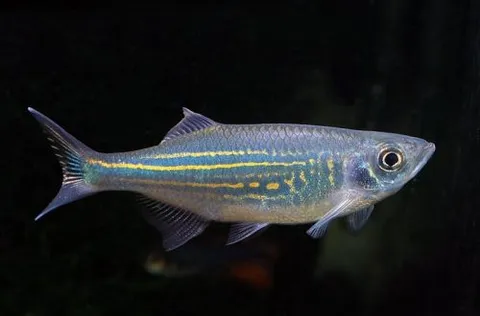
Devario malabaricus
The Malabar Danio, scientifically known as Devario malabaricus, belongs to the family Cyprinidae. These fish are undemanding in both keeping and breeding. They coexist perfectly with many freshwater species, making them…
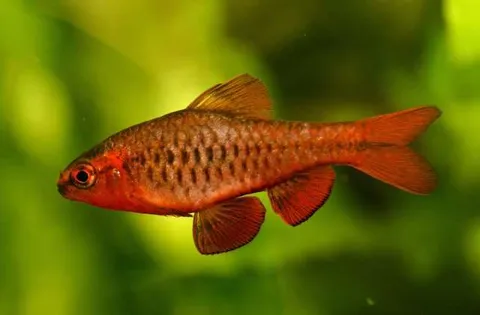
Puntius titteya
This species, the Cherry Barb, or Cherry Puntius (Puntius titteya), belongs to the Cyprinidae family. Thanks to its vibrant red coloration, this fish can brighten up any aquarium. It easily becomes a true pet due to its…