Temperature16 – 25 °C
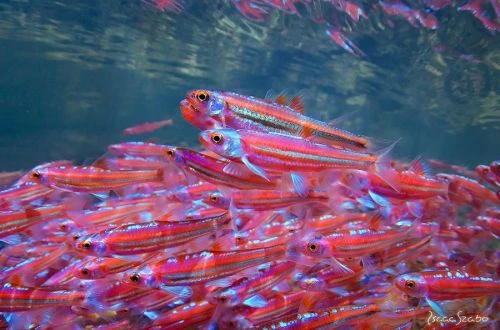
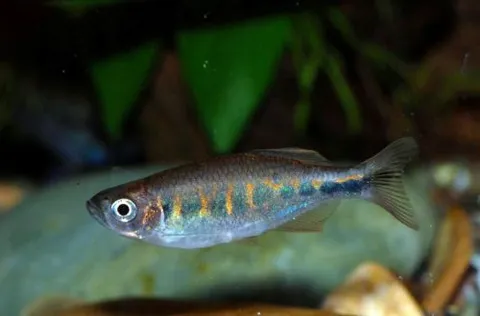
The fish known as the Rainbow Shiner, or Notropis chrosomus (scientific name Notropis chrosomus), belongs to the carp family (Cyprinidae). It first appeared on the European market after the Interzoo exhibition in Germany in 2009. A distinctive feature of these fish is their unique coloration with a neon glow, which makes them particularly attractive. Rainbow Shiners can be described as creatures that, although living a bright life, have a rather short lifespan, lasting only about 2 years. Their keeping and breeding are not difficult, so they can be recommended even to aquarists taking their first steps in this hobby.
Adult Rainbow Shiners can reach 8 cm in length, although in aquarium conditions their size usually does not exceed 6 cm. Their main feature is their coloration. The fish's body has a pink hue with blue stripes and small speckles. The blue pigment, also present on the fins and tail, has the ability to refract light in such a way that it creates the impression of a neon glow. It is interesting to note that when the water temperature rises above 20°C, the main body color changes to blue. Sexual dimorphism in this species is weakly expressed; there are no significant external differences between males and females.
The natural habitat of this species is in North America, in the southeastern regions of the USA, such as Tennessee, Alabama, and Georgia. Notropis inhabit small streams and rivers, where the water is clear and has a bluish tint. This color is due to high mineralization, as the sources of these bodies of water are located in limestone deposits. The bottom in natural conditions is usually covered with stones, boulders, coarse sand, and pebbles. Among the aquatic vegetation, riparian plants predominate.
The Rainbow Shiner is a peaceful, active schooling species that gets along well with other active fish of comparable size. It is important that tank mates are also adapted to similar conditions, namely cool, flowing water. This species should not be kept with aggressive, overly large, or excessively slow-moving fish.
For a school of 10 Notropis, the optimal aquarium volume starts from 250 liters. The setup can be as simple as a rocky substrate, with other decorative elements chosen at the aquarist's discretion. It is important to provide sufficient swimming space. To maintain the long-term health of Rainbow Shiners, it is necessary to create a stable aquatic environment that closely mimics natural conditions: clean, clear, oxygen-rich water with medium to high pH and dGH values. The accumulation of organic waste should be avoided, as it can alter the hydrochemical balance and disrupt the nitrogen cycle. This requires regular maintenance procedures, aquarium cleaning, and the installation of necessary equipment, the key element of which is the filtration system. This is a cold-water species, so the water temperature should correspond to seasonal changes: from autumn to spring, 16–20°C is recommended, and in summer, an increase to 25°C is permissible. It is important to remember that the fish are prone to jumping out of the water, so a secure lid must be provided, with internal surfaces that do not injure the fish, and the lights must be reliably insulated. Most jumping occurs at night, and installing night lighting can help solve this problem.
In their natural habitat, Notropis feed on any edible food of suitable size: this can include small insects, their larvae, crustaceans, and other invertebrates. In a home aquarium, they will readily accept most popular foods – both dry and frozen or live. Good choices include foods such as Artemia nauplii, Daphnia, or bloodworms.
These fish reach sexual maturity at approximately 12 months. Given their short lifespan, they usually have no more than two breeding seasons. In their natural environment, spawning occurs during the warmer months. Accordingly, a change in water temperature can serve as a stimulus for reproduction. For example, if the fish have been kept within the recommended range of 16–20°C, a gradual increase to 25°C can initiate the spawning process. The breeding strategy is typical for most cyprinids: females release eggs into the water column, and males fertilize them. The eggs are carried by the current, settling to the bottom and falling between rocks, which is the only protection for the future offspring of Rainbow Shiners. Parental instincts are absent in this species, so adult fish may eat their own offspring if given the opportunity. The incubation period lasts 5–6 days. Fry remain in place for another 1–2 days, feeding on the remnants of their yolk sac. Approximately one week after spawning, the emerging fry begin to swim freely.
Most often, diseases are caused by unsuitable keeping conditions. Maintaining a stable environment in the aquarium is a key factor for successful keeping. If any symptoms of illness appear, the first step is to check the water quality. If deviations are found, measures should be taken immediately to correct them. If symptoms persist or even worsen, medicinal treatment will be required.
When choosing Rainbow Shiners, pay attention to the overall activity of the school in the store: healthy fish should be active and constantly moving. Avoid individuals with signs of fin damage, film on their scales, or an unnaturally bloated abdomen, as the species is sensitive to water quality and stress during transport. Since this is a schooling species, it is recommended to acquire a group of 8–10 individuals at once, which will help them adapt more quickly to new conditions and reduce the risk of stress-related diseases.
The essentials: size, tank volume, water parameters and care
An adult reaches 6–8 cm in length. Plan the tank around the maximum size: the fish quickly outgrows a cramped setup.
The recommended volume is 250 L. A smaller tank speeds up nitrate build-up and raises stress levels.
Temperature 16–25 °C, pH 6.5–7.7, hardness 5–18 dGH. Stability matters more than exact values: sudden swings are harder on the fish than a small deviation from the ideal.
Around 3 years when kept properly. Lifespan depends directly on tank volume, water quality and a varied diet.
Temperament: peaceful (regular). Keep this in mind when choosing tank mates.
Recommended setup: group (8–10 individuals). Ignoring this is a common cause of stress and disease.
Diet type: any (universal). Feed small portions that are finished within a couple of minutes — overfeeding does more harm than underfeeding.
The scientific name of the species is Notropis chrosomus, family Cyprinids (Cyprinidae). It also appears in the literature as: Hybopsis chrosomus.
The water suits 196 of 208 plants in the catalogue — the easiest ones are shown first.
Afzelius's AnubiasAnacharisAnubiasBrazilian PennywortDwarf CloverDwarf CloverDwarf HygrophilaDwarf SagittariaDwarf ValGuppy GrassHornwortJava FernJava MossMoneywortMud SwordNarrow Leaf AnacharisNarrow-leaf CloverStringy MossSüsswassertangTaiwan MossTape GrassTemple PlantUssuri WatermilfoilWater Wisteria
Matched by family, categories and overlapping keeping conditions
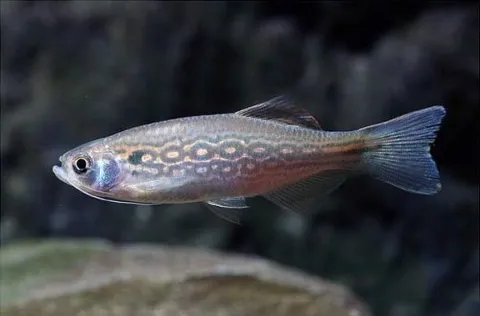
Danio dangila
Danio dangila, or Whiskered Danio (scientific name Danio dangila), belongs to the family Cyprinidae, known as carps. This fish stands out from other Danios due to its noticeably longer barbels. Its ease of care,…
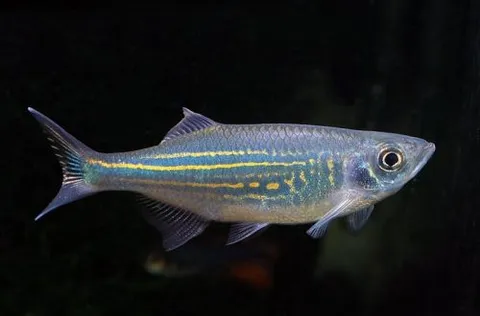
Devario malabaricus
The Malabar Danio, scientifically known as Devario malabaricus, belongs to the family Cyprinidae. These fish are undemanding in both keeping and breeding. They coexist perfectly with many freshwater species, making them…
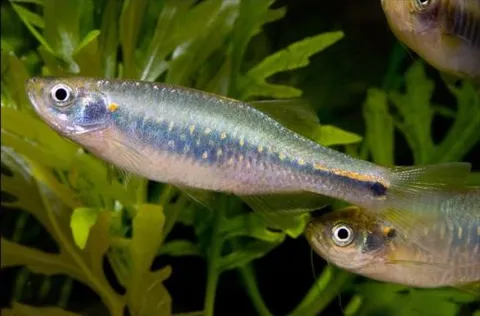
Danio feegradei
Danio feegradei, also known as Feegrade's Danio or Yoma Danio, is a member of the Cyprinidae family. The fish received its scientific name in honor of E. S. Feegrade, a public health service officer in Burma, while its…
Devario pathirana
The Patirana Danio, or Ceylon Danio, also known as the Ceylon Tiger Danio (scientific name Devario pathirana), is a member of the Cyprinidae family. This name was given in honour of Ananda Pathirana, who made the…