Temperature18 – 25 °C
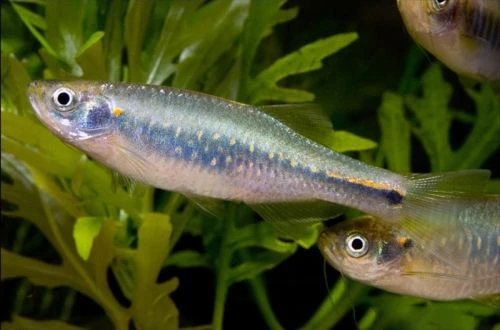
Danio feegradei, also known as Feegrade's Danio or Yoma Danio, is a member of the Cyprinidae family. The fish received its scientific name in honor of E. S. Feegrade, a public health service officer in Burma, while its other name refers to the Arakan Yoma, a mountain range at the foot of which these fish were first discovered. Since 2005, this species has been available in the trade and is considered undemanding to keep, requiring no significant expense. Due to this, it is often recommended to aquarists taking their first steps in this hobby.
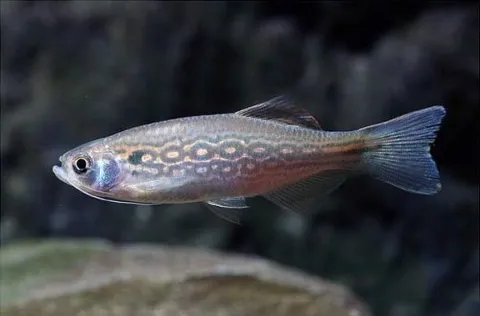
Adults grow up to 6 cm in length. Their coloration is predominantly silvery with slight blue hues. In dominant males, the fins may acquire a noticeable orange color. The fish's body is adorned with yellow specks. Sexual dimorphism in this species is weakly expressed: differences between males and females are minimal. Nevertheless, males often display brighter coloration, although they are somewhat smaller in size.
The natural habitats of this species are in Southeast Asia, in Myanmar (formerly Burma). The range is limited to Rakhine State, which is located along the western coast of the country, between the Bay of Bengal and the Arakan Mountains (Arakan Yoma). Here, the fish are found in rivers and streams flowing down the western slopes of these mountains. They prefer shallow areas with rocky bottoms, where aquatic vegetation is typically absent.
This peaceful and active species coexists well with other non-aggressive fish of similar size. However, it should be noted that the high activity of Feegrade's Danio can sometimes create stress for slower tank mates. The fish prefer to stay in shoals, which should consist of at least 10 individuals. Within the group, a hierarchy is established among males, with the dominant male usually having the most saturated and vibrant coloration.
For a small shoal of Yoma Danio, an aquarium of at least 200–250 liters is recommended. For decoration, you can use a dark substrate of various gravel fractions, natural stones, boulders, driftwood, as well as artificial or live plants. It is important to provide enough free swimming space so that the fish can move actively. Keeping this species does not require significant effort or large financial investments. Basic care procedures include standard actions: weekly partial water changes, regular removal of organic waste, as well as monitoring and maintaining stable pH and dGH levels. Preventive inspection of equipment is no less important. Remember that fish are prone to jumping, so a lid on the aquarium will help prevent accidental incidents.
This species of aquarium fish accepts most popular commercial foods. The daily diet can consist exclusively of dry foods, such as flakes or granules, provided they are of high quality and produced by reliable companies.
As with most Cyprinids, female Danios randomly lay eggs during spawning, which are immediately fertilized by males. The incubation period for the eggs is 3 to 7 days, depending on the water temperature. This species lacks parental instincts, so no care for the offspring is shown. Moreover, adults often eat their own eggs, which minimizes the survival rate of fry in a community tank. To preserve the young, it is recommended to use a separate tank of 30–40 liters, which will act as a spawning aquarium, where eggs or already hatched fry are transferred. This aquarium is equipped with a simple air-driven filter with a sponge as a filter element and a heater. An additional light source is not required, and the decoration can be arbitrary. Feeding the young is done with specialized powdered foods or, if possible, Artemia nauplii.
In a balanced aquarium ecosystem that meets the needs of this species, diseases are rare. Most often, ailments are provoked by deteriorating environmental conditions, contact with already sick fish, or mechanical damage. If the fish shows clear signs of illness, medicinal treatment should be applied.
When selecting individuals, attention should be paid to the overall activity of the shoal in the aquarium. Healthy fish should show curiosity, be constantly in motion, and actively respond to feeding. Avoid specimens with signs of emaciation, fin damage, or unusual spots on the body. Since Yoma Danio is a schooling species, it is recommended to purchase a group of 6–10 individuals at once, which reduces stress during relocation. In the store, it is important to ensure that the fish do not show signs of labored breathing or lethargic behavior, as the species can be sensitive to water quality during transport.
The essentials: size, tank volume, water parameters and care
An adult reaches 6 cm in length. Plan the tank around the maximum size: the fish quickly outgrows a cramped setup.
The recommended volume is 200 L. A smaller tank speeds up nitrate build-up and raises stress levels.
Temperature 18–25 °C, pH 6.5–7.5, hardness 2–12 dGH. Stability matters more than exact values: sudden swings are harder on the fish than a small deviation from the ideal.
Around 5 years when kept properly. Lifespan depends directly on tank volume, water quality and a varied diet.
Temperament: peaceful (regular). Keep this in mind when choosing tank mates.
Recommended setup: large group (10+ individuals). Ignoring this is a common cause of stress and disease.
Diet type: any (universal). Feed small portions that are finished within a couple of minutes — overfeeding does more harm than underfeeding.
The scientific name of the species is Danio feegradei, family Cyprinids (Cyprinidae). It also appears in the literature as: Devario feegradei.
The water suits 196 of 208 plants in the catalogue — the easiest ones are shown first.
Afzelius's AnubiasAnacharisAnubiasBrazilian PennywortDwarf CloverDwarf CloverDwarf HygrophilaDwarf SagittariaDwarf ValGuppy GrassHornwortJava FernJava MossMoneywortMud SwordNarrow Leaf AnacharisNarrow-leaf CloverStringy MossSüsswassertangTaiwan MossTape GrassTemple PlantUssuri WatermilfoilWater Wisteria
Matched by family, categories and overlapping keeping conditions
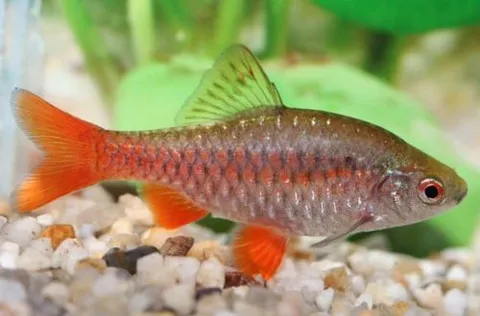
Pethia manipurensis
The fish, known scientifically as Pethia manipurensis, belongs to the Carp family (Cyprinidae) and is called the Manipur Barb. Its only natural habitat is located in the Indian state of Manipur, in Loktak Lake, which is…
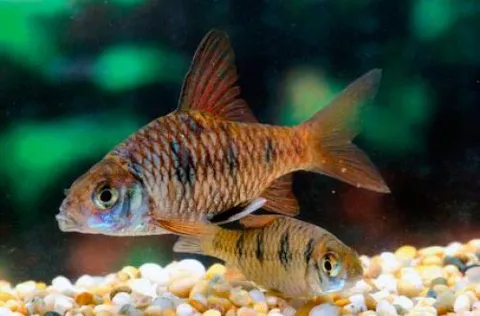
Puntius sahyadriensis
Puntius sahyadriensis, or Maharashtra Barb, is a member of the Cyprinidae family. Among various barb species, it stands out with its distinctive angular body shape, making it easily recognizable. This species is easy to…
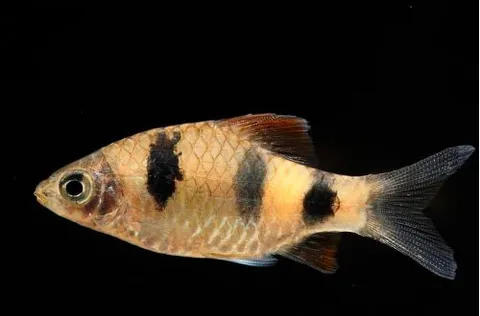
Pethia setnai
Pethia setnai, known as the Setnai Barb, belongs to the family Cyprinidae. This species of barb was named after the Indian ichthyologist Setna, who was involved in its classification. This fish is easy to keep and…
Danio dangila
Danio dangila, or Whiskered Danio (scientific name Danio dangila), belongs to the family Cyprinidae, known as carps. This fish stands out from other Danios due to its noticeably longer barbels. Its ease of care,…