Temperature18 – 25 °C
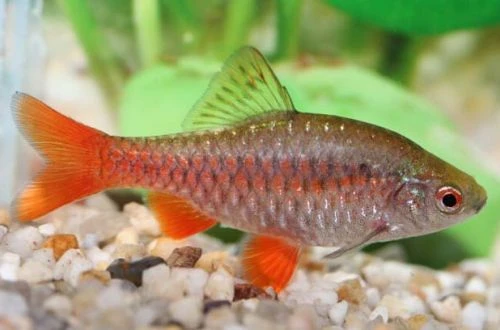
The fish, known scientifically as Pethia manipurensis, belongs to the Carp family (Cyprinidae) and is called the Manipur Barb. Its only natural habitat is located in the Indian state of Manipur, in Loktak Lake, which is part of Keibul Lamjao National Park.
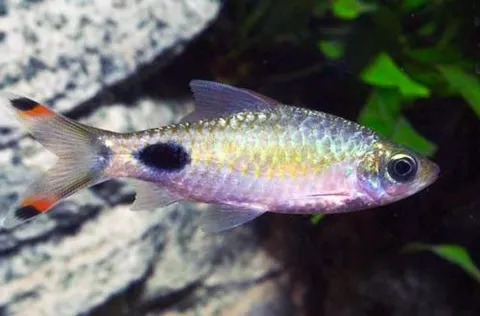
Adults of this fish reach a length of about 6 cm. Their reddish-orange coloration resembles that of the Odessa Barb, but the Manipur Barb is easily distinguished by a black spot located immediately behind the head in the anterior part of the body. Males usually appear slimmer and have brighter coloration, as well as dark speckles on the dorsal fin compared to females.
The species is endemic to Loktak Lake, located in the state of Manipur in northeastern India. In nature, the fish inhabit still or slow-moving waters with abundant aquatic vegetation, which serves as cover. Due to anthropogenic impact, including pollution and eutrophication, the species' natural habitat is threatened, and the wild population itself is classified as endangered.
This fish is characterized by a peaceful and friendly disposition, as well as noticeable activity. Thanks to its unpretentiousness, it successfully adapts to various conditions in community tanks, making it compatible with many other species. It is preferable to keep Manipur Barbs in a group of 8–10 individuals, as the fish feel more comfortable in a shoal. If kept alone or in pairs, they may become timid and try to hide.
Most Manipur Barbs offered for sale have been bred in aquarium conditions rather than caught in the wild. For aquarists, this is an advantage, as several generations raised in an artificial environment have made these fish less demanding regarding conditions. In particular, they thrive across a wide range of hydrochemical water parameters. For a group of 8–10 individuals, an aquarium of at least 70–80 liters is recommended. The aquarium's decor can be chosen at your discretion, but it's worth noting that under dim lighting and with dark substrate, the fish's coloration becomes more saturated and vibrant. Natural snags and dense thickets of plants, including floating ones that create additional shading, will be very appropriate for decoration. Aquarium care is standard: weekly partial water changes, cleaning organic waste, and maintaining equipment in working order. In their natural environment, these fish feed on algae, detritus, as well as small insects, worms, and crustaceans. In a home aquarium, they readily accept most dry foods, such as flakes and pellets. The diet can be enriched with live, frozen, or fresh brine shrimp, bloodworms, daphnia, and similar foods.
In natural conditions, the diet of these fish consists of algae, detritus, small insects, worms, as well as various crustaceans and zooplankton. In a home aquarium, they readily accept common dry foods such as flakes and pellets. To diversify their diet, live, frozen, or fresh brine shrimp, bloodworms, daphnia, and other similar foods can be offered.
Similar to many small cyprinid fish, the Manipur Barb does not form a clutch but scatters its eggs over the bottom and does not display parental care towards them. Under suitable conditions, spawning occurs regularly. With dense plant thickets in a community tank, some of the fry have a chance to reach adulthood.
The Manipur Barb has a relatively strong immune system provided that water purity is maintained and stress factors are absent. Like other members of the carp family, the species is susceptible to typical aquarium diseases such as ich, fin rot, and bacterial skin infections. Prevention involves maintaining stable water parameters, regular water changes, and quality nutrition. If signs of lethargy, fin damage, or changes in coloration are observed, it is necessary to check the nitrogenous compounds in the aquarium.
When purchasing, choose active fish that show interest in food and stay in a shoal. Healthy individuals have bright coloration, clean fins without signs of film or erosion, and no visible body damage. Avoid purchasing fish that appear emaciated, swim erratically, or stay separate from their conspecifics, as this may indicate stress or hidden diseases. It is recommended to ask the seller about the keeping conditions and diet the fish are accustomed to.
The essentials: size, tank volume, water parameters and care
An adult reaches 6 cm in length. Plan the tank around the maximum size: the fish quickly outgrows a cramped setup.
The recommended volume is 80 L. A smaller tank speeds up nitrate build-up and raises stress levels.
Temperature 18–25 °C, pH 5.5–7.5, hardness 4–15 dGH. Stability matters more than exact values: sudden swings are harder on the fish than a small deviation from the ideal.
Around 3 years when kept properly. Lifespan depends directly on tank volume, water quality and a varied diet.
Temperament: peaceful (regular). Keep this in mind when choosing tank mates.
Recommended setup: group (8–10 individuals). Ignoring this is a common cause of stress and disease.
Diet type: any (universal). Feed small portions that are finished within a couple of minutes — overfeeding does more harm than underfeeding.
The scientific name of the species is Pethia manipurensis, family Cyprinids (Cyprinidae). It also appears in the literature as: Puntius manipurensis.
The water suits 197 of 208 plants in the catalogue — the easiest ones are shown first.
Afzelius's AnubiasAnacharisAnubiasBrazilian PennywortDwarf CloverDwarf CloverDwarf HygrophilaDwarf SagittariaDwarf ValGuppy GrassHornwortJava FernJava MossMoneywortMud SwordNarrow Leaf AnacharisNarrow-leaf CloverStringy MossSüsswassertangTaiwan MossTape GrassTemple PlantUssuri WatermilfoilWater Wisteria
Matched by family, categories and overlapping keeping conditions
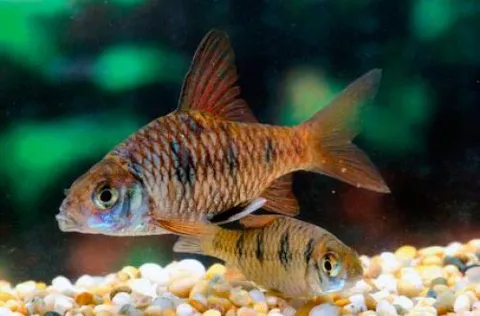
Puntius sahyadriensis
Puntius sahyadriensis, or Maharashtra Barb, is a member of the Cyprinidae family. Among various barb species, it stands out with its distinctive angular body shape, making it easily recognizable. This species is easy to…
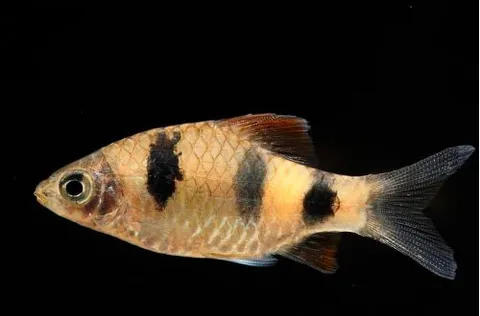
Pethia setnai
Pethia setnai, known as the Setnai Barb, belongs to the family Cyprinidae. This species of barb was named after the Indian ichthyologist Setna, who was involved in its classification. This fish is easy to keep and…
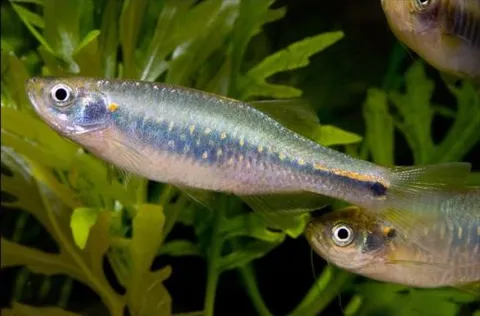
Danio feegradei
Danio feegradei, also known as Feegrade's Danio or Yoma Danio, is a member of the Cyprinidae family. The fish received its scientific name in honor of E. S. Feegrade, a public health service officer in Burma, while its…
Puntius mahecola
The fish known as Mahecola Barb (scientific name Puntius mahecola) is classified within the family Cyprinidae. It is very popular in Asian countries, especially India, but outside of this region, in Europe and America,…