Temperature16 – 19 °C
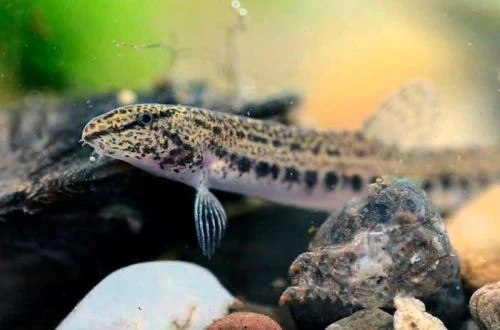
The Spined Loach, scientifically known as Cobitis taenia, belongs to the family Cobitidae, or True Loaches. Its natural habitat covers a significant part of Europe and central regions of Russia. These fish inhabit most river systems and associated water bodies. They prefer areas with calm currents and sandy bottoms, and can also be found in estuaries where water salinity does not exceed 5‰.
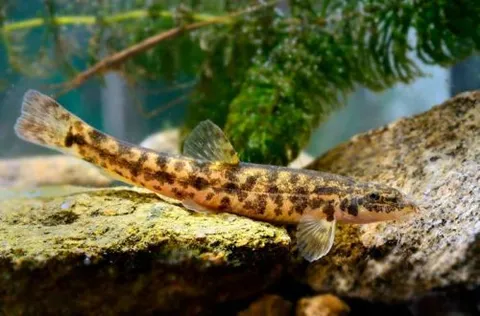
Adult Spined Loaches typically reach lengths of up to 13 cm. Their body is elongated and slightly cylindrical, a characteristic feature of loaches. The fins, like the tail, are small. Their coloration is a combination of gray-yellow and sandy hues, adorned with two rows of dark spots that extend from head to tail, resembling beads. The rest of the body is covered with small dark specks. A diagonal black stripe is visible on the head, passing through the eyes. Sexual dimorphism in these fish is weakly expressed, and males and females have subtle external differences.
The common Spined Loach is widespread in water bodies across Europe and Asia, from Great Britain to the Volga and Kuban basins. Typical biotopes include slow-flowing rivers, flowing lakes, and floodplain water bodies with clean water. The fish prefers areas with soft sandy or sand-silt bottoms, where it can easily burrow, and avoids zones with strong currents or excessively silty areas.
These fish are most active in the evening or at night. During the day, they prefer to stay in shelters or partially burrow into the substrate. Spined Loaches are peaceful towards both their own kind and other species. They coexist well with Goldfish, Koi carp, and other undemanding and hardy aquarium inhabitants.
For a group of 3–4 Spined Loaches, the optimal aquarium volume starts from 100 liters. Since Spined Loaches primarily inhabit the bottom, special attention should be paid to the lower tier when aquascaping. Soft sandy substrates are recommended, and several shelters should be provided. These can be natural elements like driftwood or large, smooth stones, as well as various artificial decorations. The fish have a habit of digging in the substrate in search of food, which in the confined space of an aquarium can damage rooted plants. Floating plants such as hornwort, najas, or elodea would be an excellent alternative in this case. These fish can adapt to diverse conditions and tolerate a wide range of pH and dGH values. However, this does not mean that significant fluctuations in these hydrochemical parameters are permissible; on the contrary, the habitat should be stable. Water quality directly depends on regular aquarium maintenance, including partial water changes and waste removal, as well as the uninterrupted operation of equipment. Nevertheless, when keeping Spined Loaches, the only essential piece of equipment may be a filtration system. There is generally no acute need for a heater or specialized lighting system. In natural conditions, they feed by sifting portions of the substrate through their mouths in search of food. In an aquarium, they can be accustomed to alternative foods, such as popular flakes and pellets. Given their lifestyle, sinking foods should be used, preferably offered closer to evening.
In their natural habitat, Spined Loaches forage by sifting substrate particles through their mouths. In an aquarium, they are quite easy to accustom to alternative foods, such as common flakes or pellets. Given their nocturnal lifestyle, it is preferable to use sinking foods and offer them in the evening.
Spawning is fractional, occurring in spring and early summer at water temperatures above 15–16 °C. Females lay eggs among dense aquatic vegetation or filamentous algae. To stimulate reproduction in aquarium conditions, preliminary wintering at low temperatures is often required. The species has the ability for gynogenesis, where egg development can occur without fertilization, provided there is contact with milt from males of closely related species.
The Spined Loach has high resistance to typical aquarium fish diseases; however, like other members of the loach family, it is sensitive to water quality and substrate condition. Due to its habit of constantly burrowing into the substrate, the fish is prone to skin injuries if sharp or excessively large gravel is used, which can lead to the development of secondary bacterial or fungal infections. The most common problem is ichthyophthiriasis, to which the species shows increased sensitivity. During treatment, it should be noted that spined loaches tolerate high concentrations of some medications poorly, especially those containing copper or malachite green. For disease prevention, it is necessary to maintain a clean bottom, avoid sharp fluctuations in hydrochemical parameters, and ensure effective filtration without creating strong water currents.
When purchasing, choose active individuals without visible skin damage, ulcers, or signs of emaciation. It is important to note that these fish lead a secretive bottom-dwelling lifestyle and can be timid. Caution must be exercised during inspection: spined loaches have sharp, retractable spines under their eyes, which they can use to snag a net or injure hands if handled carelessly.
The essentials: size, tank volume, water parameters and care
An adult reaches 13 cm in length. Plan the tank around the maximum size: the fish quickly outgrows a cramped setup.
The recommended volume is 100 L. A smaller tank speeds up nitrate build-up and raises stress levels.
Temperature 16–19 °C, pH 7–7.7, hardness 10–25 dGH. Stability matters more than exact values: sudden swings are harder on the fish than a small deviation from the ideal.
Around 5 years when kept properly. Lifespan depends directly on tank volume, water quality and a varied diet.
Temperament: peaceful (regular). Keep this in mind when choosing tank mates.
Recommended setup: small group (3–4 individuals). Ignoring this is a common cause of stress and disease.
Diet type: sinking (any). Feed small portions that are finished within a couple of minutes — overfeeding does more harm than underfeeding.
The scientific name of the species is Cobitis taenia, family Cobitidae (Loaches). It also appears in the literature as: Acanthopsis taenia, Acantopsis taenia, Cobites fluviatilis.
This fish damages plants, especially when its diet is short of vegetable food.
African Onion PlantAfzelius's AnubiasAmazon FrogbitAnacharisAnubiasBalansa Water TrumpetBanana PlantBarth's SwordBeckett's Water TrumpetBoivin's AponogetonBrookweedChristmas MossCognac AmmanniaCongo AnubiasCreeping JennyCrinkled AponogetonDark SwordDelta ArrowheadDitch StonecropDwarf AmbuliaDwarf CloverDwarf CloverDwarf HairgrassDwarf HygrophilaDwarf RotalaDwarf SagittariaDwarf ValDwarf Water TrumpetEelgrassFeathered LimnophilaGiant CryptGiant VallisneriaGolden AmmanniaGreater DuckweedGuppy GrassHornwortJapanese CressJapanese RushJava MossLake Ludwigia
Matched by family, categories and overlapping keeping conditions
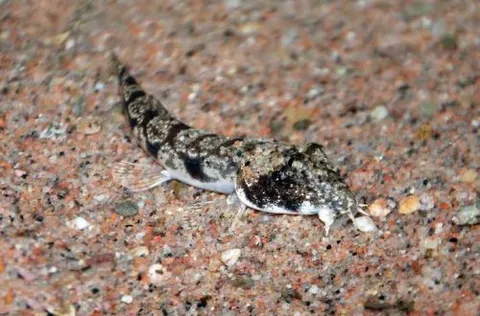
Canthophrys gongota
The Gongota Loach, scientifically known as Canthophrys gongota, belongs to the family Cobitidae, or true loaches. This species inhabits natural waters of Nepal, northern India, and Bangladesh, where it populates the…
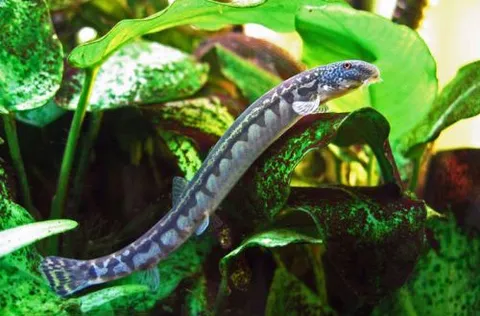
Niwaella delicata
The Japanese Loach, scientifically known as Niwaella delicata, belongs to the family Cobitidae (Loaches). This fish is valued not only by aquarists but also as a commercial catch. It is most commonly found in Japan,…
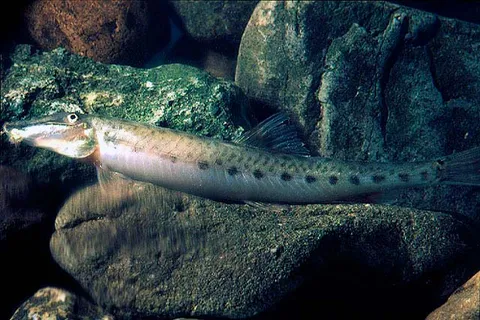
Acantopsis octoactinotos
Acantopsis octoactinotos, or the Long-nosed Loach, belongs to the family Cobitidae. This species is native to Southeast Asia, where it is found in the river systems of northern Borneo — the Indonesian part and the…
Barbatula barbatula
A representative of the Nemacheilidae family, known by its scientific name Barbatula barbatula, or Stone Loach, is distributed throughout Europe, including the Baltic countries and Central Russia. It inhabits various…