Temperature24 – 28 °C
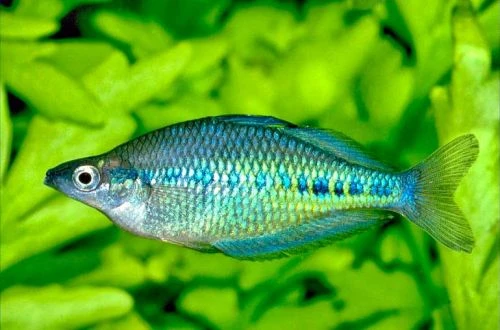
The fish, known scientifically as Glossolepis maculosa, or Spotted Rainbowfish, belongs to the family Melanotaeniidae (Rainbowfishes). Its native habitat is the island of New Guinea. In the wild, it is found in the Markham and Ramu river basins, which flow in the eastern part of the island. Typical habitats include river sections with slow currents, swampy areas, and quiet backwaters where aquatic vegetation along the banks and submerged snags create dense cover.
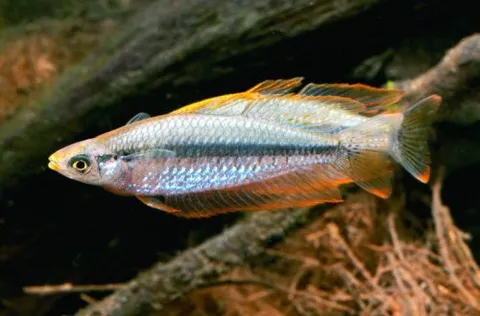
Adult specimens of this fish typically reach 5–6 cm in length. Males are characterized by a greenish-bronze coloration with slight pale blue iridescence. Their recognizable feature is the presence of several black spots, most often located along the lateral line. The number of such spots can vary from 4 to 10, and their arrangement is individual for each fish. In the abdominal area, below the lateral line, the coloration becomes noticeably lighter, acquiring silvery tones, while closer to the tail, it darkens, sometimes showing orange hues. It is important to note that such vibrant coloration is characteristic of dominant males. Males holding a lower position in the hierarchy display less intense coloration, which in some cases may resemble females. Females lack bright colors; their main tone is pale olive, with a silvery belly, but they also exhibit a spotted pattern.
The species is endemic to northern Papua New Guinea. In nature, it inhabits the Markham and Ramu river systems. It prefers slow-flowing streams, backwaters, and swampy areas with clear water. It is often found in coastal zones among dense vegetation, submerged snags, and tree branches. The temperature range in its natural environment is 18–28°C, and the pH level varies in slightly alkaline values.
It is preferable to keep these fish in groups of 6–8 individuals. Among males, there is competition for the females' attention, which usually results in a winner, easily recognized by its brighter coloration. Spotted Rainbowfish get along well with other members of the Rainbowfish family, as well as many other aquarium inhabitants, provided they are comparable in size and temperament.
For keeping a group of 6–8 Spotted Rainbowfish, an aquarium of 60–80 liters is recommended. The decor should include numerous aquatic plants, including floating species, and natural snags. The decor elements should create hiding places while leaving enough open swimming space. Warm water conditions with a neutral or slightly alkaline pH level and moderate hardness are considered ideal. However, it should be noted that for most Spotted Rainbowfish found in the aquarium trade, the keeping conditions over several generations have likely differed from wild conditions, so it is advisable to maintain the water parameters they are accustomed to. Fish care is quite simple. A weekly partial water change with fresh water, combined with the removal of organic waste, and routine equipment maintenance are necessary.
This omnivorous species readily accepts a variety of food offerings. Their diet can include dry, freeze-dried, as well as live or frozen foods intended for aquarium inhabitants.
Breeding does not present significant difficulties. Spawning occurs among fine-leaved plants or synthetic substrates, where the female lays a small number of eggs daily. The process can be prolonged. The incubation period is 7–10 days, depending on the water temperature. Fry grow quickly and require small-sized starter food.
No specific diseases exclusively characteristic of this species have been identified. Like other members of the rainbowfish family, this species is susceptible to typical infections when keeping conditions are violated, especially during sharp fluctuations in water parameters or elevated levels of organic pollution. The most common problems are bacterial lesions of the skin and fins, as well as ectoparasite infestations, such as those causing ich. Prevention is based on maintaining stable hydrochemical water composition and ensuring high-quality filtration. Fish are sensitive to stress caused by sudden movements near the aquarium or lack of hiding places, which can reduce their immunity. To prevent diseases, regular water changes, control of overcrowding, and avoidance of sharp temperature fluctuations are recommended.
When purchasing, choose active fish with clean fins and no body damage. It is important to note that the species is timid and sensitive to sudden movements near the aquarium, so in the store, the fish may show excessive caution. It is recommended to acquire a group of 6–8 individuals, as they feel more confident and less stressed in a school.
The essentials: size, tank volume, water parameters and care
An adult reaches 6 cm in length. Plan the tank around the maximum size: the fish quickly outgrows a cramped setup.
The recommended volume is 60 L. A smaller tank speeds up nitrate build-up and raises stress levels.
Temperature 24–28 °C, pH 7–7.8, hardness 12–20 dGH. Stability matters more than exact values: sudden swings are harder on the fish than a small deviation from the ideal.
Around 5 years when kept properly. Lifespan depends directly on tank volume, water quality and a varied diet.
Temperament: peaceful (regular). Keep this in mind when choosing tank mates.
Recommended setup: medium group (6–8 individuals). Ignoring this is a common cause of stress and disease.
Diet type: any (universal). Feed small portions that are finished within a couple of minutes — overfeeding does more harm than underfeeding.
The scientific name of the species is Glossolepis maculosa, family Rainbowfishes (Melanotaeniidae).
The water suits 113 of 208 plants in the catalogue — the easiest ones are shown first.
African Onion PlantAfzelius's AnubiasAmazon FrogbitAmazon SwordAnacharisAnubiasArrowhead CryptDwarf CloverDwarf CloverDwarf HygrophilaDwarf SagittariaDwarf ValGuppy GrassHornwortJava MossMoneywortMud SwordNair's LagenandraNarrow Leaf AnacharisNarrow-leaf CloverStringy MossTaiwan MossTape GrassUssuri Watermilfoil
Matched by family, categories and overlapping keeping conditions
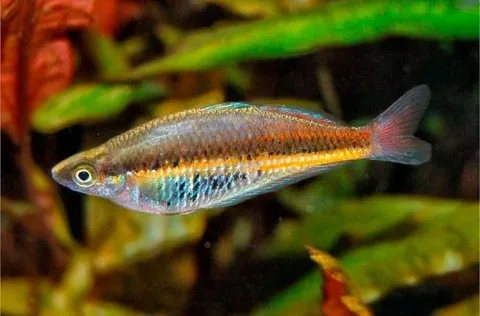
Glossolepis ramuensis
The Ramu Rainbowfish, scientifically known as Glossolepis ramuensis, belongs to the family Melanotaeniidae, or Rainbowfish. This fish originates from the island of New Guinea. Its natural habitat is the Ramu River…
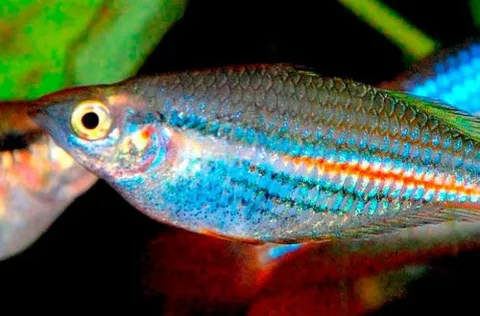
Melanotaenia papuae
Melanotaenia papuae, known by its scientific name Melanotaenia papuae, belongs to the family Melanotaeniidae (Rainbowfishes). The native habitats of this fish are numerous streams on the southern tip of the island of…
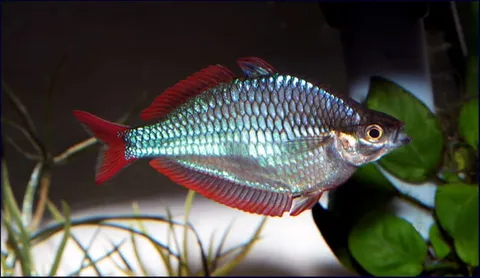
Melanotaenia praecox
Melanotaenia praecox, also known as the Neon Rainbowfish or Dwarf Rainbowfish, is a member of the family Melanotaeniidae. A relatively small schooling fish, it attracts attention with its beautiful neon shimmer in its…
Melanotaenia gracilis
The Slender Rainbowfish, also known as Melanotaenia gracilis, belongs to the family Melanotaeniidae. This fish is an excellent choice for beginner aquarists due to its hardiness and ease of care, while its attractive…