Temperature22 – 25 °C
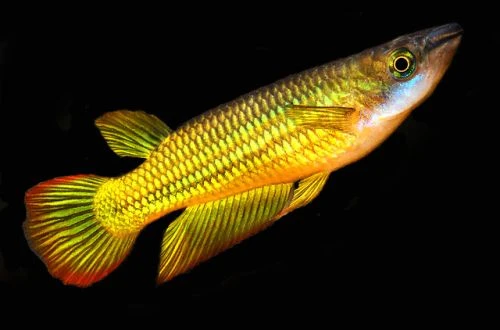
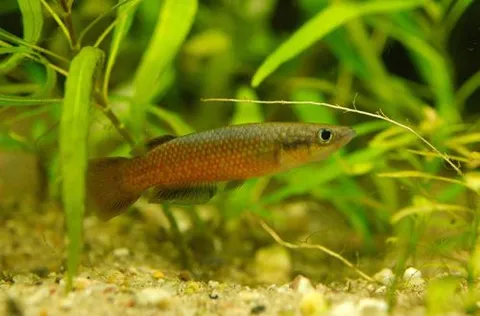
Scientifically named Aplocheilus lineatus, the Striped Panchax, or Striped Asian Killifish, belongs to the family Aplocheilidae. In its natural habitat, it is quite attractive due to its unique body pattern, but aquarists are particularly drawn to a selective breeding form characterized by a rich golden coloration, as shown in the images below. The combination of a vibrant appearance and undemanding care has ensured the Striped Panchax widespread popularity among aquarium enthusiasts worldwide. This fish can be highly recommended to beginners as a first pet.
This fish is characterized by a slender, elongated body with a slightly arched back. The head is pointed and slightly flattened on top. The dorsal fin is located closer to the tail, and both the dorsal and caudal fins are rounded, while the anal and pelvic fins are pointed. The fish's natural coloration is a coppery hue, adorned with bright yellow stripes, but aquarists most commonly encounter the golden selective breeding form. There are also variations with a red tail, white fins, and other color modifications.
This species is widespread throughout the Indian subcontinent, primarily in India. It inhabits various bodies of water with slow currents or stagnant waters, including brackish environments. Unlike most inhabitants of this region, the Striped Asian Killifish is not prone to migration, preferring to remain within its habitat. In some areas of India and neighboring countries, it is even used for mosquito control. The fish's diet consists of insect larvae, various small aquatic invertebrates, crustaceans, river worms, and small fish. It is important to note that the golden selective breeding form is not found in the wild.
The Striped Panchax can coexist with other fish species, provided they are not too small, such as Neon Tetras or Danios. Fish smaller than 5 cm may be perceived as prey. Within their own species, constant skirmishes can also occur, so to maintain harmony in the aquarium, it is recommended to keep only one pair of Striped Panchax.
These fish are quite undemanding but can be messy. They will not pick up food that falls past them or lies on the substrate, which can lead to significant water pollution. Therefore, a productive filter and regular 30% water changes every two weeks are essential. Other important equipment, in addition to the filter, includes an air pump, heater, and lighting system. Installing a lid on the aquarium will help prevent accidental fish jumps. The fish tolerates a slight level of salinity, approximately 2–3 level teaspoons of marine salt per 10 liters of water. For decoration, a dark fine-gravel substrate and subdued lighting are preferred. Plants can be arranged in groups along the side walls of the tank, and bunches of floating plants are also useful for providing additional shade.
The Striped Panchax is a predator by nature, so its diet should primarily consist of meaty foods. If live food is not available, freeze-dried or frozen options such as daphnia, bloodworms, insect larvae, as well as finely chopped pieces of fish, shrimp, or worms are acceptable.
Males can be distinguished from females by their pointed anal and pelvic fins. Spawning is quite possible in a community tank, with Java moss serving as a preferred substrate for egg-laying. The breeding period can last several weeks, during which a pair can lay up to 300 eggs daily. The substrate with eggs should be carefully removed from the community tank and placed in a separate tank with identical water parameters. Fry emerge after 12–14 days; initially, they feed on the remnants of their yolk sac, then switch to specialized foods such as micro-food, infusoria, or Artemia. Regular water changes are important, as leftover food quickly pollutes the environment. Some fry grow faster than others, and upon reaching a certain size, they may prey on their smaller siblings, so it is advisable to separate larger individuals in a timely manner.
These fish are known for their hardiness. In a well-balanced aquarium, instances of disease are extremely rare. Health problems may arise from significant deterioration in water quality, contact with sick fish, or physical injuries.
When choosing an Aplocheilus lineatus, attention should be paid to the fish's activity and the condition of its skin. Healthy individuals should be active, without visible damage, ulcers, or white film. It is important to ensure there are no signs of emaciation, where the fish's back appears unnaturally pointed. In the store, fish often stay near the surface, which is their natural behavior, but they should react quickly to a person's approach or food. — avoid purchasing individuals with signs of fin damage or unnaturally clamped fins — choose fish with bright, clear coloration, as dullness may indicate stress or poor husbandry — observe their behavior in the tank: healthy fish should not show lethargy or constantly hide at the bottom.
The essentials: size, tank volume, water parameters and care
An adult reaches 10 cm in length. Plan the tank around the maximum size: the fish quickly outgrows a cramped setup.
The recommended volume is 80 L. A smaller tank speeds up nitrate build-up and raises stress levels.
Temperature 22–25 °C, pH 6–8, hardness 5–20 dGH. Stability matters more than exact values: sudden swings are harder on the fish than a small deviation from the ideal.
Around 4 years when kept properly. Lifespan depends directly on tank volume, water quality and a varied diet.
Temperament: semi-peaceful (dangerous to smaller ones). Not a predatory species, but small fish that fit in its mouth will eventually be eaten.
Recommended setup: mixed (solitary / pair / group). Ignoring this is a common cause of stress and disease.
Diet type: meat / protein (live, frozen, fresh). Feed small portions that are finished within a couple of minutes — overfeeding does more harm than underfeeding.
The scientific name of the species is Aplocheilus lineatus, family Aplocheilidae. It also appears in the literature as: Aplocheilus affinis, Aplocheilus lineolatus, Aplocheilus rubropictus.
The water suits 196 of 208 plants in the catalogue — the easiest ones are shown first.
Afzelius's AnubiasAnacharisAnubiasBrazilian PennywortDwarf CloverDwarf CloverDwarf HygrophilaDwarf SagittariaDwarf ValGuppy GrassHornwortJava FernJava MossMoneywortMud SwordNarrow Leaf AnacharisNarrow-leaf CloverStringy MossSüsswassertangTaiwan MossTape GrassTemple PlantUssuri WatermilfoilWater Wisteria
Matched by family, categories and overlapping keeping conditions
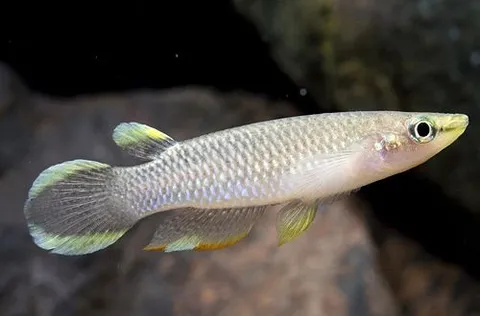
Aplocheilus panchax
The scientific name Aplocheilus panchax indicates that this fish belongs to the family Aplocheilidae. Known as Panchax, this killifish is one of the most popular and recognizable among aquarists, largely due to the wide…
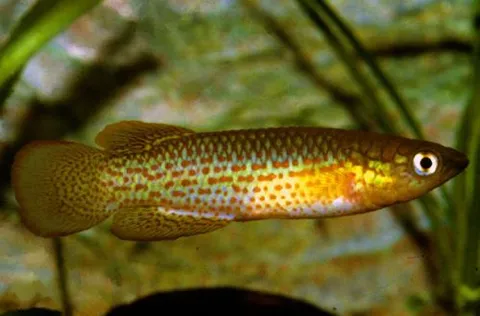
Pachypanchax playfairii
Pachypanchax playfairii, or Playfair's Panchax, belongs to the family Aplocheilidae. This tropical killifish, native to the Seychelles, is quite large among members of the Killifish genus. It exhibits a high degree of…
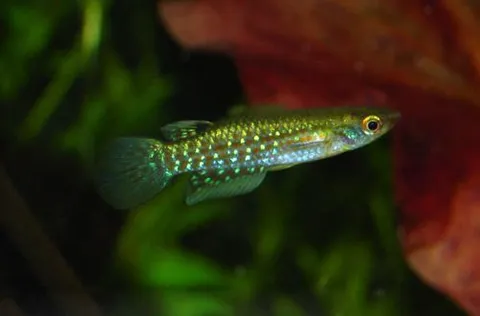
Aplocheilus blockii
The scientific name Aplocheilus blockii includes this species, also known as Block's Aplocheilus or Green Panchax, in the family Aplocheilidae. This fish is easy to keep and undemanding, thrives in community tanks, and…
Pachypanchax omalonotus
Pachypanchax omalonotus, or Omalonotus Panchax, belongs to the family Aplocheilidae. This species is well-known in aquaristics and is distinguished by a variety of colorations depending on geographic origin. Numerous…