Temperature20 – 25 °C
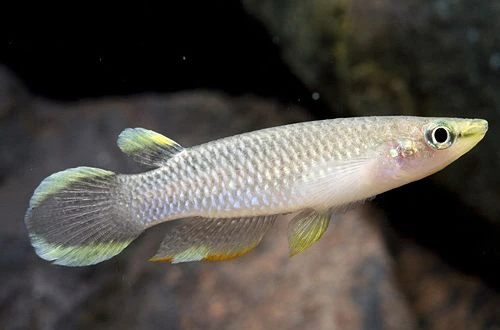
The scientific name Aplocheilus panchax indicates that this fish belongs to the family Aplocheilidae. Known as Panchax, this killifish is one of the most popular and recognizable among aquarists, largely due to the wide variety of artificially bred strains with vibrant and expressive coloration. It is this combination of a bright color palette, as well as unpretentiousness and hardiness, that has brought Panchax its well-deserved popularity. This species can successfully live in both brackish and fresh water, making it an excellent choice for beginner aquarists.
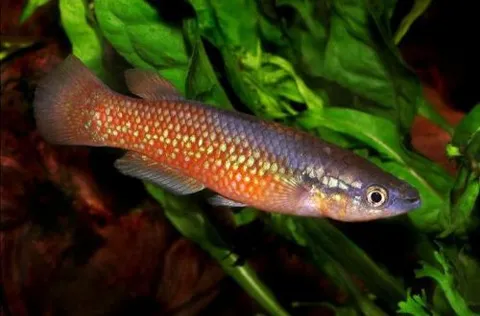
The body shape of Panchax is slender and elongated, with the dorsal and anal fins located close to the tail, giving it some resemblance to a river pike. The head of this fish is flattened on top, ending in a pointed snout and an upward-facing mouth. The natural body coloration often features an iridescent blue hue with a characteristic black spot on the dorsal fin. However, due to selective breeding, many varieties have emerged where orange and red tones predominate. For example, the Orange-finned Panchax, also known as the Indian Pike, was bred in India and is distinguished by its bright orange caudal fin.
These fish are widely distributed across South and Southeast Asia, found in countries such as India, Nepal, Malaysia, Indonesia, Cambodia, Vietnam, and many others. Their natural habitats include ponds, secluded river backwaters, as well as flooded fields and meadows, where they find shelter and food. Some populations have successfully adapted and live in coastal brackish waters. Nowadays, the range of Panchax has been significantly expanded by humans: these fish are actively bred in various regions to control mosquito populations, as the larvae of these insects, along with other small invertebrates, form the basis of their diet.
Towards other fish of similar size or slightly larger, Panchax usually exhibits a peaceful character. However, skirmishes or conflicts can sometimes occur among males, although serious injuries are extremely rare. It is important to avoid keeping Panchax with very small fish species, as the latter may be perceived as potential prey.
Keeping Panchax in a home aquarium, thanks to its unpretentiousness, will not cause much difficulty. To maintain water purity and the health of the inhabitants, it is sufficient to install a quality filter and renew 25–30% of the water volume weekly. Water preparation will also not be a problem, as Panchax adapts perfectly to a wide range of pH and dH values. However, it should be noted that these fish are prone to jumping, so using an aquarium lid is a recommended precaution. They prefer to spend time in the upper layers of the water, so when decorating the aquarium, avoid excessive overgrowth of the water surface. It is advisable to use a combination of floating and rooted plants to leave enough free swimming space. Choosing a dark substrate in combination with good lighting will help to better reveal and emphasize the bright coloration of the fish. Additional decorative elements such as stones, snags, or grottoes are at your discretion.
All types of dry commercial feeds, whether granules or flakes, are well-suited for the Panchax diet, as long as their size allows the fish to easily swallow them. To enrich the diet, it is useful to add meaty foods. This can be live or frozen bloodworms or Artemia. If for some reason meaty foods are not suitable or difficult to acquire, special dry foods enriched with protein supplements can be used.
Sexual differences in these fish are not pronounced, so for successful breeding, it is recommended to keep a group of 4–5 individuals, which will increase the likelihood of a suitable pair forming. Spawning can occur in the community tank at any time, provided that Java moss is present among the vegetation. It is into this that the fish lay their eggs, which should then be carefully transferred to a separate tank with similar water parameters. It is very important that the eggs develop separately from the parents to avoid them being eaten. Fry appear after 11–15 days; initially, they feed on the remnants of the yolk sac, and then switch to Artemia nauplii, infusoria, or powdered dry food. It should be noted that some fry grow faster than their siblings and, upon reaching a certain size, may start eating smaller ones. Therefore, it is advisable to promptly separate the largest individuals.
This is a very hardy species, characterized by good resistance to most common diseases. Health problems usually arise only in cases of extremely unfavorable keeping conditions or contact with already sick fish. In such situations, bacterial infections are most often manifested.
When purchasing Panchax, choose active individuals with clean fins and no visible damage, sores, or white film on the body. It is important to ensure that the fish display their natural caution and do not appear emaciated, as this species can have difficulties adapting to new aquarium conditions. — avoid acquiring individuals with clamped fins or lethargic behavior, which may indicate stress or hidden diseases — carefully examine the condition of the eyes and scales, excluding any signs of parasitic infections — ask the seller what type of food the fish are accustomed to, as acclimatization to dry commercial diets may take time.
The essentials: size, tank volume, water parameters and care
An adult reaches 10 cm in length. Plan the tank around the maximum size: the fish quickly outgrows a cramped setup.
The recommended volume is 80 L. A smaller tank speeds up nitrate build-up and raises stress levels.
Temperature 20–25 °C, pH 6–8, hardness 5–19 dGH. Stability matters more than exact values: sudden swings are harder on the fish than a small deviation from the ideal.
Around 5 years when kept properly. Lifespan depends directly on tank volume, water quality and a varied diet.
Temperament: semi-peaceful (dangerous to smaller ones). Not a predatory species, but small fish that fit in its mouth will eventually be eaten.
Recommended setup: harem (1 male and several females). Ignoring this is a common cause of stress and disease.
Diet type: meat with plant additives (omnivores). Feed small portions that are finished within a couple of minutes — overfeeding does more harm than underfeeding.
The scientific name of the species is Aplocheilus panchax, family Aplocheilidae. It also appears in the literature as: Aplocheilus andamanicus, Aplocheilus armatus, Aplocheilus buchanani.
The water suits 196 of 208 plants in the catalogue — the easiest ones are shown first.
Afzelius's AnubiasAnacharisAnubiasBrazilian PennywortDwarf CloverDwarf CloverDwarf HygrophilaDwarf SagittariaDwarf ValGuppy GrassHornwortJava FernJava MossMoneywortMud SwordNarrow Leaf AnacharisNarrow-leaf CloverStringy MossSüsswassertangTaiwan MossTape GrassTemple PlantUssuri WatermilfoilWater Wisteria
Matched by family, categories and overlapping keeping conditions
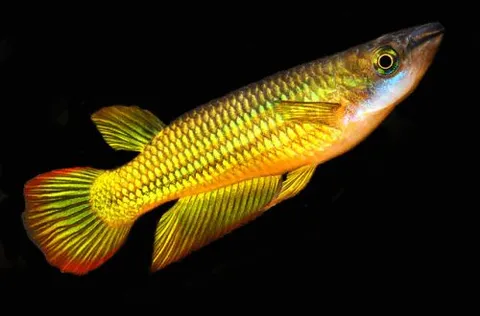
Aplocheilus lineatus
Scientifically named Aplocheilus lineatus, the Striped Panchax, or Striped Asian Killifish, belongs to the family Aplocheilidae. In its natural habitat, it is quite attractive due to its unique body pattern, but…
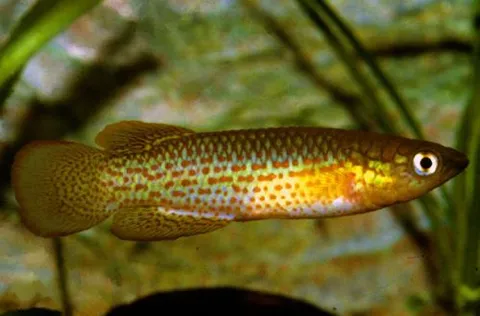
Pachypanchax playfairii
Pachypanchax playfairii, or Playfair's Panchax, belongs to the family Aplocheilidae. This tropical killifish, native to the Seychelles, is quite large among members of the Killifish genus. It exhibits a high degree of…
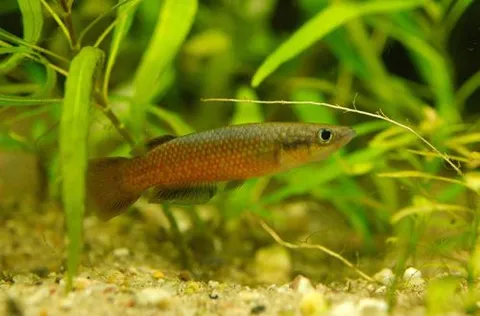
Pachypanchax omalonotus
Pachypanchax omalonotus, or Omalonotus Panchax, belongs to the family Aplocheilidae. This species is well-known in aquaristics and is distinguished by a variety of colorations depending on geographic origin. Numerous…
Pachypanchax sakaramyi
The Madagascar Panchax, also known by its scientific name Pachypanchax sakaramyi, belongs to the family Aplocheilidae. This killifish is remarkably popular among aquarists, despite its critically low numbers in the…