Temperature22 – 27 °C
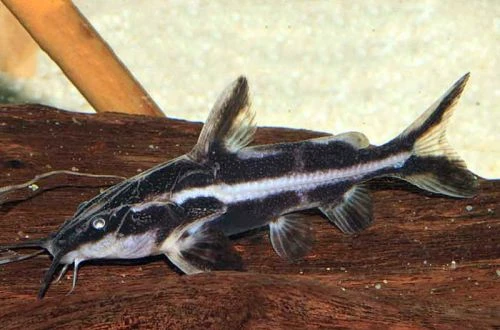
Orinocodoras eigenmanni, also known as the Striped Raphael Catfish or Orinoco Raphael Catfish, belongs to the family Doradidae (thorny catfishes). This catfish originates from South America, specifically the Orinoco River basin, which extends through Venezuela.
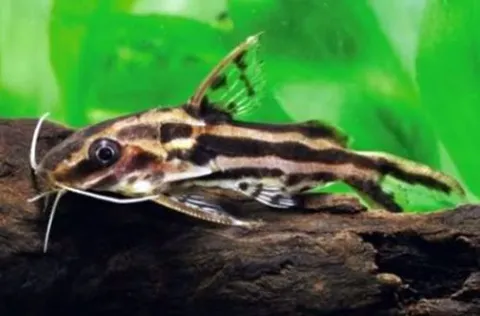
Adults of this species can reach up to 20 cm in length. In appearance, it is almost indistinguishable from the common Raphael Catfish, but upon closer inspection, some morphological differences can be noted: its head is more pointed, its eyes are slightly smaller, and its adipose fin is longer. The coloration and characteristic body pattern are similar in both catfishes. Dark brown or black hues predominate, complemented by a white stripe running from head to tail. The edges of the fins also have a light border. The Orinoco Raphael Catfish is reliably protected from potential predators by its tough skin, which feels like sandpaper, and sharp spines—these are modified first rays of the fins.
The species is endemic to South America and inhabits exclusively the Orinoco River basin in Venezuela. In nature, it occupies the bottom areas of water bodies, preferring places with subdued lighting and natural shelters.
This fish is distinguished by its peaceful and calm disposition, showing a tendency to stay in groups of its own kind. It coexists well with other non-aggressive catfish species and other aquarium inhabitants. However, it should be noted that due to its omnivorous nature, this catfish can pose a threat to very small neighbors or fry, so their cohabitation is not recommended.
For a group of 2–3 such catfishes, an aquarium of at least 250 liters will be optimal. In terms of decor, special attention should be paid to the lower stratum, as the Orinoco Raphael Catfish spends a significant part of its life there. It is recommended to create both open areas and appropriately sized shelters, for example, from large snags. The catfish is safe for aquarium plants. Nevertheless, it is preferable to use hardy species with well-developed root systems, or those that can grow on the surfaces of snags or stones. In terms of care, it is relatively undemanding and adapts well to various conditions. Aquarium maintenance includes standard procedures: weekly partial water changes with fresh water, removal of organic waste, and regular equipment checks.
This species is omnivorous, actively eating everything it finds on the bottom of the water body. The basis of the daily diet can consist of popular dry sinking foods, which can be supplemented with live or frozen bloodworms, small earthworms, as well as pieces of shrimp or mussels. Unlike many catfishes, this species actively searches for food not only in the evening or at night but also during the day.
Breeding has not been described. Thorny catfishes spawn in aquaria only very rarely, and for this species there are no confirmed cases. No external differences between males and females are reported, and all fish in the trade are wild-caught.
Like other members of the thorny catfish family, this species possesses robust health and high resistance to diseases when kept under proper conditions. The main danger comes from mechanical damage to the skin when using unsuitable nets or sharp decorations, which can lead to the development of secondary bacterial infections. Prevention involves maintaining water cleanliness and regular partial water changes.
When purchasing, attention should be paid to the integrity of the skin, the absence of white spots, ulcers, or damage on the body. A healthy fish should show activity in searching for food, even during the day, despite its nocturnal lifestyle. It is important to note that due to the presence of sharp spines on its fins, the fish should be transported with caution, avoiding the use of mesh nets in which it can get entangled.
The essentials: size, tank volume, water parameters and care
An adult reaches 20 cm in length. Plan the tank around the maximum size: the fish quickly outgrows a cramped setup.
The recommended volume is 250 L. A smaller tank speeds up nitrate build-up and raises stress levels.
Temperature 22–27 °C, pH 6–7.8, hardness 5–15 dGH. Stability matters more than exact values: sudden swings are harder on the fish than a small deviation from the ideal.
Around 15 years when kept properly. Lifespan depends directly on tank volume, water quality and a varied diet.
Temperament: semi-peaceful (dangerous to smaller ones). Not a predatory species, but small fish that fit in its mouth will eventually be eaten.
Recommended setup: both solitary and in group (flexible). Ignoring this is a common cause of stress and disease.
Diet type: sinking (any). Feed small portions that are finished within a couple of minutes — overfeeding does more harm than underfeeding.
The scientific name of the species is Orinocodoras eigenmanni, family Doradidae (Thorny Catfishes).
The water suits 197 of 208 plants in the catalogue — the easiest ones are shown first.
Afzelius's AnubiasAnacharisAnubiasBrazilian PennywortDwarf CloverDwarf CloverDwarf HygrophilaDwarf SagittariaDwarf ValGuppy GrassHornwortJava FernJava MossMoneywortMud SwordNair's LagenandraNarrow Leaf AnacharisNarrow-leaf CloverStringy MossSüsswassertangTaiwan MossTape GrassTemple PlantUssuri Watermilfoil
Matched by family, categories and overlapping keeping conditions
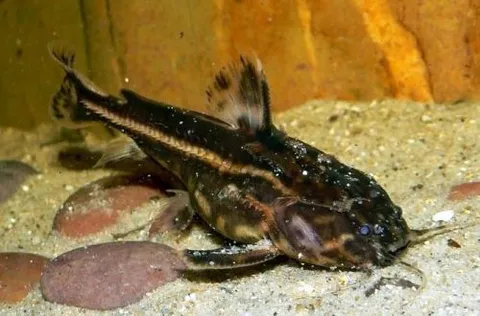
Acanthodoras cataphractus
Acanthodoras cataphractus, commonly known as the Chocolate Talking Catfish or Chocolate Doradid, belongs to the family Doradidae (Thorny Catfishes). It is also called the Spiny Catfish. This fish is not frequently found…
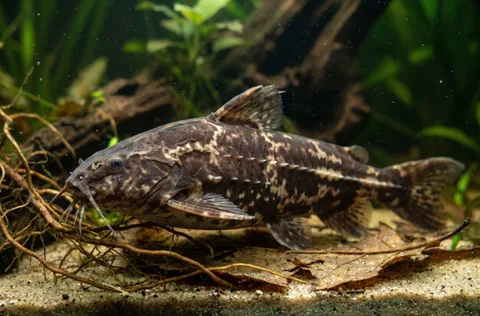
Acanthodoras spinosissimus
The Spiny Catfish, scientifically known as Acanthodoras spinosissimus, belongs to the family Doradidae, or Thorny Catfishes. They are also called "Talking Catfishes" due to the sounds they produce using special bony…
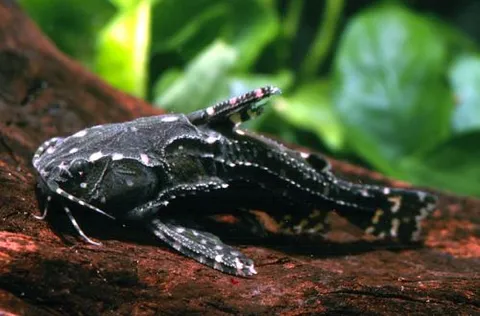
Agamyxis pectinifrons
Agamyxis pectinifrons is the scientific name for the Spotted Raphael Catfish, also known as the Spotted Doradid or White-spotted Agamyxis. This member of the Doradidae family earned its other common name, "Talking…
Synodontis flavitaeniatus
Belonging to the Mochokidae family, the Striped Synodontis, also known as the Orange Synodontis (Synodontis flavitaeniatus), easily adapts to various water conditions. This peaceful and undemanding species makes an…