Mormyridae

Trunk-nosed Elephantfish

Campylomormyrus rhynchophorus

The trunk-nosed elephantfish (Campylomormyrus rhynchophorus) belongs to the family Mormyridae, as does its close relative the Nile elephantfish. It too has a highly unusual appearance. Acquiring one can be difficult, since breeding them presents certain challenges and their care requires specific knowledge, which can be daunting for inexperienced aquarists.

Tank
from 250 L (66 gal)
Temperature
22 – 24 °C (72 – 75 °F)
Size in aquarium
22 cm (8.7 in)
Acidity
pH 5–7
Natural rangeRange on the map
  • Congo River Basin
  • Angola
  • Cameroon
  • Democratic Republic of the Congo

Tank conditions

Plan the tank stocking
Temperature
22 – 24 °C (72 – 75 °F)
Water pH
Slightly acidic (5) – Neutral (7)
Water dH
Soft (5) – Medium hardness (10)
Water salinity
no salt (freshwater)
Size in aquarium
22 cm (8.7 in)
Lifespan
8 years
Temperament
Peaceful (regular)
Toward small fish
not a predator
Required aquarium volume
from 250 L (66 gal)
Lighting
dimmed
Substrate
soft silted
Water flow
weak or moderate
Feeding
Sinking (any)
Keeping
Solitary + other species large / compatible
  • Lifespan. A lifespan to expect under good care, not a measured value: it depends heavily on tank volume, water quality and diet — and for selectively bred forms, on their origin as well.
  • Toward small fish. Based on the Predators category in the catalog or the temperament in the species parameters. “A risk to small fish” means the species is not a predator by habit, yet will swallow any fish that fits in its mouth.
  • Required aquarium volume. This is a husbandry recommendation, not a measured value: the volume depends on the keeping mode (solitary + other species (large / compatible)), footprint, decor and tank mates.

Care and keeping

Description

Adults reach up to 22 cm in length, with a laterally compressed body. The fish is usually grey-white in colour. The dorsal and anal fins are positioned symmetrically, shifted towards the tail. One of the most striking features is the 'trunk'—a specialized mouth that the fish uses to search for food in mud and silt, which gives it the common name trunk-nosed elephantfish. Active at night and in low visibility, it uses a special organ on the tail that generates short electrical pulses to navigate. Electroreceptors on the head detect minute changes in the electrical field, creating a 'picture' of the world around it.

Habitat

Its natural range lies in central Africa, in the Congo River basin, which covers parts of present-day Cameroon, Democratic Republic of the Congo, and Angola. In the wild it prefers the bottom zones of rivers rich in silt and dense aquatic vegetation.

Behavior and Compatibility

This species is territorial and fiercely defends its bottom area from other members of its own kind. Therefore, keep only one individual per tank. The trunk-nosed elephantfish lives well with non-aggressive, calm fish of similar or smaller size, preferably ones that inhabit the middle or upper water layers.

Care and Maintenance

The trunk-nosed elephantfish needs an aquarium of at least 250 litres. Provide dimmed lighting and use a soft sandy substrate with added processed peat or similar material. Include dense plant growth. Given the dim lighting, choose shade-tolerant species such as anubias, vallisneria, and certain mosses and ferns. Stable water parameters are critical. A powerful filtration system is recommended, but remember that this fish tolerates strong water flow poorly; choose a filter that does not create excessive water movement. Standard tank care includes weekly partial water changes and regular removal of organic waste.

Diet

In nature it feeds on various bottom organisms such as crustaceans, worms, insects and their larvae, and also eats plant matter. In the home aquarium, maintain a suitable diet, especially if the fish is not yet accustomed to dry or frozen foods.

Breeding and Reproduction

No successful breeding of the trunk-nosed elephantfish has been recorded in the home aquarium. These fish come either from commercial breeding farms or are caught in the wild.

Diseases

Poor tank conditions are often the cause of disease. Low water quality, unbalanced feeding, and injury can lead to various infections. The 'trunk' is particularly vulnerable to damage, especially if the substrate is hard. In a well-balanced aquarium ecosystem, fish typically do not develop health problems.

How to choose

When choosing a trunk-nosed elephantfish, examine it carefully: healthy skin should be clean, without white coating, ulcers or damage, as this fish has no scales and is highly susceptible to infection and water quality issues. Pay attention to activity: in the shop it may look shy, but should show interest when offered food. Avoid specimens with an unnaturally sunken belly, which may indicate prolonged starvation or refusal to feed. Check for signs of rapid breathing or lethargy, which often indicate stress or poor conditions in the shop tank. Ask the seller what the fish is being fed, as adapting to new food types can be difficult. Ensure the trunk is undamaged, as this organ is key to navigation and finding food, and injury to it can be fatal.
Compatibility

There are no pair reviews for this species yet — check tankmates in the matcher.

All tankmates

Plants and this fish

Matching water does not mean the plant will stay intact.

Frequently asked questions

The essentials: size, tank volume, water parameters and care

How big does Trunk-nosed Elephantfish get?

An adult reaches 22 cm in length. Plan the tank around the maximum size: the fish quickly outgrows a cramped setup.

What size aquarium does Trunk-nosed Elephantfish need?

The recommended volume is 250 L. A smaller tank speeds up nitrate build-up and raises stress levels.

What water parameters does Trunk-nosed Elephantfish need?

Temperature 22–24 °C, pH 5–7, hardness 5–10 dGH. Stability matters more than exact values: sudden swings are harder on the fish than a small deviation from the ideal.

How long does Trunk-nosed Elephantfish live?

Around 8 years when kept properly. Lifespan depends directly on tank volume, water quality and a varied diet.

Is Trunk-nosed Elephantfish aggressive?

Temperament: peaceful (regular). Keep this in mind when choosing tank mates.

How many Trunk-nosed Elephantfish should be kept together?

Recommended setup: solitary + other species (large / compatible). Ignoring this is a common cause of stress and disease.

What does Trunk-nosed Elephantfish eat?

Diet type: sinking (any). Feed small portions that are finished within a couple of minutes — overfeeding does more harm than underfeeding.

What is the scientific name of Trunk-nosed Elephantfish?

The scientific name of the species is Campylomormyrus rhynchophorus, family Mormyridae. It also appears in the literature as: Campylomormyrus lualabaensis, Gnathonemus lualabaensis, Gnathonemus rhynchophorus.

Similar fishes

Matched by family, categories and overlapping keeping conditions

Elephantfish

Elephantfish

Gnathonemus petersii

Mormyridae

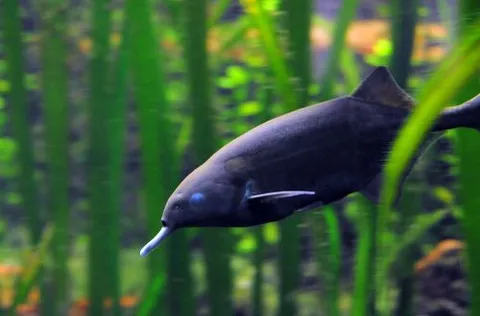
Peters's Elephantnose Fish, often referred to as the Elephantfish or Nile Elephantfish (scientific name Gnathonemus petersii), belongs to the family Mormyridae. Its exotic appearance, resembling an elephant's trunk due…

Plated Cory

Plated Cory

Scleromystax barbatus

Armored Catfish (Callichthyidae)

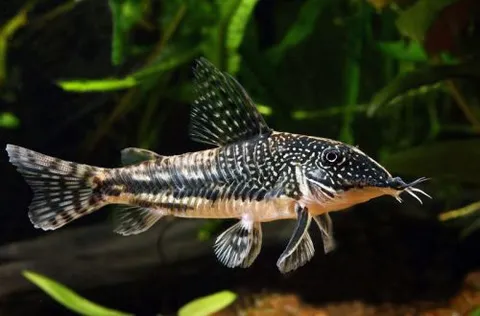
Scleromystax barbatus, known as the Plated Cory or Bearded Cory, belongs to the Callichthyidae family. This species is considered the largest among the Corydoras genus, reaching approximately 10 cm in length. Otherwise,…

Brushmouth Loach

Brushmouth Loach

Formosania lacustris

River Loaches (Balitoridae)

Formosania lacustris, also known as the Brushmouth Loach, belongs to the family Balitoridae, known as river loaches. The fish owes its name to its body structure: it is elongated and slender, but has a rather large…

Characidium fasciatum

Characidium fasciatum

Characidium fasciatum

Crenuchidae

Characidium fasciatum belongs to the family Crenuchidae. Its modest colouration has kept it from becoming popular in the hobby, but it appears periodically in shipments from South America. The species is undemanding and…

Other scientific names and conservation status

Other scientific names
Campylomormyrus lualabaensis, Gnathonemus lualabaensis, Gnathonemus rhynchophorus
Categories
Unusual, Cold-water
Conservation status
Least concernLC