Temperature18 – 24 °C
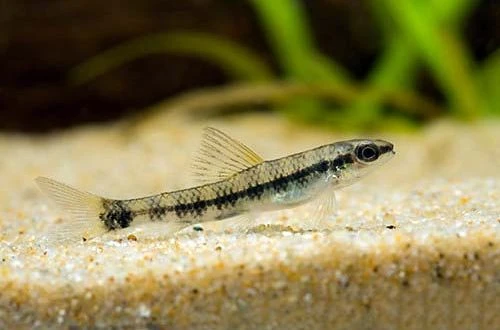
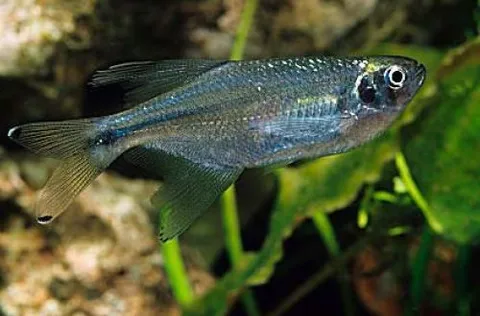
The Characidium fasciatum, scientifically known as Characidium fasciatum, is a member of the family Crenuchidae. Its modest coloration has led to its low popularity among aquarium enthusiasts. Nevertheless, this species periodically appears in fish shipments from South America. It is considered unpretentious and quite easy to keep.
Adults grow up to 6–7 cm in length. Their elongated body shape resembles some loach species, such as the Chinese Hillstream Loach, the Krano Loach, or Hasseelt's Goby. The predominant color is gray. Depending on the fish's geographical origin, black spots running along a dark horizontal stripe or dashes starting from the back may be found on its body.
The origin of this species is South America. It inhabits the São Francisco River basin and the upper reaches of the Paraná River, located in the eastern states of Brazil. It prefers river sections with sandy-gravel bottoms and moderate currents.
These peaceful and calm fish prefer to stay in groups of at least 6 individuals. They get along well with other non-aggressive species that also tolerate relatively cool water, such as goldfish.
A group of 6–8 individuals will require an aquarium of 80–100 liters. Since these fish prefer the bottom zone, special attention should be paid to the lower tier when decorating the aquarium. Fine gravel or coarse sand will serve as suitable substrate. It is desirable to place stones, boulders, and driftwood to create many shelters. The presence of live aquatic plants is not mandatory. For Characidium fasciatum, it is important to provide a moderate current, which can be achieved with an efficient internal filter. It is also worth remembering that this species tolerates high water temperatures poorly; the optimal temperature range is 18–24°C, which means that in most cases, a heater in the aquarium will likely not be needed. In their natural habitat, they feed on small aquatic invertebrates such as crustaceans, worms, and insect larvae. In home aquariums, their main diet can consist of any sinking dry foods rich in protein, such as flakes and granules.
In their natural habitat, these fish prefer to feed on small aquatic invertebrates such as crustaceans, worms, and insect larvae. In a home aquarium environment, their diet can be successfully based on sinking dry flakes and granules rich in protein. This peaceful and calm fish feels best in a group of at least 6 individuals. They get along well with other non-aggressive species that also prefer relatively cool water, such as goldfish.
Currently, reliable information on breeding Characidium fasciatum in aquarium conditions is practically nonexistent. Due to the rarity of the species in trade, successful reproduction is most often recorded by experienced aquarists working with wild-caught specimens. Creating specific conditions that mimic their natural habitat is recommended, but a generally accepted protocol has not been developed.
The species exhibits relative resistance to diseases when water parameters are maintained. The main health risk is associated with keeping them alone or in unsuitable conditions, which provokes severe stress and reduced immunity. Characidium fasciatum is sensitive to high temperatures and low oxygen content. Prevention includes maintaining water purity, regular water changes, and providing sufficient shelters to reduce stress levels.
When purchasing, pay attention to the fish's activity: healthy individuals should show interest in their surroundings, stay in the bottom layer, and show no signs of emaciation. It is important to avoid specimens with damaged fins, film on the body, or unnatural behavior (lethargy, constant attempts to stay at the surface). Since the species is rare, it is recommended to acquire a group of 6 or more individuals to ensure their social well-being.
The essentials: size, tank volume, water parameters and care
An adult reaches 6–7 cm in length. Plan the tank around the maximum size: the fish quickly outgrows a cramped setup.
The recommended volume is 80 L. A smaller tank speeds up nitrate build-up and raises stress levels.
Temperature 18–24 °C, pH 5.6–7.5, hardness 2–15 dGH. Stability matters more than exact values: sudden swings are harder on the fish than a small deviation from the ideal.
Around 4 years when kept properly. Lifespan depends directly on tank volume, water quality and a varied diet.
Temperament: peaceful (regular). Keep this in mind when choosing tank mates.
Recommended setup: medium group (6–8 individuals). Ignoring this is a common cause of stress and disease.
Diet type: sinking (any). Feed small portions that are finished within a couple of minutes — overfeeding does more harm than underfeeding.
The scientific name of the species is Characidium fasciatum, family Crenuchidae.
The water suits 197 of 208 plants in the catalogue — the easiest ones are shown first.
Afzelius's AnubiasAnacharisAnubiasBrazilian PennywortDwarf CloverDwarf CloverDwarf HygrophilaDwarf SagittariaDwarf ValGuppy GrassHornwortJava FernJava MossMoneywortMud SwordNarrow Leaf AnacharisNarrow-leaf CloverStringy MossSüsswassertangTaiwan MossTape GrassTemple PlantUssuri WatermilfoilWater Wisteria
Matched by family, categories and overlapping keeping conditions
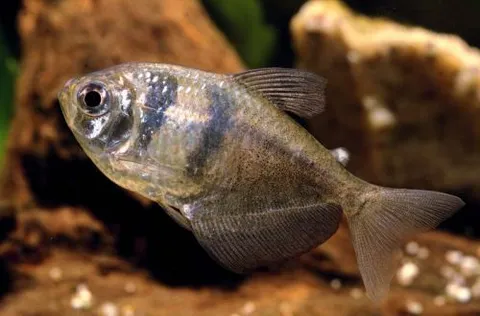
Gymnocorymbus thayeri
The False Black Tetra, also known as the Blue-spotted Gymnocorymbus (scientific name Gymnocorymbus thayeri), belongs to the Acestrorhamphidae family. It was named in honor of the patron N. Thayer, who supported a…
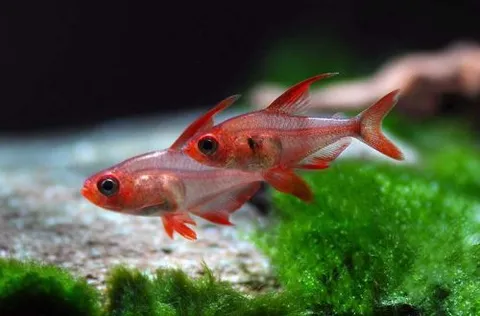
Megalamphodus sweglesi
The Red Phantom Tetra, also known as Megalamphodus sweglesi, belongs to the Acestrorhamphidae family. This fish is popular due to its vibrant coloration and peaceful nature. It is easy to keep and breed, and can adorn…
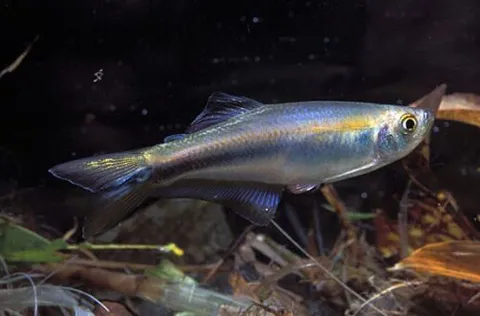
Mimagoniates microlepis
A representative of the Stevardiidae family, Mimagoniates microlepis, also known as the Blue Tetra. This beautiful schooling species has the unique ability to produce sounds, which are most likely used to attract a mate…
Pseudocorynopoma doriae
The scientific name Pseudocorynopoma doriae indicates the Dragon Tetra's belonging to the Stevardiidae family. This species is not often found in home aquariums outside the American continent, mainly due to its modest…