Temperature20 – 24 °C
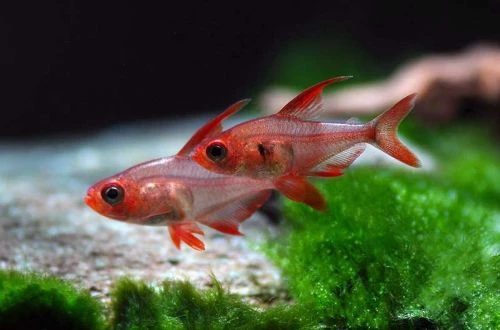
The Red Phantom Tetra, also known as Megalamphodus sweglesi, belongs to the Acestrorhamphidae family. This fish is popular due to its vibrant coloration and peaceful nature. It is easy to keep and breed, and can adorn almost any freshwater tropical aquarium, provided its tankmates are suitable. Due to its very modest size, special attention should be paid to the selection of tankmates.
This is a small fish, with adults reaching only 3 cm in length. Their body is characterized by a rich red color, the intensity of which can vary depending on the keeping conditions. An aquarium designed to mimic its natural habitat will help bring out the full brilliance of its colors. Differences between males and females are subtle: males have enlarged dorsal and anal fins, while females often have a white spot on the tip of the dorsal fin.
The natural habitat of this species covers the upper Orinoco River basin in South America, where it is found in numerous tributaries within modern-day Colombia and Venezuela. The fish prefers to live in shallow rivers and streams, in flooded areas of tropical forests, in temporary lakes, and in the channels of major rivers.
This peaceful fish prefers to live in a school, which should consist of at least 8–10 individuals. Intraspecific relationships are characterized by a hierarchy based on competition among males for the attention of females. Such competition manifests not in fights, but in the desire to appear brighter and more attractive than rivals. They get along well with most other peaceful species of similar size and temperament.
To ensure comfortable conditions, an aquarium of at least 80 liters is required. For its decor, it is recommended to use a sandy substrate, place several pieces of driftwood, and dense thickets of plants, which should be grouped along the side or back walls. Adding dried fallen leaves will not only give the aquarium a natural look but also become a source of tannins, which are abundant in the Red Phantom Tetra's natural habitats. It is important to remember that before placing fallen leaves in the aquarium, they must be soaked in water for about a week so that they become waterlogged and sink. When maintaining the aquarium, special attention should be paid to water quality: avoid the accumulation of organic waste, regularly perform partial water changes with fresh water, and ensure that pH and dGH parameters are within acceptable limits, and the temperature does not exceed 23–24°C.
Fish readily accept all types of dry, frozen, or fresh foods of appropriate size. The quality and variety of nutrition directly affect the vibrancy of their coloration, so it is beneficial to include small crustaceans (such as Daphnia, Artemia) and/or bloodworms in their daily diet.
Red Phantoms are egg-laying species: females deposit eggs in open water, while males fertilize them. Since they lack parental instincts, fish may eat their own offspring immediately after spawning. Breeding these fish is not particularly difficult; fry can even appear in a community tank, but survival rates in such cases will be extremely low. If the goal is successful reproduction of the Red Phantom, it is recommended to prepare a separate spawning tank of about 20 liters. The spawning aquarium is filled with water from the main tank, and the only equipment used is a heater and a simple sponge air-lift filter. Special lighting is not required; ambient light from the room is sufficient. Typically, no decorations are used. To protect the eggs from being eaten, the bottom is covered with a layer of glass marbles or a fine-mesh net. The breeding period can occur at any time of year, but establishing a neutral pH value at a temperature of about 24°C, along with a daily diet predominantly consisting of live foods, can stimulate this process. When the females become noticeably rounded, they, along with several of the brightest males, are transferred to the spawning tank. Once the process is complete (this may take several days), the fish are returned to the main aquarium. Fry should be fed specialized food for aquarium fish juveniles.
A well-balanced aquarium system with optimal keeping conditions is the best protection for the Red Phantom against various diseases. Therefore, if you notice changes in the fish's behavior, coloration, or the appearance of unusual spots, you should first check the water parameters, and only then proceed with treatment.
When selecting individuals in a store, pay attention to their activity and fin integrity. Healthy fish should show interest in their surroundings, actively swim in a school, and have no signs of damage, ulcers, or white film on their bodies. Avoid purchasing fish that appear emaciated, isolate themselves, or have unnaturally clamped fins, as this may indicate stress or hidden diseases. — Choose individuals from aquariums where there are no fish with signs of infection. — Give preference to individuals with bright coloration appropriate for the species. — Make sure the fish exhibit normal schooling behavior when approached at the aquarium.
The essentials: size, tank volume, water parameters and care
An adult reaches 3.5 cm in length. Plan the tank around the maximum size: the fish quickly outgrows a cramped setup.
The recommended volume is 80 L. A smaller tank speeds up nitrate build-up and raises stress levels.
Temperature 20–24 °C, pH 4.5–7.5, hardness 1–12 dGH. Stability matters more than exact values: sudden swings are harder on the fish than a small deviation from the ideal.
Around 5 years when kept properly. Lifespan depends directly on tank volume, water quality and a varied diet.
Temperament: peaceful (regular). Keep this in mind when choosing tank mates.
Recommended setup: group (8–10 individuals). Ignoring this is a common cause of stress and disease.
Diet type: any (universal). Feed small portions that are finished within a couple of minutes — overfeeding does more harm than underfeeding.
The scientific name of the species is Megalamphodus sweglesi, family Acestrorhamphidae. It also appears in the literature as: Magalamphodus sweglesi, Megalamphodus sweglesi.
The water suits 197 of 208 plants in the catalogue — the easiest ones are shown first.
Afzelius's AnubiasAnacharisAnubiasBrazilian PennywortDwarf CloverDwarf CloverDwarf HygrophilaDwarf SagittariaDwarf ValGuppy GrassHornwortJava FernJava MossMoneywortMud SwordNarrow Leaf AnacharisNarrow-leaf CloverStringy MossSüsswassertangTaiwan MossTape GrassTemple PlantUssuri WatermilfoilWater Wisteria
Matched by family, categories and overlapping keeping conditions
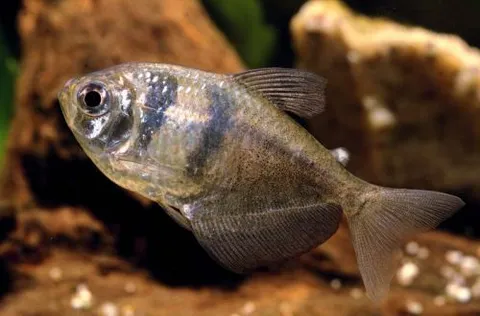
Gymnocorymbus thayeri
The False Black Tetra, also known as the Blue-spotted Gymnocorymbus (scientific name Gymnocorymbus thayeri), belongs to the Acestrorhamphidae family. It was named in honor of the patron N. Thayer, who supported a…
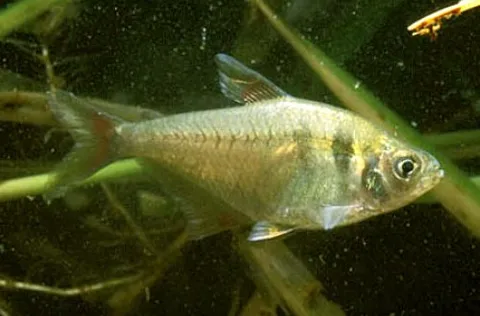
Hyphessobrycon bifasciatus
The Yellow Tetra (Hyphessobrycon bifasciatus), a member of the Acestrorhamphidae family, possesses a pleasant yellow hue that allows it to stand out in an aquarium. These fish are readily available, easy to keep and…
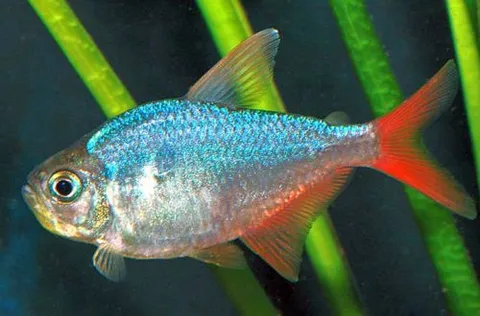
Hyphessobrycon columbianus
The Colombian Tetra (Hyphessobrycon columbianus) is an attractive and peaceful fish belonging to the family Acestrorhamphidae. Its care is straightforward, making it an excellent choice for aquarists. It harmonizes well…
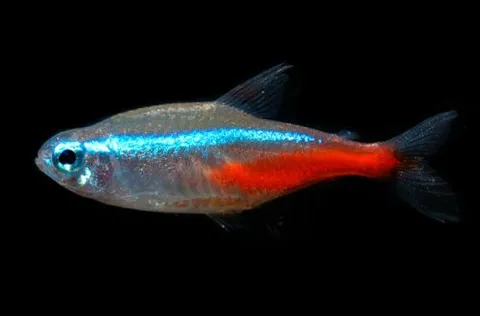
Paracheirodon innesi
Paracheirodon innesi, better known as the Neon Tetra or Blue Neon, belongs to the Acestrorhamphidae family. This aquarium fish rightly holds a place among the most beloved and popular species. As early as the 1930s, it…