Temperature20 – 25 °C
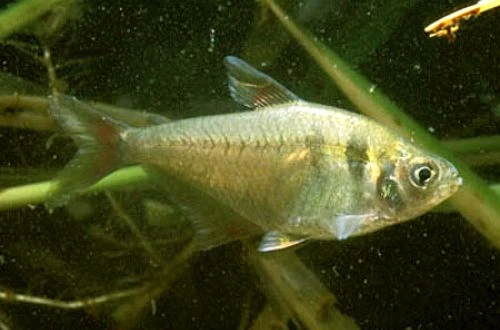
The Yellow Tetra (Hyphessobrycon bifasciatus), a member of the Acestrorhamphidae family, possesses a pleasant yellow hue that allows it to stand out in an aquarium. These fish are readily available, easy to keep and breed, making them an excellent choice for beginner aquarists.
Adults of this species reach up to 4.5 cm in length. Their coloration is often yellow, sometimes silvery with a slight yellowish tint, while the fins and tail remain transparent. Sexual dimorphism in the Yellow Tetra is not pronounced. It is important to note that it should not be confused with the Lemon Tetra; the Yellow Tetra is distinguished by the presence of two dark streaks on its body, especially noticeable in males.
The natural habitat of the Yellow Tetra spans the river systems of southern Brazil, including the states of Espírito Santo and Rio Grande do Sul, as well as the upper Paraná River basin. Preferred habitats include floodplain tributaries, streams, and small lakes under the canopy of tropical forests.
This peaceful and calm species cannot compete with faster and more active fish. Therefore, for tankmates for the Yellow Tetra, it is advisable to choose species of similar size and temperament – these can be other characins, cyprinids, livebearers, and some South American cichlids. Optimal keeping involves a school of at least 6–8 individuals.
For a small school of Yellow Tetras, a tank volume of 60 liters is quite sufficient. It is recommended to use a sandy substrate and shelters made of driftwood, roots, or tree branches. Plants can be arranged in groups, and floating vegetation is not only welcome but also contributes to additional shading of the aquarium. To recreate conditions close to natural ones, it is desirable to use a filter with an alder cone filler. You can also place a small fabric bag filled with alder cones into the aquarium. Such a bag, placed in a corner, will gradually give the water a slight light brown tint. A similar effect can be achieved by using dried and then soaked tree leaves until they sink, which should be replaced every two weeks. Aquarium maintenance includes weekly water changes of 15–20% of the volume with fresh water and regular cleaning of the substrate from organic debris.
The diet of these fish can include all types of dry, frozen, and live foods of appropriate size. A varied diet, such as a combination of dry flakes, pellets with bloodworms or daphnia, not only maintains the vitality of the fish but also enhances the richness of their coloration.
The Yellow Tetra is an egg-laying species, but its parental instincts are weakly expressed, which means there is a risk of eggs and fry being eaten by adult fish. For successful breeding, it is recommended to use a separate breeding tank, usually about 20 liters in volume, where decor does not play an important role. To protect the offspring, the bottom of the aquarium can be lined with a fine mesh, a layer of marbles 1–2 cm in diameter, or dense thickets of low, fine-leaved plants or mosses. Before placing the fish, the aquarium is filled with water from the main tank. For equipment, a simple sponge air-lift filter and a heater are sufficient. A lighting system is not required, as the Yellow Tetra prefers dim, subdued light during spawning. At home, spawning can occur regardless of the time of year. An additional stimulus can be the inclusion of a large amount of protein-rich foods (such as bloodworms, daphnia, brine shrimp) in the daily diet instead of dry food. After some time, some females will noticeably round out, indicating they are full of eggs. Then, the females and the largest, brightest males are moved to a separate aquarium. After spawning, the new parents are returned. Fry appear after 24–36 hours and begin free-swimming on day 3–4, at which point they require food. Young fish are fed with special aquarium fish food.
A well-balanced aquarium biosystem with optimal keeping conditions serves as the best protection against potential diseases. For this species, the main sign of malaise is the appearance of a metallic sheen in their coloration, where the yellow color takes on a metallic hue. In such a situation, the first step should always be to check the water parameters and, if necessary, correct them, and only then proceed with treatment.
When selecting individuals, attention should be paid to the overall activity of the fish: healthy tetras should stay in a school and show interest in their surroundings. Avoid specimens with damaged fins, whitish spots on the body, or signs of emaciation. It is important to consider that this species sometimes exhibits a specific condition where the scales acquire a pronounced metallic sheen, but this is not always a symptom of illness. In the store, it is recommended to assess the conditions in the aquarium and ensure there are no dead fish nearby to minimize the risk of acquiring infected individuals.
The essentials: size, tank volume, water parameters and care
An adult reaches 4.5 cm in length. Plan the tank around the maximum size: the fish quickly outgrows a cramped setup.
The recommended volume is 60 L. A smaller tank speeds up nitrate build-up and raises stress levels.
Temperature 20–25 °C, pH 5–7.5, hardness 5–15 dGH. Stability matters more than exact values: sudden swings are harder on the fish than a small deviation from the ideal.
Around 5 years when kept properly. Lifespan depends directly on tank volume, water quality and a varied diet.
Temperament: peaceful (regular). Keep this in mind when choosing tank mates.
Recommended setup: group (8–10 individuals). Ignoring this is a common cause of stress and disease.
Diet type: any (universal). Feed small portions that are finished within a couple of minutes — overfeeding does more harm than underfeeding.
The scientific name of the species is Hyphessobrycon bifasciatus, family Acestrorhamphidae.
The water suits 197 of 208 plants in the catalogue — the easiest ones are shown first.
Afzelius's AnubiasAnacharisAnubiasBrazilian PennywortDwarf CloverDwarf CloverDwarf HygrophilaDwarf SagittariaDwarf ValGuppy GrassHornwortJava FernJava MossMoneywortMud SwordNarrow Leaf AnacharisNarrow-leaf CloverStringy MossSüsswassertangTaiwan MossTape GrassTemple PlantUssuri WatermilfoilWater Wisteria
Matched by family, categories and overlapping keeping conditions
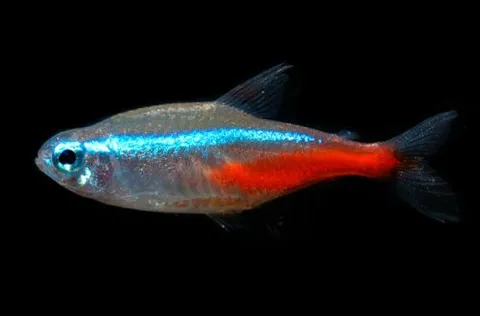
Paracheirodon innesi
Paracheirodon innesi, better known as the Neon Tetra or Blue Neon, belongs to the Acestrorhamphidae family. This aquarium fish rightly holds a place among the most beloved and popular species. As early as the 1930s, it…
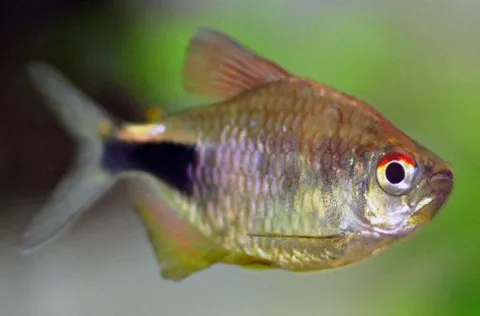
Holopristis pulchra
The Pulcher fish, also known by its scientific name Holopristis pulchra, belongs to the Acestrorhamphidae family. Despite its rather narrow natural habitat, it has gained popularity among aquarists worldwide due to its…
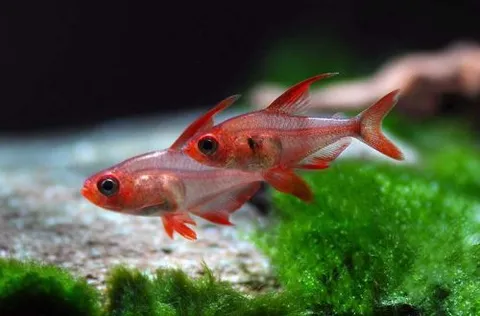
Megalamphodus sweglesi
The Red Phantom Tetra, also known as Megalamphodus sweglesi, belongs to the Acestrorhamphidae family. This fish is popular due to its vibrant coloration and peaceful nature. It is easy to keep and breed, and can adorn…
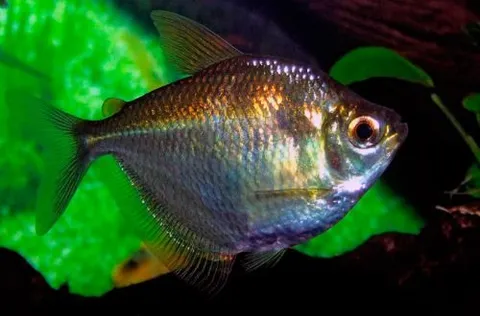
Brachychalcinus orbicularis
The scientific name Brachychalcinus orbicularis is assigned to the Orbicular Tetra, also known as the Discus Tetra, belonging to the Acestrorhamphidae family. This fish received its second name due to the similarity of…