Temperature20 – 27 °C
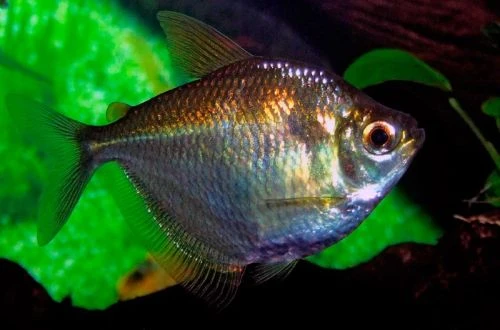
The scientific name Brachychalcinus orbicularis is assigned to the Orbicular Tetra, also known as the Discus Tetra, belonging to the Acestrorhamphidae family. This fish received its second name due to the similarity of its body shape to the popular South American cichlid, the Discus. However, unlike the Discus, it is noticeably smaller in size and does not have such vibrant coloration. In aquaristics, these fish are quite rare among hobbyists, which is more likely due to their dull appearance than to difficulties in keeping them. This species of Tetra is unpretentious, easy to breed, and coexists well with various freshwater species.
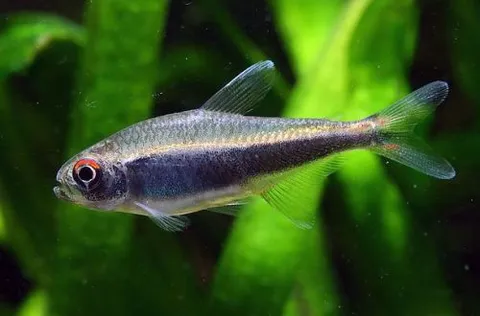
Adults grow up to 8–9 cm in length. This fish has a high body that is "compressed" laterally, resembling a disc in shape. The coloration is predominantly silvery, with the back having a darker shade. Sexual dimorphism is weakly expressed, and males are practically indistinguishable from females; females may appear larger immediately before spawning.
Its natural habitat is South America. This species is endemic and found in small river systems in Guyana and Suriname, preferring small rivers and streams that flow through tropical forests.
This is a peaceful and active fish, but its relatively large size (for Tetras) can intimidate smaller aquarium inhabitants. It is well compatible with other non-aggressive species and can be an excellent addition to a community of small characins, South American cichlids, cyprinids, catfishes, and others. It is recommended to keep these fish in a school of at least 8–10 individuals.
For a group of 8–10 fish, the recommended aquarium volume starts from 100–120 liters. The decor can be arbitrary, but it is desirable to recreate a natural environment with elements such as sandy substrate, stones, boulders of various sizes, driftwood, and aquatic plants. The Orbicular Tetra requires clean, flowing water with high oxygen content and moderate current. A productive filtration system will largely help ensure these conditions. In addition, water quality is affected by regular mandatory aquarium maintenance procedures. These include: weekly partial water changes (30% to 50% of the volume) with fresh water, timely removal of organic waste (e.g., food remnants and excrement), and monitoring of basic hydrochemical parameters and concentrations of nitrogen cycle products (including ammonia, nitrites, and nitrates).
As an omnivorous species, the Orbicular Tetra readily accepts various foods intended for aquarium fish. The daily diet can be formed from dry foods in the form of flakes or granules, supplemented with live or frozen artemia, daphnia, bloodworms, and other invertebrates.
This fish species does not exhibit developed parental instincts and does not care for its offspring, which leads to low fry survival rates. Nevertheless, this is compensated by the female's ability to lay a large number of eggs; for example, one adult can produce up to 2000 eggs. In artificial aquarium conditions, there is no seasonal breeding, so spawning is possible year-round. The fish scatter their eggs over the substrate quite haphazardly, not forming a localized clutch. The eggs are scattered across the bottom, with many remaining unfertilized. If breeding is planned, the eggs should be carefully transferred to a separate tank for their preservation. The incubation period lasts about 6 days. In the first days of life, the fry feed on their yolk sac, and then begin to swim freely in search of food.
Specific diseases that affect only this particular fish species have not been identified. When kept in suitable conditions, including high water quality, a balanced diet, and peaceful tank mates, health issues usually do not arise. The most common cause of illness is a deterioration of living conditions, which weakens the immune system and makes the fish susceptible to infections that are always present in their environment. Upon noticing initial signs of sickness (such as lethargy, emaciation, refusal to eat, or clamped fins), it is crucial to immediately check the basic water parameters. Often, restoring acceptable living conditions will lead to self-recovery, but if the fish is too weak or has suffered visible damage, medicinal treatment may be required.
When choosing individuals in a store, pay attention to the fish's activity and the cleanliness of their skin. Healthy fish should be evenly distributed throughout the water column, show curiosity, and have no visible damage, spots, or signs of emaciation. Avoid buying fish that stay at the surface, breathe heavily, or show signs of apathy, as this may indicate poor keeping conditions or hidden diseases. Given that the species is schooling, purchase a group of 6–10 individuals at once to reduce stress during relocation and adaptation to a new aquarium.
The essentials: size, tank volume, water parameters and care
An adult reaches 8–9 cm in length. Plan the tank around the maximum size: the fish quickly outgrows a cramped setup.
The recommended volume is 100 L. A smaller tank speeds up nitrate build-up and raises stress levels.
Temperature 20–27 °C, pH 5–7.5, hardness 1–12 dGH. Stability matters more than exact values: sudden swings are harder on the fish than a small deviation from the ideal.
Around 5 years when kept properly. Lifespan depends directly on tank volume, water quality and a varied diet.
Temperament: peaceful (regular). Keep this in mind when choosing tank mates.
Recommended setup: group (8–10 individuals). Ignoring this is a common cause of stress and disease.
Diet type: any (universal). Feed small portions that are finished within a couple of minutes — overfeeding does more harm than underfeeding.
The scientific name of the species is Brachychalcinus orbicularis, family Acestrorhamphidae. It also appears in the literature as: Brachychalcinus guianensis, Ephippicharax orbicularis, Poptella orbicularis.
The water suits 198 of 208 plants in the catalogue — the easiest ones are shown first.
Afzelius's AnubiasAnacharisAnubiasBrazilian PennywortDwarf CloverDwarf CloverDwarf HygrophilaDwarf SagittariaDwarf ValGuppy GrassHornwortJava FernJava MossMoneywortMud SwordNair's LagenandraNarrow Leaf AnacharisNarrow-leaf CloverStringy MossSüsswassertangTaiwan MossTape GrassTemple PlantUssuri Watermilfoil
Matched by family, categories and overlapping keeping conditions
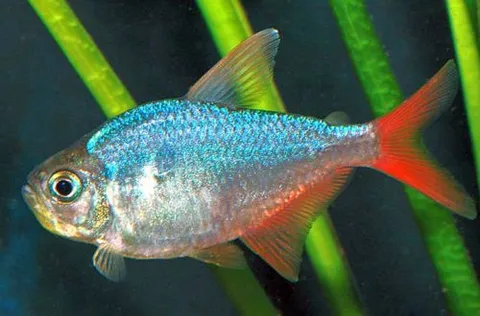
Hyphessobrycon columbianus
The Colombian Tetra (Hyphessobrycon columbianus) is an attractive and peaceful fish belonging to the family Acestrorhamphidae. Its care is straightforward, making it an excellent choice for aquarists. It harmonizes well…
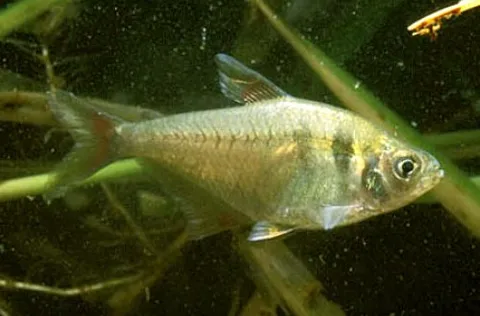
Hyphessobrycon bifasciatus
The Yellow Tetra (Hyphessobrycon bifasciatus), a member of the Acestrorhamphidae family, possesses a pleasant yellow hue that allows it to stand out in an aquarium. These fish are readily available, easy to keep and…
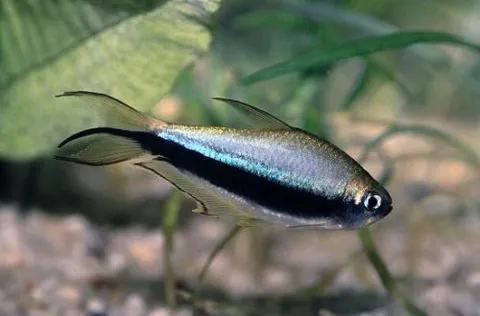
Nematobrycon palmeri
Nematobrycon palmeri, known as the Emperor or Royal Tetra, belongs to the family Acestrorhamphidae. Its popularity is due to its striking coloration, peaceful disposition, ease of care, and relatively high hardiness.…
Hyphessobrycon peruvianus
The Peruvian Tetra, or Peruvian Neon (scientific name Hyphessobrycon peruvianus), belongs to the Acestrorhamphidae family. This species has gained widespread popularity in aquaristics due to its moderate requirements,…