Temperature24 – 28 °C
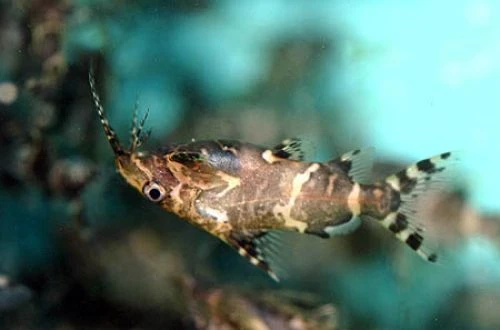
The Upside-down Catfish, scientifically known as Synodontis nigriventris, belongs to the family Mochokidae. Its name accurately reflects the main characteristic of this species: it constantly swims upside down. It is thanks to this unusual behavior, as well as its peaceful nature and unpretentiousness, that this catfish has gained widespread popularity among aquarists worldwide.
This fish is distinguished by its modest size. Adult males reach only about 6 cm in length, while females grow larger, up to 8–9 cm. The Upside-down Catfish has an elongated and slightly flattened body, characteristic large eyes, and three pairs of barbels located around its mouth. Its coloration is gray-brown, with several dark spots distributed over its body. Its belly is dark, while its back is significantly lighter.
Originating from Africa, this species inhabits numerous tributaries of the Congo River basin, concentrating primarily in its middle reaches. It prefers to settle in areas of rivers abundant with dense vegetation and located under the thick canopy of a humid tropical forest.
This is a peaceful, schooling fish that gets along well with most calm, non-aggressive species. Optimal companions will be fish from the same habitat, such as African tetras. There are no conflicts observed within its own species.
To set up the aquarium, several essential components must be considered: it is recommended to use a soft, dark substrate, such as sand, as well as groups of rooted and floating plants, such as Anubias and Echinodorus. It is also important to provide numerous shelters using snags, intertwined tree roots, or branches. A harmonious combination of these elements will create a favorable habitat that fully meets the needs of the Upside-down Catfish. It is best to fill the aquarium with soft to medium-hard water. As for the hydrogen index (pH), it can range from slightly acidic to slightly alkaline. This species is completely undemanding regarding the hydrochemical composition of the water and thrives in a wide range of general hardness (dGH) and pH values. Standard aquarium equipment includes a filter, heater, aerator, and a lighting system set to a low light intensity. Regular maintenance, in addition to daily feeding, includes cleaning the substrate and glass as needed, weekly water changes of 15–20% of the volume with fresh water, and constant monitoring of its quality.
Regarding feeding, this catfish is undemanding, readily accepting all types of food: dry (in the form of flakes or pellets), live, and frozen. It is important that the food floats, as it prefers to feed from the surface. It is recommended to feed the fish 2–3 times a day, offering an amount of food they can consume within 5 minutes.
Breeding the Upside-down Catfish in a home aquarium is possible, although detailed and reliable information on this is quite rare. In their natural habitat, spawning occurs during the rainy season when fish migrate to flooded forest areas. This indicates that the stimulus for reproduction is a change in external conditions – specifically, the gradual addition of very soft, cool water. To implement such significant changes, it is advisable to use a separate tank – a breeding aquarium. There is conflicting data regarding the egg-laying site: they are either attached to a substrate of dense vegetation or placed in secluded spots under driftwood. One adult female can lay up to 450 eggs. The fry hatch on the 4th day and initially swim vertically. Only by 7–8 weeks of age do they transition to the species' characteristic upside-down swimming.
In a well-balanced aquarium ecosystem, disease outbreaks are extremely rare. Health problems only begin in severely neglected cases, when keeping conditions significantly deteriorate, for example, due to a lack of regular cleaning and water changes, overcrowding of the aquarium, or feeding with poor-quality or monotonous diets.
When purchasing, choose active individuals that show no signs of lethargy and have no visible skin damage. It is important to inspect the fish for the absence of ulcers, white spots, or film, which indicate diseases. Avoid specimens with an unnaturally sunken belly or damaged fins. In the store, catfish may hide, so it is worth asking an employee to reveal them to assess their health and plumpness. Refuse to purchase if dead individuals are found in the aquarium with the fish or if the keeping conditions are clearly unsatisfactory, as this increases the risk of hidden infections. A healthy catfish should have clear coloration and display natural curiosity for the species when feeding.
The essentials: size, tank volume, water parameters and care
An adult reaches 6–10 cm in length. Plan the tank around the maximum size: the fish quickly outgrows a cramped setup.
The recommended volume is 70 L. A smaller tank speeds up nitrate build-up and raises stress levels.
Temperature 24–28 °C, pH 6–8, hardness 5–19 dGH. Stability matters more than exact values: sudden swings are harder on the fish than a small deviation from the ideal.
Around 15 years when kept properly. Lifespan depends directly on tank volume, water quality and a varied diet.
Temperament: peaceful (regular). Keep this in mind when choosing tank mates.
Recommended setup: schooling (usually from 5–6 individuals and more). Ignoring this is a common cause of stress and disease.
Diet type: any (universal). Feed small portions that are finished within a couple of minutes — overfeeding does more harm than underfeeding.
The scientific name of the species is Synodontis nigriventris, family Mochokidae. It also appears in the literature as: Synodontis nigroventris.
The water suits 196 of 208 plants in the catalogue — the easiest ones are shown first.
Afzelius's AnubiasAnacharisAnubiasBrazilian PennywortDwarf CloverDwarf CloverDwarf HygrophilaDwarf SagittariaDwarf ValGuppy GrassHornwortJava FernJava MossMoneywortMud SwordNair's LagenandraNarrow Leaf AnacharisNarrow-leaf CloverStringy MossSüsswassertangTaiwan MossTape GrassTemple PlantUssuri Watermilfoil
Matched by family, categories and overlapping keeping conditions
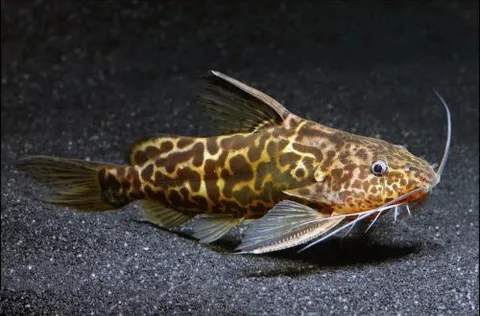
Synodontis schoutedeni
The Marbled Synodontis, or Synodontis schoutedeni, also known as Schouteden's Synodontis, belongs to the family Mochokidae. This catfish is popular due to its peaceful nature and unusual body pattern, as well as being…
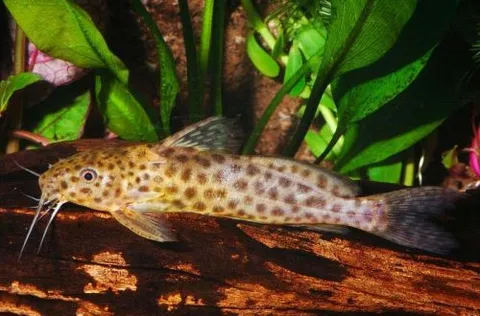
Synodontis camelopardalis
The Leopard Synodontis, scientifically known as Synodontis camelopardalis, belongs to the family Mochokidae, or upside-down catfishes. Its native habitat is the waters of Central Africa. This species is endemic to the…
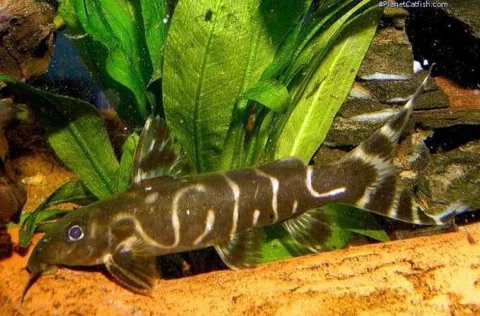
Synodontis brichardi
The scientific name Synodontis brichardi belongs to the family Mochokidae, known as upside-down catfish. This catfish is named after Pierre Brichard, a Belgian ichthyologist who made significant contributions to the…
Pareutropius buffei
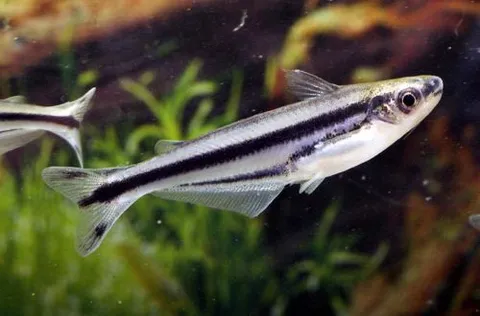
Pareutropius buffei, known as the Striped Glass Catfish, belongs to the family Schilbeidae (Schilbeid Catfishes). Its peaceful and friendly nature allows for successful integration into most types of freshwater…