Temperature20 – 28 °C
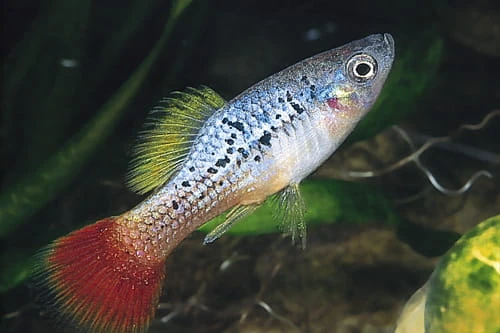
The Variable Platy, or Platy variatus, is the common name for Xiphophorus variatus, belonging to the family Poeciliidae. This species, along with the closely related Platy, is among the most common aquarium fish. Their high popularity is due not only to their vibrant coloration but also to their low maintenance requirements and ease of breeding.
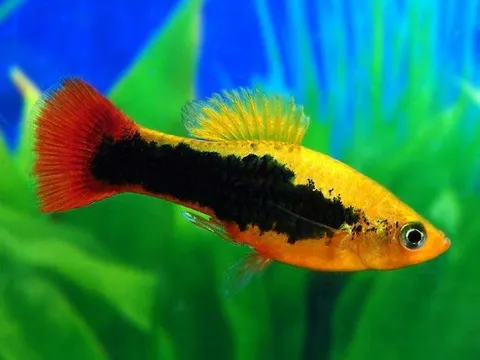
Adults reach a length of 5–7 cm. Males are usually more brightly colored and smaller than females. Body coloration and pattern can vary depending on the specific variety. The closest to the natural coloration is considered to be a silvery body, speckled with numerous dark spots, with a red tail and a yellow dorsal fin. It is the combination of these three colors that gave the species its name.
Initially, these fish were considered endemic to small, densely overgrown bodies of water on the Atlantic coast of Mexico. However, with the development of aquaristics and subsequent distribution, they successfully adapted to new habitats. Their distribution range has significantly expanded, covering all of Central America, the Caribbean islands, and the southern states of the USA. Currently, Variable Platies also inhabit river systems in Southeast Asia, the Far East, and southern regions of Europe.
This species is distinguished by its peaceful and friendly disposition, getting along well with all fish species of comparable size and temperament. It is recommended to acquire them in a group consisting of several males and females, with more females than males.
The Tricolor Platy is considered an unpretentious and hardy species. These fish can live comfortably in aged tap water, provided it has medium to high hardness values (GH). In regions with soft water, it may be necessary to use special reagents to increase hardness, which can be found in pet stores or ordered online. In a spacious, sparsely populated aquarium (for example, 100 liters for 2–3 fish), it is permissible to do without a complex filtration system, using a simple airlift filter, provided it is regularly maintained and a portion of the water is changed weekly. As for decor, the choice is up to the aquarist. However, it is important to provide a sufficient number of hiding places. Dense thickets of live aquatic plants and natural driftwood will be an excellent choice.
These fish accept all types of dry, frozen, and live foods. It is recommended to prioritize diets with plant additives.
Under favorable conditions, spawning occurs regularly, approximately once every 1–2 months. Like other live-bearing species, the Tricolor Platy does not lay eggs but gives birth to fully formed fry. Since the parents do not show care for their offspring, it is advisable to transfer the young to a separate tank to avoid predation.
Most diseases in aquariums are caused by unsuitable fish keeping conditions. Thanks to its hardiness and adaptability, the Tricolor Platy can "forgive" some keeping mistakes. Therefore, at the first signs of illness, it is extremely important to immediately check the water parameters and ensure there are no dangerous concentrations of nitrogen cycle products.
When choosing fish in a store, pay attention to their activity and appearance. Healthy individuals should be active, with clean fins showing no signs of plaque, erosion, or damage. Avoid specimens with clamped fins, an unnaturally bloated abdomen, or, conversely, severe emaciation, as this may indicate the presence of parasites or chronic diseases. — Examine the scales: they should lie flat against the body, without visible sores, spots, or signs of fungal infection. — Check their behavior: fish should show interest in their surroundings, and not stay aloof, at the water surface, or on the bottom in a lethargic state. — Make sure there are no dead fish in the platy tank, as this indicates unfavorable keeping conditions or an infection in the system.
The essentials: size, tank volume, water parameters and care
An adult reaches 5–7 cm in length. Plan the tank around the maximum size: the fish quickly outgrows a cramped setup.
The recommended volume is 60 L. A smaller tank speeds up nitrate build-up and raises stress levels.
Temperature 20–28 °C, pH 7–8.2, hardness 10–30 dGH. Stability matters more than exact values: sudden swings are harder on the fish than a small deviation from the ideal.
Around 4 years when kept properly. Lifespan depends directly on tank volume, water quality and a varied diet.
Temperament: peaceful (regular). Keep this in mind when choosing tank mates.
Recommended setup: mixed (solitary / pair / group). Ignoring this is a common cause of stress and disease.
Diet type: any (universal). Feed small portions that are finished within a couple of minutes — overfeeding does more harm than underfeeding.
The scientific name of the species is Xiphophorus variatus, family Poeciliidae. It also appears in the literature as: Platypoecilus variatus.
The water suits 114 of 208 plants in the catalogue — the easiest ones are shown first.
African Onion PlantAfzelius's AnubiasAmazon FrogbitAmazon SwordAnacharisAnubiasArrowhead CryptDwarf CloverDwarf CloverDwarf HygrophilaDwarf SagittariaDwarf ValGuppy GrassHornwortJava MossMoneywortMud SwordNair's LagenandraNarrow Leaf AnacharisNarrow-leaf CloverStringy MossTaiwan MossTape GrassUssuri Watermilfoil
The same fish in another colour: care, water and size are identical.
Matched by family, categories and overlapping keeping conditions
Xiphophorus maculatus
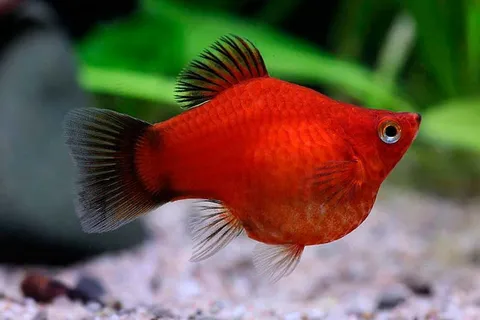
The Balloon Platy, also known as the Disc Platy, is known in the English-speaking commercial world as the Balloon Platy. A distinctive feature of this fish is its peculiar appearance: it has a strongly arched, hunched…
Xiphophorus maculatus
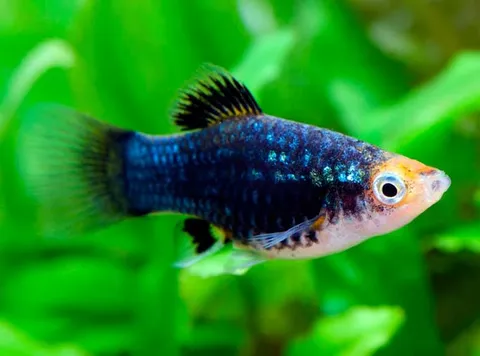
Platy Black is the trade name for this variety of Black Platy in the English-speaking market. This fish is not found in nature, as it is an artificially bred color variation derived from the common Platy (Xiphophorus…
Xiphophorus maculatus
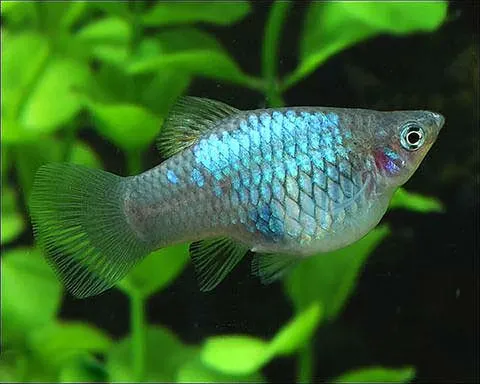
The Blue Platy, also known by the commercial English names Platy Blue, Blue Moon Platy, and Platy Neon Blue, is a selectively bred form of the common Platy and does not exist in the wild. Its main distinguishing feature…
Xiphophorus maculatus
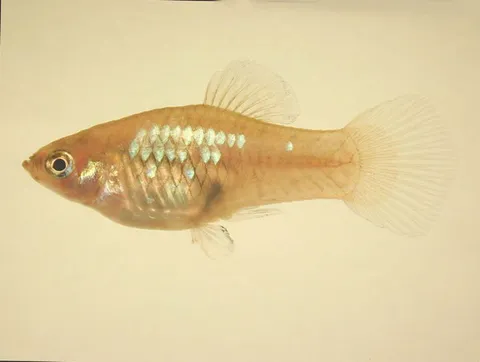
The Platy, or Spotted Platy (scientific name Xiphophorus maculatus), belongs to the family Poeciliidae. Its hardiness and vibrant coloration make it one of the most sought-after aquarium fish. However, it should be…