Temperature18 – 22 °C
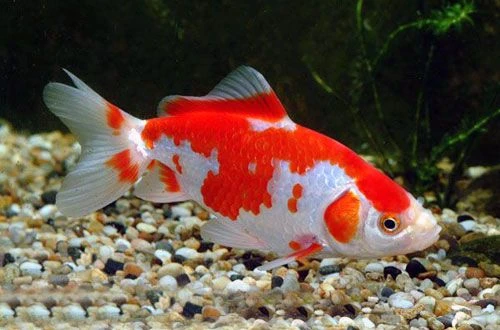
The Wakin is one of the oldest artificially bred forms of Goldfish. The development of this variety occurred in China between the second and fourth centuries AD, and for many centuries, it remained unchanged. Intensive selective breeding of the Wakin began with its appearance in Japan in 1502. These efforts led to the emergence of many currently known species. Consequently, the Wakin can rightfully be considered the origin that gave rise to all other varieties of Goldfish.
The Wakin is a selectively bred form of goldfish with an elongated, robust body resembling a carp in shape. The main distinguishing feature of the breed is a forked caudal fin, although individuals with a single tail are also found. These fish are highly active and hardy. In aquarium conditions, their average size is about 20 cm, but in spacious ponds, they can grow up to 30 cm or more. The coloration is usually variegated, consisting of large patches of red, orange, and white; specimens with bright, contrasting patterns are considered the most valuable.
The Wakin is an artificially bred variety and therefore does not occur in the wild. Its ancestor is considered to be the goldfish (Carassius auratus), originating from the waters of East Asia. In Japan and China, this breed is traditionally cultivated for both ornamental ponds and aquariums. The fish adapt well to moderate temperatures and can tolerate seasonal fluctuations characteristic of open waters, provided the water does not freeze to critical levels.
These are active and agile fish that exhibit social behavior and feel comfortable in a group of their kind. Unlike many short-bodied goldfish breeds, Wakins are excellent swimmers, capable of successfully competing for food. They are peaceful towards other species, but due to their activity and size, they can cause inconvenience for slow-moving or smaller fish. Intraspecific conflicts are practically absent, except during spawning periods.
For keeping Wakins, a spacious aquarium of at least 150 liters per individual is required, as the fish grow quickly and produce a large amount of organic waste. Powerful filtration and regular water changes are necessary. Water parameters: temperature 18–22 °C, pH in the range of 6.0–8.0, hardness 5–19 dGH. The substrate should either be coarse enough so that the fish cannot swallow it, or absent altogether. Lighting should be moderate, and the aquarium decor should be free of sharp elements that could damage fins.
Wakins are omnivorous and undemanding in their diet. The diet should include both dry specialized foods (flakes or pellets), as well as vegetable supplements and frozen foods. Feeding is recommended 2–3 times a day in small portions that the fish can eat within a couple of minutes. It is important to avoid overfeeding to prevent water pollution and digestive problems.
Spawning is paired or communal, usually stimulated by a spring increase in water temperature. For breeding, a separate spawning tank of at least 100 liters with a separator grid at the bottom is required, as parents may eat the eggs. The female lays up to 2000 eggs, which attach to the substrate or aquatic plants. The incubation period lasts up to 3 days. Fry are fed with infusoria or specialized starter foods for goldfish fry.
The fish are characterized by robust health, but are sensitive to water quality. The main problems arise from the accumulation of nitrates and ammonia, which can lead to bacterial infections, fin rot, or parasitic diseases. Prevention involves maintaining cleanliness in the aquarium, proper feeding, and avoiding sudden fluctuations in water parameters. With proper care, Wakins can live up to 20 years.
When purchasing, choose active, agile individuals with clean fins and scales, free of visible damage, ulcers, or white film. It is important to pay attention to the fish's breathing — it should be calm, without signs of gill parasites. Avoid individuals with deformed spines or signs of emaciation. It is recommended to purchase fish from reputable breeders, as a healthy Wakin should show curiosity and actively respond to food.
The essentials: size, tank volume, water parameters and care
An adult reaches 20–30 cm in length. Plan the tank around the maximum size: the fish quickly outgrows a cramped setup.
The recommended volume is 230 L. A smaller tank speeds up nitrate build-up and raises stress levels.
Temperature 18–22 °C, pH 6–8, hardness 5–19 dGH. Stability matters more than exact values: sudden swings are harder on the fish than a small deviation from the ideal.
Around 15 years when kept properly. Lifespan depends directly on tank volume, water quality and a varied diet.
Temperament: semi-peaceful (dangerous to smaller ones). Not a predatory species, but small fish that fit in its mouth will eventually be eaten.
Recommended setup: small group (3–4 individuals). Ignoring this is a common cause of stress and disease.
Diet type: any (universal). Feed small portions that are finished within a couple of minutes — overfeeding does more harm than underfeeding.
The scientific name of the species is Carassius auratus, family Cyprinids (Cyprinidae). It also appears in the literature as: Carasius auratus, Carassius buergeri, Carassius burgeri.
The water suits 196 of 208 plants in the catalogue — the easiest ones are shown first.
Afzelius's AnubiasAnacharisAnubiasBrazilian PennywortDwarf CloverDwarf CloverDwarf HygrophilaDwarf SagittariaDwarf ValGuppy GrassHornwortJava FernJava MossMoneywortMud SwordNarrow Leaf AnacharisNarrow-leaf CloverStringy MossSüsswassertangTaiwan MossTape GrassTemple PlantUssuri WatermilfoilWater Wisteria
Matched by family, categories and overlapping keeping conditions
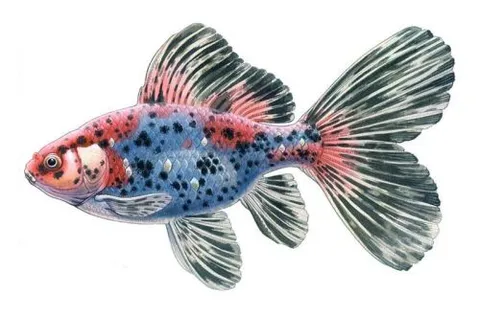
Carassius auratus
The Bristol Shubunkin, known by its English trade name, is an artificially bred ornamental goldfish variety. Although specialists from Japan and China have traditionally been considered the leading goldfish breeders for…
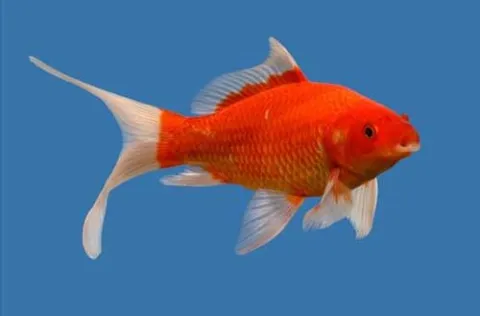
Carassius auratus
Developed in the USA in the 19th century, the Comet Goldfish is a form of the classic Goldfish. Its distinguishing features are large fins and a characteristic elongated, forked tail. This species, like its wild…
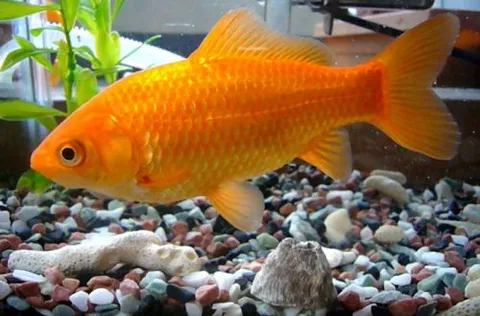
Carassius auratus
Carassius auratus, or the common Goldfish, belongs to the family Cyprinidae. This fish is undoubtedly one of the most well-known and widespread aquarium inhabitants today. Its outstanding popularity is explained not…
Carassius auratus
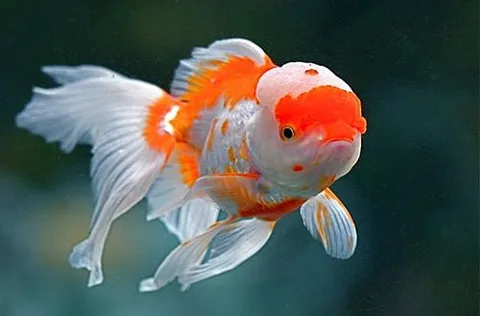
The Oranda, also known as the Oranda Goldfish in English-speaking countries, is a very attractive and distinctive fish. Its distinguishing feature is a large head growth, resembling a cap. This growth, which usually…