Temperature18 – 22 °C
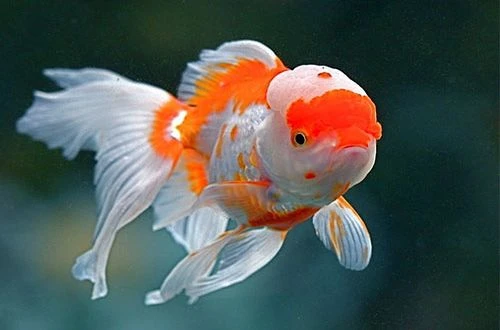
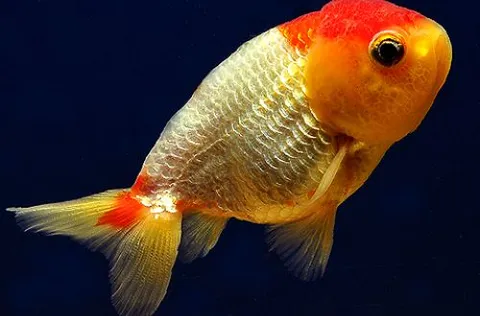
The Oranda, also known as the Oranda Goldfish in English-speaking countries, is a very attractive and distinctive fish. Its distinguishing feature is a large head growth, resembling a cap. This growth, which usually contrasts in color with the main body coloration, becomes noticeable by 3-4 months of the fish's life but only reaches its final form by two years of age.
The Oranda is a selectively bred form of goldfish with a characteristic egg-shaped body and a bifurcated caudal fin. The main distinguishing feature is the massive fatty growth on its head, called a wen, which can cover the top of the head and gill covers. Depending on age and keeping conditions, the wen can become very prominent. The coloration is extremely diverse: red, orange, white, black, and multicolored calico variations are popular. Adult specimens reach 18–26 cm in length, including fins.
The Oranda does not occur in nature, as it is an entirely artificially bred variety. Its ancestor is considered to be the goldfish (Carassius auratus), which inhabited freshwater bodies in Asia. In aquarium conditions, Orandas require stable water parameters and good aeration, mimicking clean, flowing or still waters with an oxygen-rich environment.
These are calm and unhurried fish with a peaceful disposition. They are social and feel best in a group of their own kind. Due to their body structure and potential vision limitation caused by the wen, Orandas are slow swimmers, so they should not be kept with aggressive or fast-swimming species that might nip their fins or steal food.
For keeping a single specimen, an aquarium of 75 liters is required, but for a group of fish, tanks of 100–200 liters are preferable. Effective filtration and regular water changes (25–30% weekly) are necessary, as the fish produce a lot of waste. The optimal water temperature is 18–22 °C, pH 6.0–8.0, hardness 5–19 dGH. The substrate should be without sharp edges to avoid injuring the fish; live plants should be chosen with tough leaves and a strong root system.
Orandas are omnivorous and voracious. The diet should be balanced and include both specialized dry foods for goldfish and vegetable supplements (lettuce leaves, blanched spinach). It is important to avoid overfeeding, which often leads to digestive and swim bladder problems. Feeding is recommended in small portions several times a day.
Breeding is possible in aquarium conditions but requires stimulation that mimics spring environmental changes (gradual increase in water temperature). A pair or group of fish will spawn on fine-leaved plants or special substrates. After spawning, the parent fish must be removed, as they are prone to eating the eggs. Fry require careful care and sorting, as body deformities are possible.
The fish are susceptible to diseases associated with poor water quality and digestive disorders. Bacterial infections affecting the wen, as well as fin rot, fungal diseases, and ichthyophthiriasis, are common. Special attention should be paid to the condition of the swim bladder, problems with which often arise due to improper feeding.
When purchasing, choose active fish with clean fins showing no signs of damage, coatings, or ulcers. The wen should look healthy, without signs of decay or unnatural redness. It is important to observe their behavior: a healthy Oranda swims confidently, does not tip to one side, and does not hover at the surface or bottom without apparent reason. It is recommended to avoid specimens with signs of emaciation or body anomalies.
The essentials: size, tank volume, water parameters and care
An adult reaches 18–23 cm in length. Plan the tank around the maximum size: the fish quickly outgrows a cramped setup.
The recommended volume is 75 L. A smaller tank speeds up nitrate build-up and raises stress levels.
Temperature 18–22 °C, pH 6–8, hardness 5–19 dGH. Stability matters more than exact values: sudden swings are harder on the fish than a small deviation from the ideal.
Around 15 years when kept properly. Lifespan depends directly on tank volume, water quality and a varied diet.
Temperament: semi-peaceful (dangerous to smaller ones). Not a predatory species, but small fish that fit in its mouth will eventually be eaten.
Recommended setup: mixed (solitary / pair / group). Ignoring this is a common cause of stress and disease.
Diet type: any (universal). Feed small portions that are finished within a couple of minutes — overfeeding does more harm than underfeeding.
The scientific name of the species is Carassius auratus, family Cyprinids (Cyprinidae). It also appears in the literature as: Carasius auratus, Carassius buergeri, Carassius burgeri.
The water suits 196 of 208 plants in the catalogue — the easiest ones are shown first.
Afzelius's AnubiasAnacharisAnubiasBrazilian PennywortDwarf CloverDwarf CloverDwarf HygrophilaDwarf SagittariaDwarf ValGuppy GrassHornwortJava FernJava MossMoneywortMud SwordNarrow Leaf AnacharisNarrow-leaf CloverStringy MossSüsswassertangTaiwan MossTape GrassTemple PlantUssuri WatermilfoilWater Wisteria
Matched by family, categories and overlapping keeping conditions
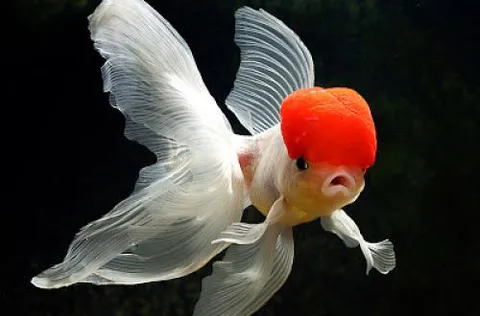
Carassius auratus
Among the many color variations of the Oranda, the Redcap Oranda Goldfish is undoubtedly the most recognizable. Its distinguishing feature is a snow-white body that brightly contrasts with the growth on its head, known…
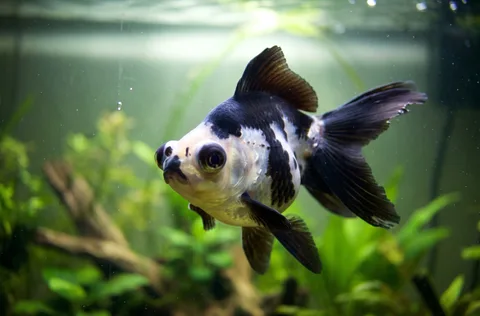
Carassius auratus
The trade name for this fish in English is Panda Goldfish. It encompasses several varieties, distinguished by their similar black and white body coloration. Initially, such a bicolored pattern was observed only in Black…
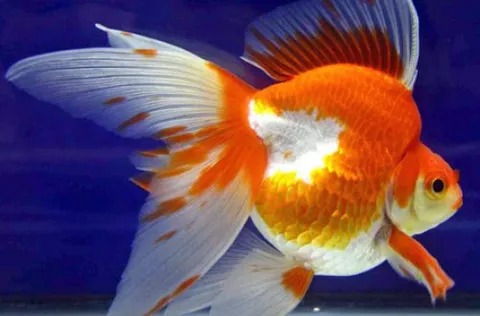
Carassius auratus
The Ryukin, known in English-speaking countries as the Ryukin Goldfish, is a Japanese adaptation of the Nymph goldfish. Although both varieties originated from a common ancestor, the Ryukin is distinguished by a high…
Carassius auratus
The Lionhead Goldfish attracts attention due to the unique growths forming a mane-like structure on its head. These growths are individual to each fish, and their presence is not a strict rule. Some individuals may…