Temperature18 – 22 °C
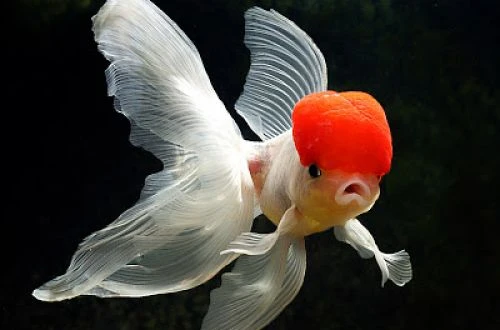
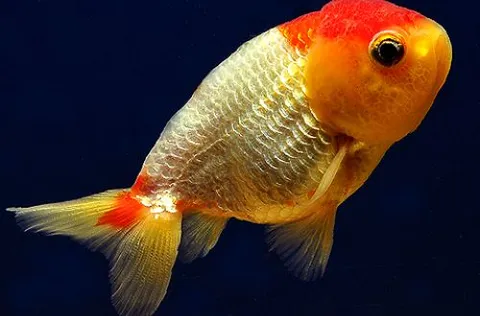
Among the many color variations of the Oranda, the Redcap Oranda Goldfish is undoubtedly the most recognizable. Its distinguishing feature is a snow-white body that brightly contrasts with the growth on its head, known as the “cap,” which is colored in a rich red or deep cherry hue. Otherwise, it retains all the characteristic features of its progenitor: the Redcap Oranda has a short, rounded body with large, bifurcated fins (with the exception of the caudal fin). The formation of the growth begins relatively early, at 3-4 months of age, and it reaches its full size and characteristic coloration by two years of age.
The Oranda “Redcap” is a selective short-bodied form of goldfish with an ovoid body and well-developed fins. A distinctive feature is a massive fatty growth on the head, called a “cap,” which is bright red. The main body and fin coloration is snow-white. The caudal fin is bifurcated and flowing. Adult specimens can reach 18-23 cm in length. Sexual dimorphism is weakly expressed: it is difficult to distinguish males and females during normal times.
The “Redcap” is a selective form of goldfish (Carassius auratus), bred artificially, so this species is not found in the wild. Its natural ancestor, the silver crucian carp, inhabits freshwater bodies with slow currents or stagnant water, preferring eutrophic environments rich in nutrients and aquatic vegetation. In their natural environment, these fish stay in small groups, primarily in the bottom layers of the water.
This is a calm and peaceful fish, leading a sedentary lifestyle. Due to the peculiarities of their body and fin structure, “Redcaps” are weak swimmers, so it is not recommended to keep them with active or aggressive species that could damage their fins or steal food. They are social and feel best in a group of their own kind or other slow-moving goldfish.
A single specimen requires an aquarium of at least 75 liters, while a group needs significantly more. Powerful filtration and regular aeration are essential, as these fish create a high biological load and are sensitive to water quality. The temperature regime should be 18-22°C. Sand or smooth gravel without sharp edges that could damage the head growth is preferred as substrate. The decor should exclude sharp ornaments.
Omnivorous, their diet should include both plant and animal components. It is recommended to use high-quality specialized goldfish foods in the form of pellets or flakes. To improve digestion, it is beneficial to supplement their diet with blanched vegetables (spinach, lettuce, peas) and live or frozen foods (Artemia, Daphnia, bloodworms). It is important to avoid overfeeding, as these fish are prone to obesity.
Sexual maturity occurs at 1.5-2 years of age. A separate spawning tank of 30-50 liters with fine-leaved plants and sandy substrate is required for breeding. Water changes and a temperature increase of 3-5 degrees serve as a stimulus. During the breeding season, males develop characteristic white spots – “breeding tubercles” – on their gill covers and pectoral fins. After spawning, the parents must be removed to prevent them from eating the eggs.
Most susceptible to infections due to water pollution and injuries to the head growth. Bacterial and fungal infections, as well as ichthyophthiriasis, are common. Due to their unique body shape, these fish are prone to swim bladder disorders, which manifest as loss of balance and swimming on their side or upside down. Prevention includes maintaining clean water, regular water changes, and controlling diet quality.
When purchasing, choose active fish with clean skin and no visible damage to the head or fins. The head growth should be evenly developed, without signs of rot, ulcers, or unnatural coatings. Avoid specimens that appear emaciated, lethargic, or constantly stay near the water surface, as this may indicate swim bladder problems or general intoxication in the store environment.
The essentials: size, tank volume, water parameters and care
An adult reaches 18–23 cm in length. Plan the tank around the maximum size: the fish quickly outgrows a cramped setup.
The recommended volume is 75 L. A smaller tank speeds up nitrate build-up and raises stress levels.
Temperature 18–22 °C, pH 6–8, hardness 5–19 dGH. Stability matters more than exact values: sudden swings are harder on the fish than a small deviation from the ideal.
Around 15 years when kept properly. Lifespan depends directly on tank volume, water quality and a varied diet.
Temperament: semi-peaceful (dangerous to smaller ones). Not a predatory species, but small fish that fit in its mouth will eventually be eaten.
Recommended setup: mixed (solitary / pair / group). Ignoring this is a common cause of stress and disease.
Diet type: any (universal). Feed small portions that are finished within a couple of minutes — overfeeding does more harm than underfeeding.
The scientific name of the species is Carassius auratus, family Cyprinids (Cyprinidae). It also appears in the literature as: Carasius auratus, Carassius buergeri, Carassius burgeri.
The water suits 196 of 208 plants in the catalogue — the easiest ones are shown first.
Afzelius's AnubiasAnacharisAnubiasBrazilian PennywortDwarf CloverDwarf CloverDwarf HygrophilaDwarf SagittariaDwarf ValGuppy GrassHornwortJava FernJava MossMoneywortMud SwordNarrow Leaf AnacharisNarrow-leaf CloverStringy MossSüsswassertangTaiwan MossTape GrassTemple PlantUssuri WatermilfoilWater Wisteria
Matched by family, categories and overlapping keeping conditions
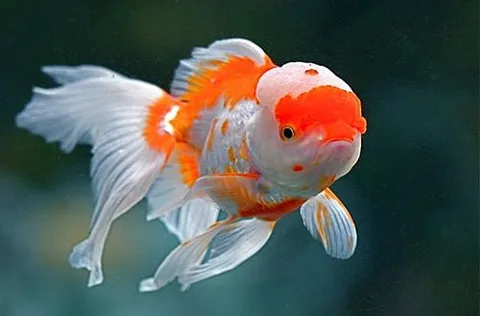
Carassius auratus
The Oranda, also known as the Oranda Goldfish in English-speaking countries, is a very attractive and distinctive fish. Its distinguishing feature is a large head growth, resembling a cap. This growth, which usually…
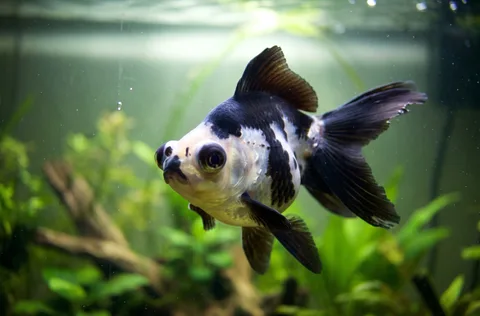
Carassius auratus
The trade name for this fish in English is Panda Goldfish. It encompasses several varieties, distinguished by their similar black and white body coloration. Initially, such a bicolored pattern was observed only in Black…
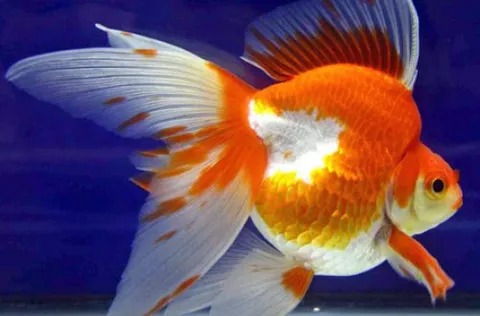
Carassius auratus
The Ryukin, known in English-speaking countries as the Ryukin Goldfish, is a Japanese adaptation of the Nymph goldfish. Although both varieties originated from a common ancestor, the Ryukin is distinguished by a high…
Carassius auratus
The Lionhead Goldfish attracts attention due to the unique growths forming a mane-like structure on its head. These growths are individual to each fish, and their presence is not a strict rule. Some individuals may…