Temperature25 – 30 °C
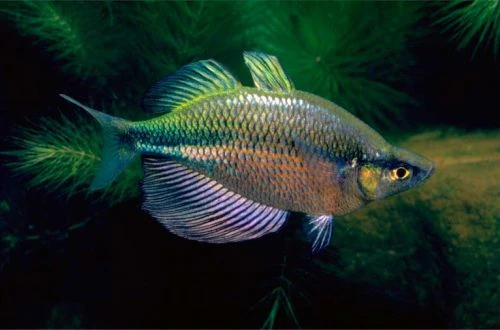
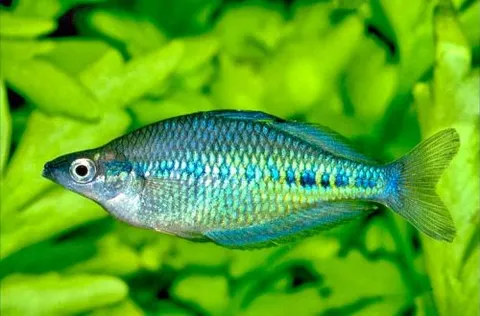
The Wanam Lake Rainbowfish, known scientifically as Glossolepis wanamensis, or Bluish Glossolepis, belongs to the family Melanotaeniidae. This fish is native to the island of New Guinea. Its natural habitat is Lake Wanam, a small lake located 24 km from the coastal city of Lae, on the eastern edge of the island, making Glossolepis wanamensis endemic to this body of water.
Adult males can reach a length of about 9 cm. Their coloration has a greenish tint with a noticeable metallic sheen, and their belly shimmers with yellow-orange tones. Below the lateral line, thin orange stripes can be distinguished. The anal fin is significantly enlarged, growing up to 3 cm. Females are typically slightly smaller than males, measuring around 8 cm. Their coloration is less vibrant and more uniform, with a predominance of pale greenish tones.
The species is endemic to Lake Wanam in Papua New Guinea. Located in a valley surrounded by hills, the lake has a maximum depth not exceeding 20 meters. The shallow shoreline is rich in aquatic vegetation, including water lilies, among which schools of Bluish Glossolepis and Fasciata Rainbowfish find refuge. Today, this species is on the verge of extinction in the wild. The main reason for this is invasive species that have appeared in the lake: Tilapia cichlids, carp, and Gambusia. The first two species were introduced for commercial fishing, providing food for local residents, while Gambusia was intended to combat mosquito larvae.
This active fish is peaceful and feels most comfortable in a group of its own kind. Therefore, it is recommended to acquire a school of 6–8 individuals. It interacts well with other species that are comparable in size and temperament. For example, Tetras, Barbs, Danios, as well as some types of small catfish such as Corydoras, and other Rainbowfish, will make excellent tank mates.
The optimal aquarium volume for keeping a school of 6–8 fish starts from 80 liters. In terms of decor, it is preferable to combine areas with open water for free swimming and zones with dense aquatic vegetation. Water parameters should be alkaline on the pH scale, with medium to high hardness levels. It is important to note that the Wanam Lake Rainbowfish is not suitable for aquariums with soft water. When choosing a filter, preference should be given to a model that does not create excessive current. Aquarium maintenance is standard and includes regular procedures: weekly partial water changes with fresh water, removal of organic waste, and keeping equipment in good working order. As for diet, these fish are undemanding and readily accept most common foods, whether dry, freeze-dried, frozen, or live.
The fish is undemanding in terms of diet and readily accepts many known types of food available on the market: dry, freeze-dried, frozen, as well as live foods.
The Wanam Lake Rainbowfish is an egg-laying species. To stimulate spawning, it is recommended to use a breeding tank with fine-leaved plants or synthetic substrates, where the female lays her eggs. The breeding process often occurs at a water temperature of 26–27°C. After spawning is complete, the parents should be removed to prevent them from eating the eggs. The incubation period is 7–10 days, after which fry emerge, which are fed infusoria or rotifers, followed by a transition to Artemia nauplii.
The species has moderate resistance to diseases when water parameters are maintained, but it is sensitive to sharp changes in the chemical composition and quality of the environment. Typical problems with poor care can include bacterial infections affecting the skin and fins. Prevention includes maintaining stable pH and hardness levels, regular water changes, and providing a complete diet. It is important to avoid overpopulation, as stress reduces the fish's immunity.
When selecting individuals, attention should be paid to the activity of the fish and the cleanliness of their skin. A healthy rainbowfish should have a robust physique without visible damage, ulcers, or signs of emaciation. Avoid purchasing fish with signs of hybridization if the body shape or coloration appears atypical for the species. It is recommended to inquire about the origin of the individuals from the seller, preferring specimens from aquarium breeding, as wild populations are endangered.
The essentials: size, tank volume, water parameters and care
An adult reaches 9 cm in length. Plan the tank around the maximum size: the fish quickly outgrows a cramped setup.
The recommended volume is 80 L. A smaller tank speeds up nitrate build-up and raises stress levels.
Temperature 25–30 °C, pH 7–7.8, hardness 12–20 dGH. Stability matters more than exact values: sudden swings are harder on the fish than a small deviation from the ideal.
Around 6 years when kept properly. Lifespan depends directly on tank volume, water quality and a varied diet.
Temperament: peaceful (regular). Keep this in mind when choosing tank mates.
Recommended setup: medium group (6–8 individuals). Ignoring this is a common cause of stress and disease.
Diet type: any (universal). Feed small portions that are finished within a couple of minutes — overfeeding does more harm than underfeeding.
The scientific name of the species is Glossolepis wanamensis, family Rainbowfishes (Melanotaeniidae).
The water suits 108 of 208 plants in the catalogue — the easiest ones are shown first.
African Onion PlantAfzelius's AnubiasAmazon FrogbitAmazon SwordAnacharisAnubiasArrowhead CryptAsian WatermossDwarf CloverDwarf CloverDwarf HygrophilaDwarf SagittariaDwarf ValGuppy GrassHornwortJava MossMoneywortMud SwordNair's LagenandraNarrow Leaf AnacharisNarrow-leaf CloverTaiwan MossTape GrassUssuri Watermilfoil
Matched by family, categories and overlapping keeping conditions
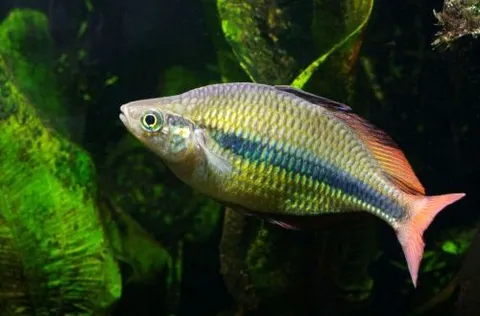
Melanotaenia herbertaxelrodi
Melanotaenia herbertaxelrodi, also known as Axelrod's Rainbowfish, belongs to the family Melanotaeniidae. This beautiful and undemanding fish is an excellent choice for a freshwater community aquarium, as it is easy to…
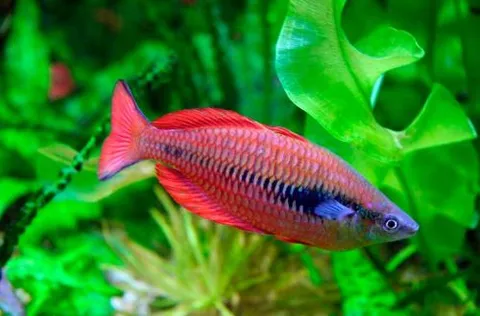
Melanotaenia parva
The scientific name Melanotaenia parva belongs to the family Melanotaeniidae, commonly known as Rainbowfishes. This fish is also known as the Kurumoi Lake Rainbowfish, named after Lake Kurumoi on the Cenderawasih…
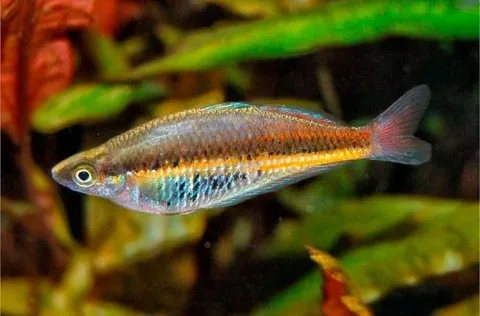
Glossolepis ramuensis
The Ramu Rainbowfish, scientifically known as Glossolepis ramuensis, belongs to the family Melanotaeniidae, or Rainbowfish. This fish originates from the island of New Guinea. Its natural habitat is the Ramu River…
Glossolepis maculosa
The fish, known scientifically as Glossolepis maculosa, or Spotted Rainbowfish, belongs to the family Melanotaeniidae (Rainbowfishes). Its native habitat is the island of New Guinea. In the wild, it is found in the…