Cichlids (Cichlidae)

Zebra Mbuna

Maylandia zebra

Maylandia zebra, commonly known as zebra mbuna, belongs to the family Cichlidae. Though once classified in the genus Pseudotropheus, this older name is still widely used in the hobby. This cichlid is a classic representative of the family, with both vivid colours and a notably aggressive temperament. The species is extremely hostile to other tank inhabitants, so a species tank is recommended for its care. Given its special requirements, beginners may find it wise to avoid this fish.

Tank
from 200 L (53 gal)
Temperature
23 – 28 °C (73 – 82 °F)
Size in aquarium
10 – 13 cm (3.9 – 5.1 in)
Acidity
pH 7.6–8.8
Natural rangeRange on the map
  • Lake Malawi area
  • East Africa area
  • Malawi

Tank conditions

Plan the tank stocking
Temperature
23 – 28 °C (73 – 82 °F)
Water pH
Slightly alkaline (7.6) – Alkaline (8.8)
Water dH
Medium hardness (10) – Very hard (25)
Water salinity
no salt (freshwater)
Size in aquarium
10 – 13 cm (3.9 – 5.1 in)
Lifespan
10 years
Temperament
Aggressive Aggressive / incompatible / unfriendly
Toward small fish
not a predator
Required aquarium volume
from 200 L (53 gal)
Lighting
moderate (regular)
Substrate
sand or gravel + stones/boulders
Water flow
moderate
Swimming level
near the bottom
Feeding
Plant-based algae, vegetables
Keeping
Harem 1 male and several females
Jumping
low
  • Lifespan. A lifespan to expect under good care, not a measured value: it depends heavily on tank volume, water quality and diet — and for selectively bred forms, on their origin as well.
  • Toward small fish. Based on the Predators category in the catalog or the temperament in the species parameters. “A risk to small fish” means the species is not a predator by habit, yet will swallow any fish that fits in its mouth.
  • Required aquarium volume. This is a husbandry recommendation, not a measured value: the volume depends on the keeping mode (harem (1 male and several females)), footprint, decor and tank mates.

Care and keeping

Description

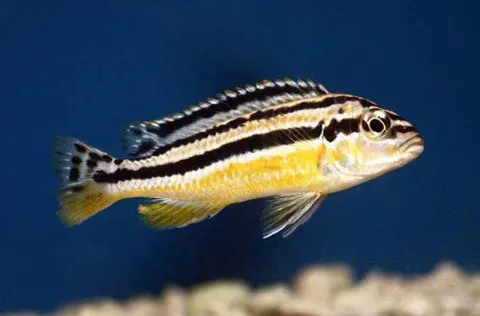
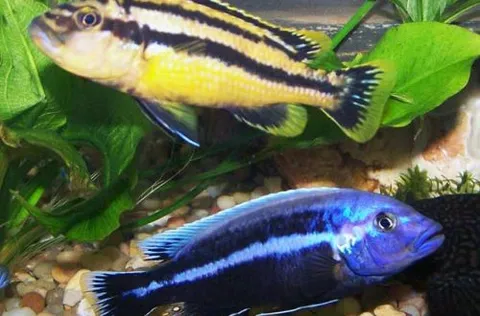
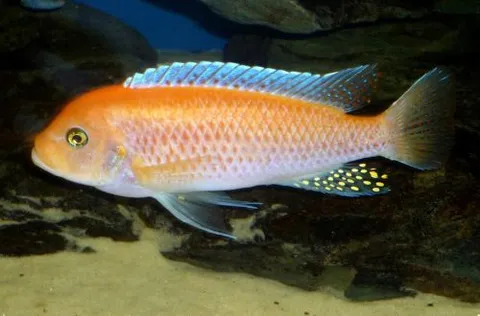
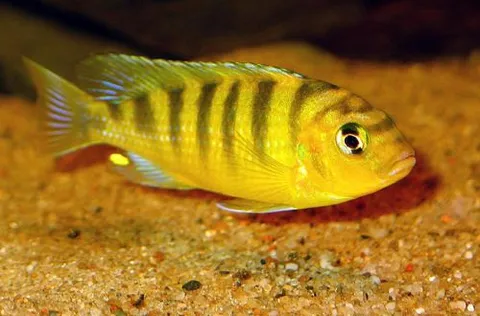
The body is elongated with a slightly convex head; the dorsal and anal fins taper toward the tips. Coloration varies widely: specimens come in blue, orange, black-and-white, and blue-black. This colour diversity reflects both natural variation and selective breeding. To the casual aquarist, it can be difficult to identify this species visually. Buy only from reputable breeders or well-known dealers to avoid mistakes. Many cichlids from Lakes Malawi and Tanganyika look very similar, and one species is often sold as another. Males are larger and more intensely coloured than females. The anal fin bears a pattern of coloured spots. Males also develop a distinctive frontal hump that becomes more pronounced with age.

Habitat

Wild zebra mbuna are found nowhere but Lake Malawi in Africa. They inhabit rocky shores, reefs and islands at various depths. They belong to the Mbuna group, a name derived from the local language meaning "rock dwellers".

Behavior and Compatibility

This fish shows extreme aggression and incompatibility toward other species. Males are especially combative with each other. A small group of one male and 2–3 females can be kept, but only in a tank of at least 200 litres with ample hiding places. Without sufficient space, the females will be relentlessly attacked. If you plan to keep several cichlids, allow a minimum of 200 litres per male.

Care and Maintenance

Lake Malawi cichlids require similar water conditions. The paramount requirement is high water quality and purity. The water should be slightly alkaline with medium to high hardness. For detailed information on water composition and how to adjust its parameters, see the section on water chemistry. A 10–15% water change weekly is recommended; if filtration is weak, increase this to 25%. Vacuum the substrate at least once a week. Zebra mbuna are extremely sensitive to pollution. An efficient filtration system is central to maintaining biological balance. Choose the most powerful filter your budget allows. Other essential equipment includes a heater, an air pump and a light. Tank decor should mimic the natural habitat. Live plants are usually absent; use only a few plastic ornaments if any. Most of the space should be taken up by rocky outcrops and stones with many crevices and caves. Use coarse sand as substrate.

Diet

Most commercial dry foods suit these fish. However, the diet should be primarily plant-based: flakes enriched with algae (often spirulina) or dried nori seaweed, which is sold in supermarkets for sushi rolls. Periodically supplement with protein-rich foods such as bloodworm and brine shrimp. Avoid excessive protein, as it can cause obesity and digestive problems.

Breeding and Reproduction

In a harem group, fry are not long in coming. During spawning, the male's colours become even more vivid to attract the female. He selects a suitable spot on the sandy bottom, usually clear of obstacles, and digs several pits that serve as spawning sites. The female lays eggs in these depressions one batch at a time, immediately taking them into her mouth. She repeats this in several pits until her mouth is full of eggs. Fertilization happens in an unusual way: the male's anal fin pattern mimics eggs, and the female, mistaking them for another batch, tries to take them into her mouth. At that moment the male releases sperm, and fertilization occurs. The female carries the brood for 3–4 weeks before releasing the fry to swim freely. During this entire period she cannot eat, so if she was underfed before spawning, the brood may be at risk of being consumed. This reproductive strategy is typical of most Lake Malawi cichlids and ensures high fry survival in a competitive environment.
Diseases

With proper care and a balanced diet, health problems are rare. Poor water quality and unbalanced feeding are the main causes of disease. If several males are kept together—which is not recommended—physical injuries are common and can lead to secondary fungal and bacterial infections.

How to choose

When selecting fish, consult experienced breeders or specialist shops: because of the high species diversity and similarity among Lake Malawi cichlids, there is a risk of buying the wrong species. A healthy fish is active and displays bright, saturated colours typical of its morph. Avoid specimens showing signs of emaciation, fin damage, spots or cloudiness on the body, or fish that look sluggish or hide in a corner during feeding.

Compatibility

There are no pair reviews for this species yet — check tankmates in the matcher.

All tankmates

Plants and this fish

Matching water does not mean the plant will stay intact.

Frequently asked questions

The essentials: size, tank volume, water parameters and care

How big does Zebra Mbuna get?

An adult reaches 10–13 cm in length. Plan the tank around the maximum size: the fish quickly outgrows a cramped setup.

What size aquarium does Zebra Mbuna need?

The recommended volume is 200 L. A smaller tank speeds up nitrate build-up and raises stress levels.

What water parameters does Zebra Mbuna need?

Temperature 23–28 °C, pH 7.6–8.8, hardness 10–25 dGH. Stability matters more than exact values: sudden swings are harder on the fish than a small deviation from the ideal.

How long does Zebra Mbuna live?

Around 10 years when kept properly. Lifespan depends directly on tank volume, water quality and a varied diet.

Is Zebra Mbuna aggressive?

Temperament: aggressive / incompatible / unfriendly. Keep this in mind when choosing tank mates.

How many Zebra Mbuna should be kept together?

Recommended setup: harem (1 male and several females). Ignoring this is a common cause of stress and disease.

What does Zebra Mbuna eat?

Diet type: plant-based (algae, vegetables). Feed small portions that are finished within a couple of minutes — overfeeding does more harm than underfeeding.

What is the scientific name of Zebra Mbuna?

The scientific name of the species is Maylandia zebra, family Cichlids (Cichlidae). It also appears in the literature as: Metriaclima zebra, Pseudotropheus zebra, Tilapia zebra.

Similar fishes

Matched by family, categories and overlapping keeping conditions

Red Zebra Cichlid

Red Zebra Cichlid

Maylandia estherae

Cichlids (Cichlidae)

The Red Zebra Cichlid, scientifically known as Maylandia estherae (formerly Pseudotropheus estherae), belongs to the Cichlidae family. This vibrant, beautiful, and active fish exhibits interesting behavior. It can be a…

Kenyi Cichlid

Kenyi Cichlid

Maylandia lombardoi

Cichlids (Cichlidae)

Maylandia lombardoi, also known as Lombardo's Cichlid or Pseudotropheus lombardoi, belongs to the family Cichlidae. This bright and attractive fish is characterized by a rather belligerent disposition, which makes it…

Golden Cichlid

Golden Cichlid

Melanochromis auratus

Cichlids (Cichlidae)

Melanochromis auratus, also known as the Golden Cichlid (scientific name Melanochromis auratus), belongs to the Cichlidae family. These fish are characterized by their striking golden coloration, adorned with large…

Melanochromis chipokae

Melanochromis chipokae

Melanochromis chipokae

Cichlids (Cichlidae)

Melanochromis chipokae, known scientifically as Melanochromis chipokae, belongs to the family Cichlidae. This species represents the Mbuna group of cichlids, characterized by their aggressive behavior. This particular…

Other scientific names and conservation status

Other scientific names
Metriaclima zebra, Pseudotropheus zebra, Tilapia zebra
Categories
Cichlids
Conservation status
Least concernLC